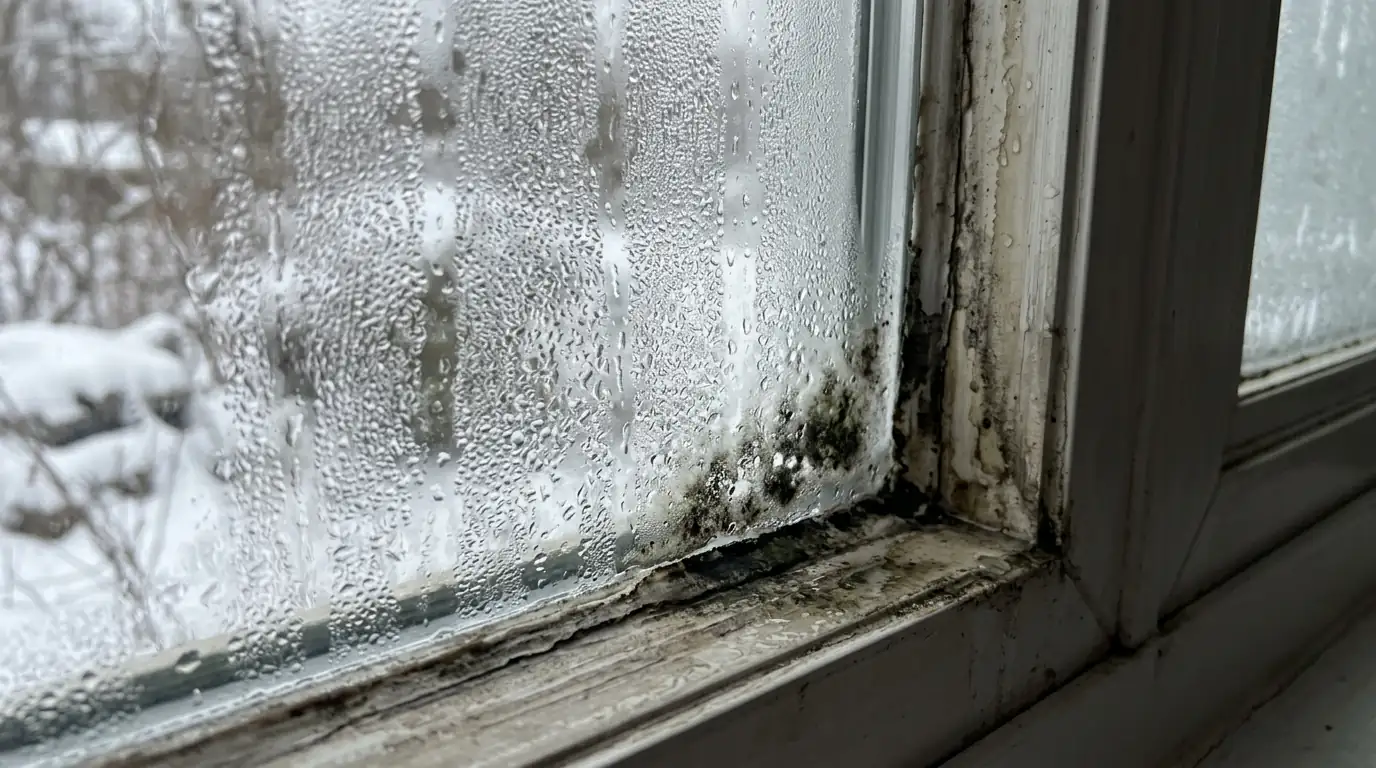
Color does not tell you much about mold. What matters is what it is growing on, how large the area is and why that material stayed wet. The mold people usually mean by black mold, Stachybotrys, needs cellulose like drywall paper that stayed wet for a long time, so finding it usually means finding an old leak.
Why color is a poor guide
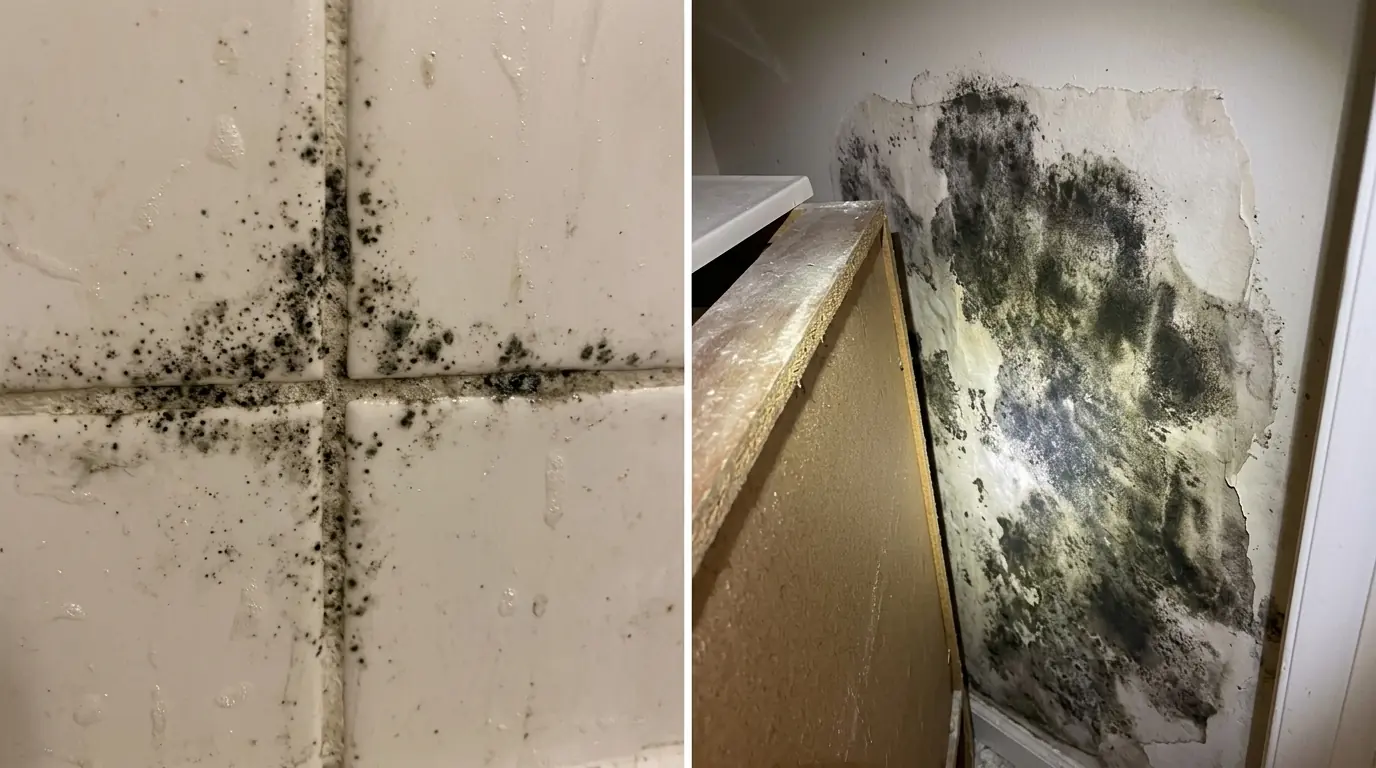
Dozens of common molds look black, dark green or gray, and the same mold can look different on different surfaces. The dark spots on bathroom grout and the dark patch behind a leaking vanity may be entirely different organisms.
No one can identify a mold by looking at it, including us. What we can see is where it is, how big it is and whether the material under it is wet, and those three things decide what happens next.
What black mold actually needs
Stachybotrys grows on material rich in cellulose, like the paper face of drywall, ceiling tile or cardboard, and it needs that material to stay wet for an extended period. It does not grow on a damp bathroom wall that dries every afternoon.
That is what makes it useful to know about: finding it points to a long-running leak. A supply line that dripped for months, a shower pan that seeps into the wall or a roof leak over a closet are the usual stories.
Size matters more than species
Public health guidance citing the EPA suggests calling a contractor once mold covers more than about 10 square feet, whatever it is. Below that, growth on hard surfaces can usually be cleaned. Above it, or when it is inside a wall or on drywall that has to be removed, containment keeps the work from spreading spores through the house.
Growth on drywall is a removal job at any size, because the paper cannot be cleaned and the back side is usually worse than the front.
Does it need testing?
Usually not. When growth is visible and the source is clear, the removal is the same whether a lab calls it Stachybotrys or something else. Testing is worth it when growth is suspected but hidden, when a sale or a lease needs documentation, or after removal to confirm the area is clear. See how mold testing works.
What we can and cannot say about health
Public health guidance treats indoor mold growth the same way regardless of species: remove it and fix the moisture. People with asthma, allergies or weakened immune systems should stay away from the work area and keep the door closed until it is dealt with.
We are not doctors. If you have health concerns about mold exposure, a physician is the right person to ask, and a remediation company should never tell you otherwise.
What removal looks like either way
The area is sealed with plastic and put under negative air, moldy drywall and insulation are cut out past the growth and bagged, the framing is HEPA vacuumed and cleaned, and everything is dried before it is closed up. Most important of all, the leak is found and fixed, because it is the reason the mold was there.
Where it hides in Utah homes
Because it needs long-wet cellulose, the places we open to find it are predictable: behind a vanity or sink base where a drain slowly leaks, in the wall behind a shower with a failed pan or valve, under carpet pad in a basement that stays damp, and in closets on exterior walls where winter condensation never quite dries.
A dry climate does not protect against any of those. Every one of them is a leak or condensation problem inside the house, not a weather problem.
Where we can help
Quick questions
Color does not tell you that. Treat any indoor growth the same way: remove it and fix the moisture.
No. The growth is in and behind the paper. The drywall comes out.
Sources
Answered around the clock
Dark spots spreading? Call us before you scrub.
Tell us where it is and how long it has been there. We will explain the next steps.