Updated October 2026
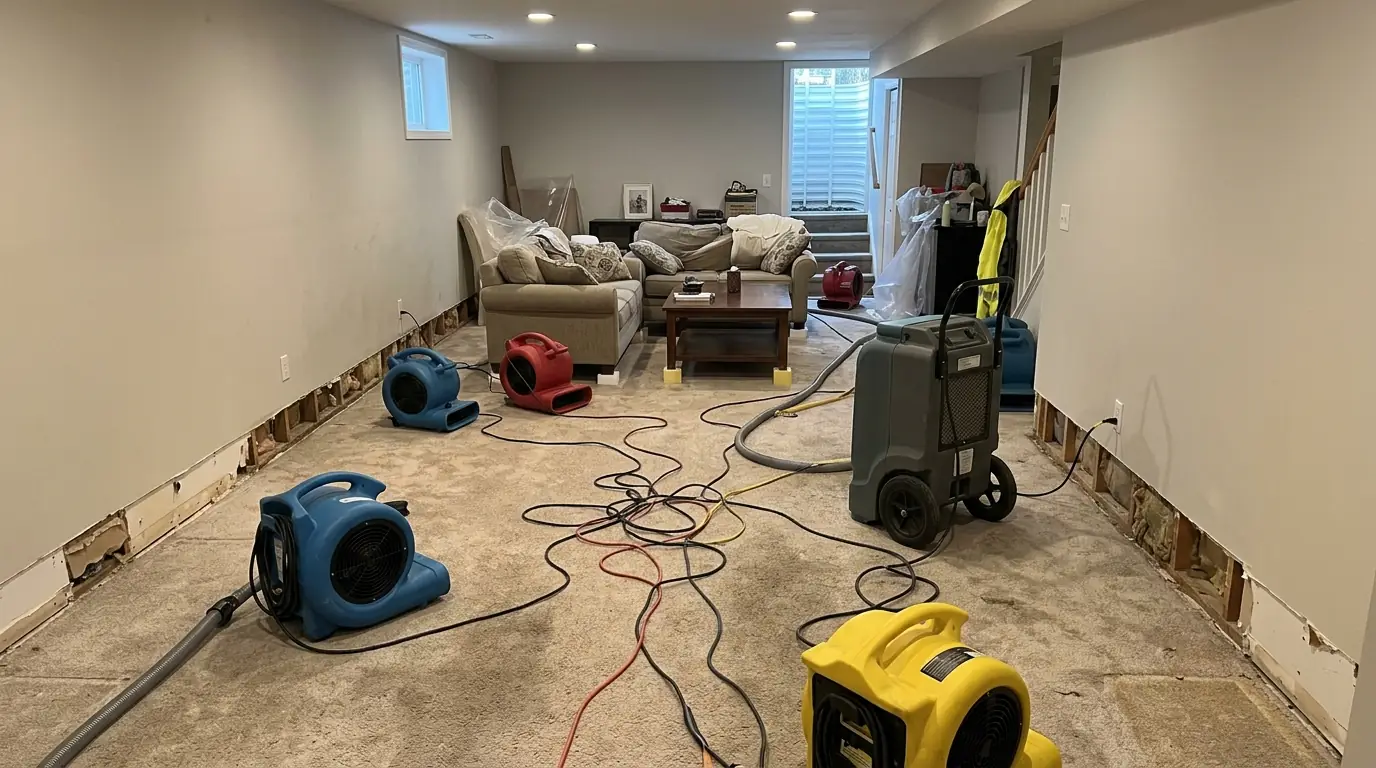
Flooded basement cleanup in Salt Lake City starts with extracting the water, then removing soaked carpet pad and the lower drywall, and running dehumidifiers and air movers until readings are normal. EPA guidance says drying within 24 to 48 hours usually prevents mold, which is why the first calls matter most.
Signs water is getting into the basement
Water at the base of the walls
After snowmelt or a heavy spring storm.
Full window wells
Water standing against the glass or leaking at the frame.
A silent sump pump
The pit is full but the pump is not running.
Wet carpet along one wall
The pad soaks up seepage before the surface looks wet.
Damp spots on the slab
Dark patches that spread after rain.
Why speed matters more than anything else
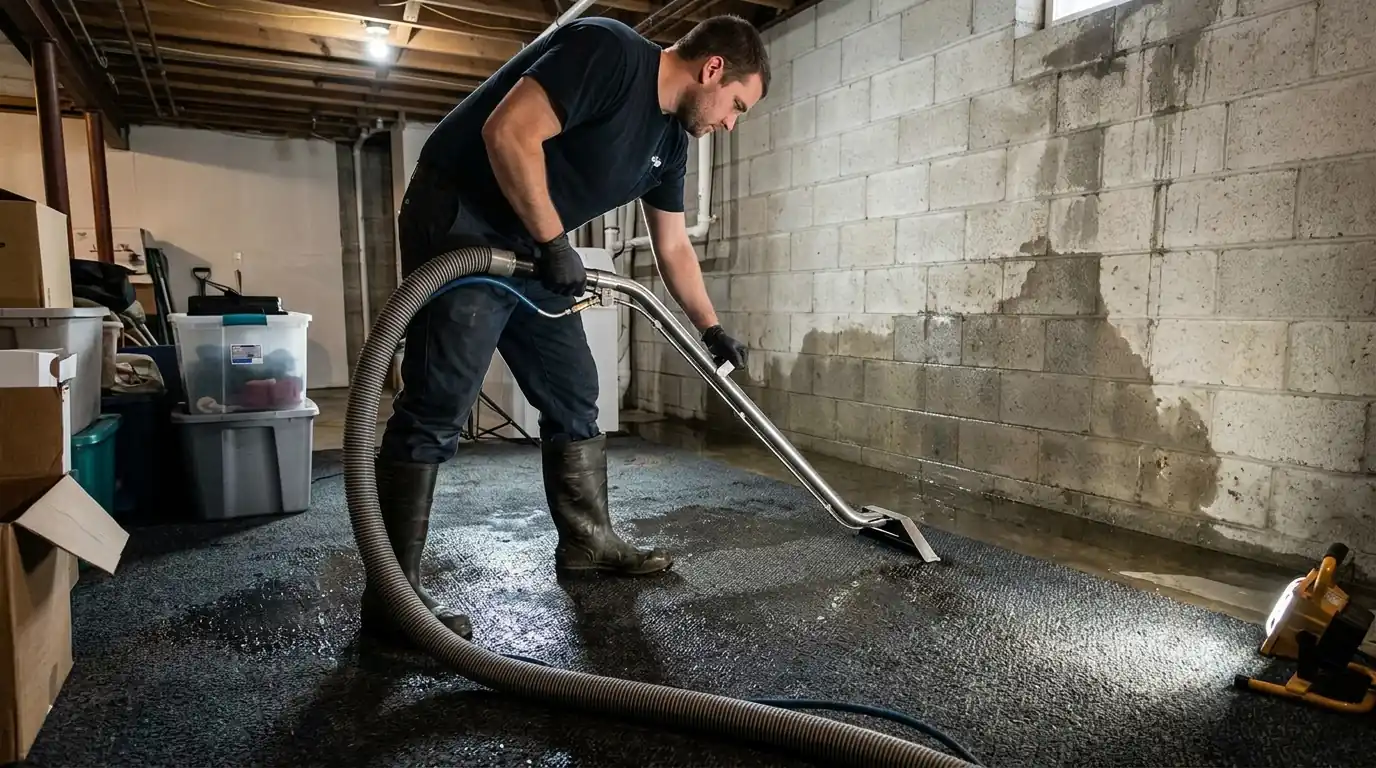
Standing water is only part of it. Water wicks up drywall, soaks carpet pad and runs under walls, and anything porous that stays wet for two days starts growing mold.
We extract first, then decide what can be dried in place and what has to come out, and set equipment so drying starts the same night.
How the job runs, step by step
- 1
Answer and triage
Where the water is coming from.
- 2
Stop it if possible
Sump, window well or valve.
- 3
Extract
Standing water pumped and vacuumed out.
- 4
Remove soaked materials
Pad and lower drywall bagged.
- 5
Set drying equipment
Dehumidifiers and air movers the same visit.
- 6
Check readings daily
Until materials read dry.
- 7
Look for mold
Before anything is rebuilt.
Snowmelt and groundwater seepage
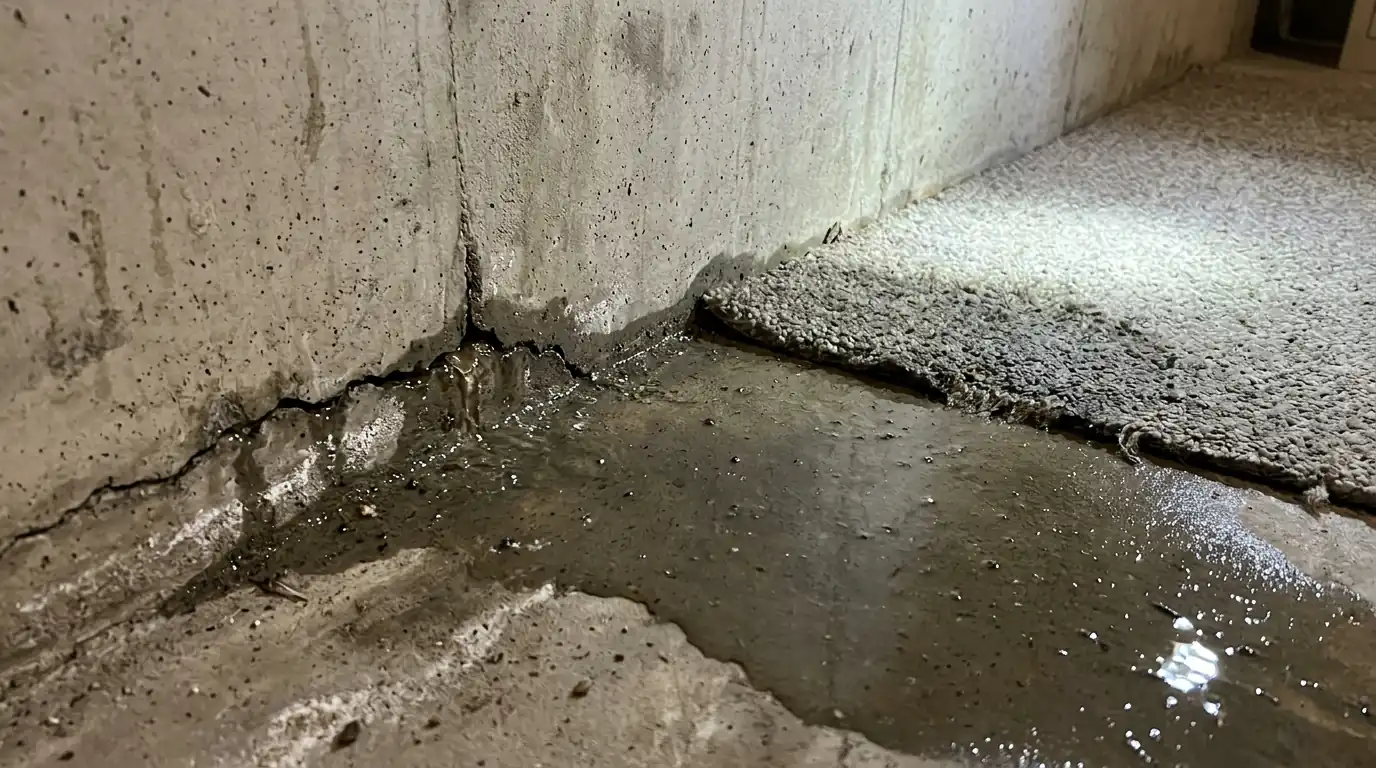
When snow melts fast, water saturates the soil and pushes through foundation cracks, the joint where the wall meets the slab, and old tie holes in poured walls. Seepage usually shows up along one or two walls rather than everywhere. We extract the water, pull the carpet pad and lower drywall along those walls, and dry the rest in place. Once the season settles, grading, gutters and downspout extensions often fix most of it, and we tell you what we saw so you know where to start.
Window well flooding
A window well is a hole dug beside the foundation, and when its drain clogs with leaves or the well fills with melting snow, water rises against the window until it leaks in at the frame. It can put a lot of water into a finished basement fast, usually into a bedroom or family room with carpet. We extract it, remove what soaked, and dry the wall under the window. Clearing the well drain and adding a cover keeps it from happening again in most cases.
Sump pump failure
Sump pumps fail when they are needed most: during a storm, during a power outage, or after years without a test. When the pit overflows, water spreads across the slab from one corner. We extract it, remove soaked materials, and dry the space. While we are there, we look at the pump, the float and the discharge line so you can have it repaired or replaced, and we mention a battery backup if power outages were part of the story this time.
Spring in Salt Lake City
Salt Lake City's precipitation peaks in spring, right as mountain snowmelt is running, so basement water tends to come in April and May rather than midsummer. EPA guidance says wet materials dried within 24 to 48 hours usually do not grow mold. That window is why we set drying equipment on the first visit instead of scheduling it for later in the week.
How long drying takes
Extraction happens on the first visit. Drying usually runs several days, depending on how much water there was, how long it sat and whether walls and subfloor soaked it up.
We check readings each visit and remove equipment only when materials read dry.
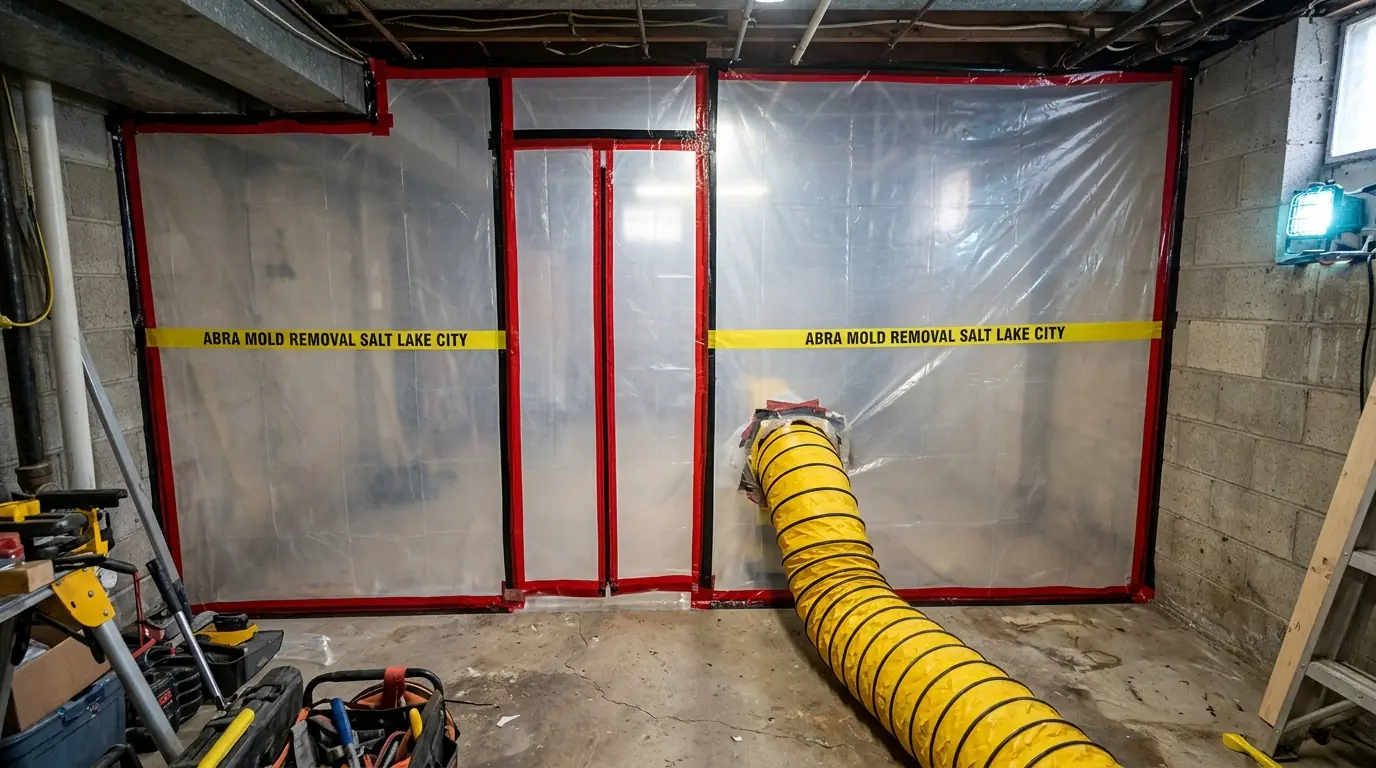
Dry before anything is rebuiltEquipment stays until readings match dry areas of the house, not until the floor looks dry.
What to do before we get there
| Situation | Safe to do yourself | Leave it for us |
|---|---|---|
| Water still coming in | Clear window well drains, check the sump | Pumping and extraction |
| Standing water near outlets | Stay out and shut off power at the breaker if safe | Anything that means wading near electricity |
| Soaked boxes and furniture | Move what you safely can to a dry floor | Deciding what can be dried |
| Water from a drain or sewer | Keep everyone out | Cleanup: it is contaminated water |
What flooded basement cleanup costs
Water jobs are priced by the area affected, the water category and the drying time.
- Water volumeInches of standing water and area covered.
- Water sourceClean seepage costs less than contaminated water.
- Materials removedCarpet, pad and lower drywall.
- Drying daysEquipment until readings are normal.
- ContentsMoving and drying belongings.
Published price ranges
- Water damage restoration, typical: $1,384 to $6,387, about $3,867 average (HomeAdvisor data) (pushleads.com, 2026)
- Water damage restoration by category: clean water $3 to $4, gray water $4 to $6.50, black water $7 to $7.50 per square foot (pushleads.com, 2026)
National planning figures from the sources named, not our prices. Your number comes from the written scope.
Questions about flooded basement cleanup
Small spills, yes. Soaked carpet pad and drywall usually need removal and commercial drying.
Sometimes, after clean water caught quickly. The pad almost always gets replaced.
EPA guidance says drying within 24 to 48 hours usually prevents it.
It depends on the source and your policy. We document everything either way.
We point out what we see: grading, wells or the sump. Some fixes need other trades.
Answered around the clock
Water in the basement? Call now.
Tell us how much water and where it is coming from. We answer 24/7 and will tell you what to do while we are on the way.