Updated October 2026
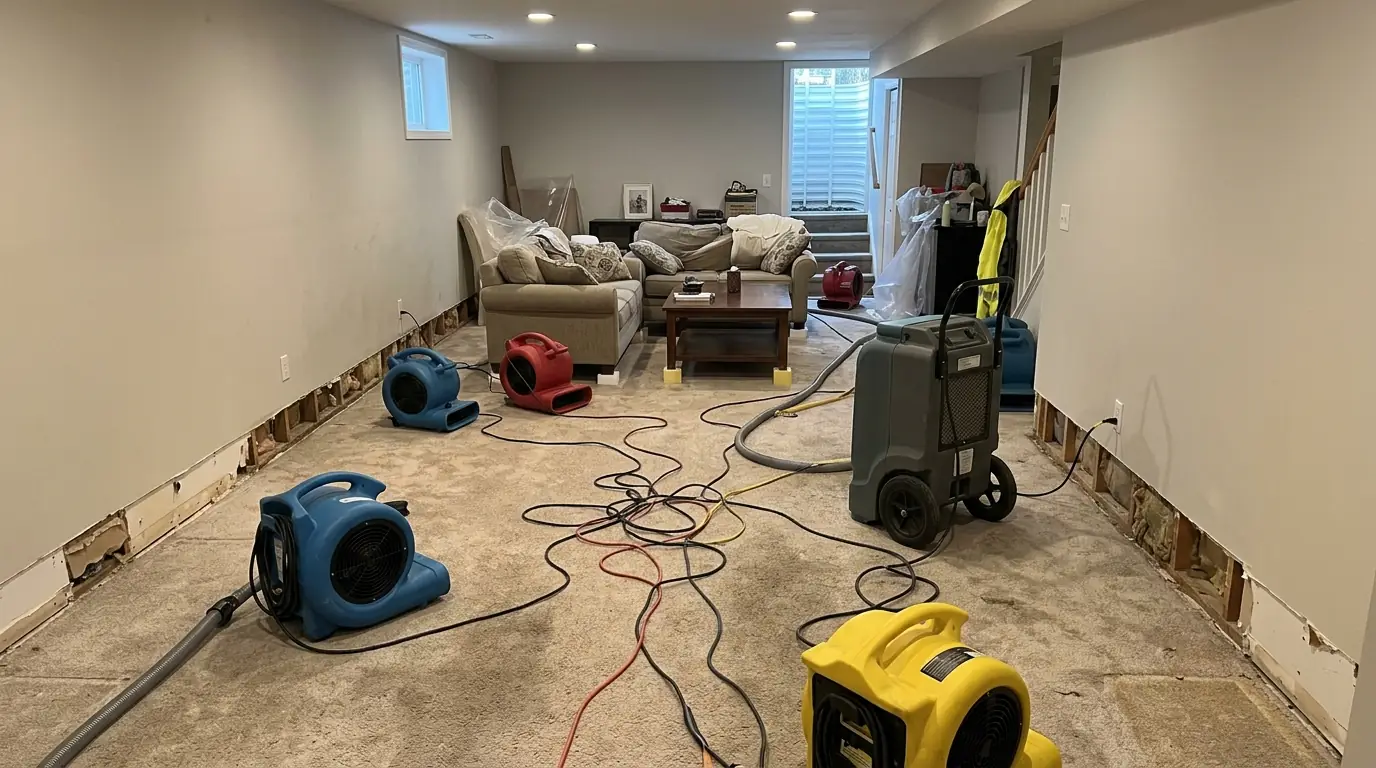
Sewage backup cleanup in Salt Lake City starts with extracting the water, then removing carpet, pad, drywall and insulation that it touched, because sewage is Category 3 water. Published figures put that category at $7 to $7.50 per square foot. Hard surfaces are cleaned and sanitized, and the room is dried.
Signs a backup is starting
Gurgling floor drains
Air pushed back through the drain when a toilet flushes.
Water at the floor drain
Clean or dirty, it means the line is not carrying away.
Sewer smell in the basement
A dry trap or a partial blockage in the line.
Slow drains everywhere at once
One slow sink is a clog; all of them points to the main.
Water rising in the shower
When a toilet flushes or the washer drains.
Why sewage cleanup is different from a clean leak
Clean water from a burst supply line can often be dried in place. Sewage cannot. It carries bacteria and debris into anything porous it touches, so carpet, pad, drywall and insulation below the waterline come out rather than getting dried.
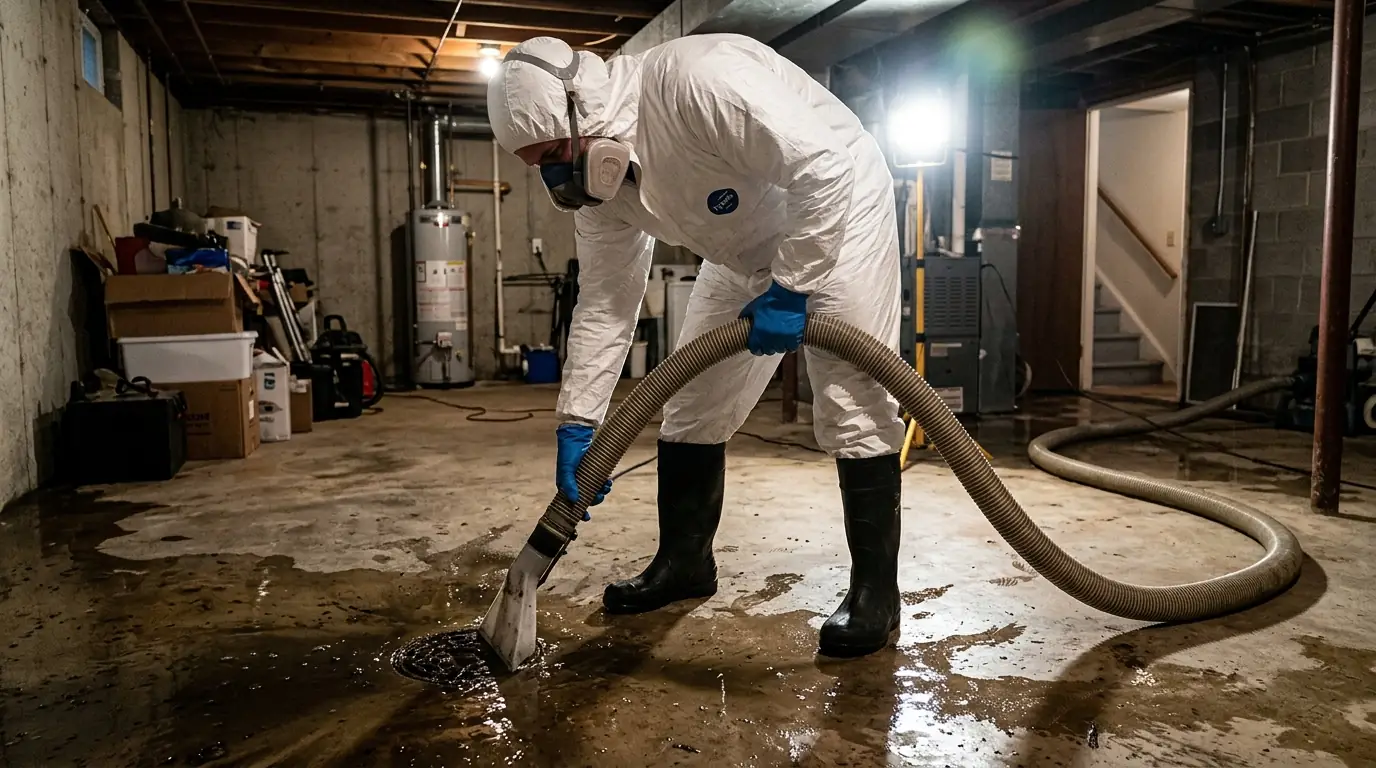
We work in protective gear, keep the affected area separate from the rest of the house and document the damage for your records.
How the job runs, step by step
- 1
Answer and triage
What came up, where, and whether it is still flowing.
- 2
Stop and extract
Remove standing water first.
- 3
Protect the house
Keep the area separate from clean rooms.
- 4
Remove porous materials
Carpet, pad and wet drywall bagged.
- 5
Clean and sanitize
Hard surfaces washed and disinfected.
- 6
Dry and verify
Readings until everything is back to normal.
- 7
Document it
Photos and notes for your records.
Floor drain backups
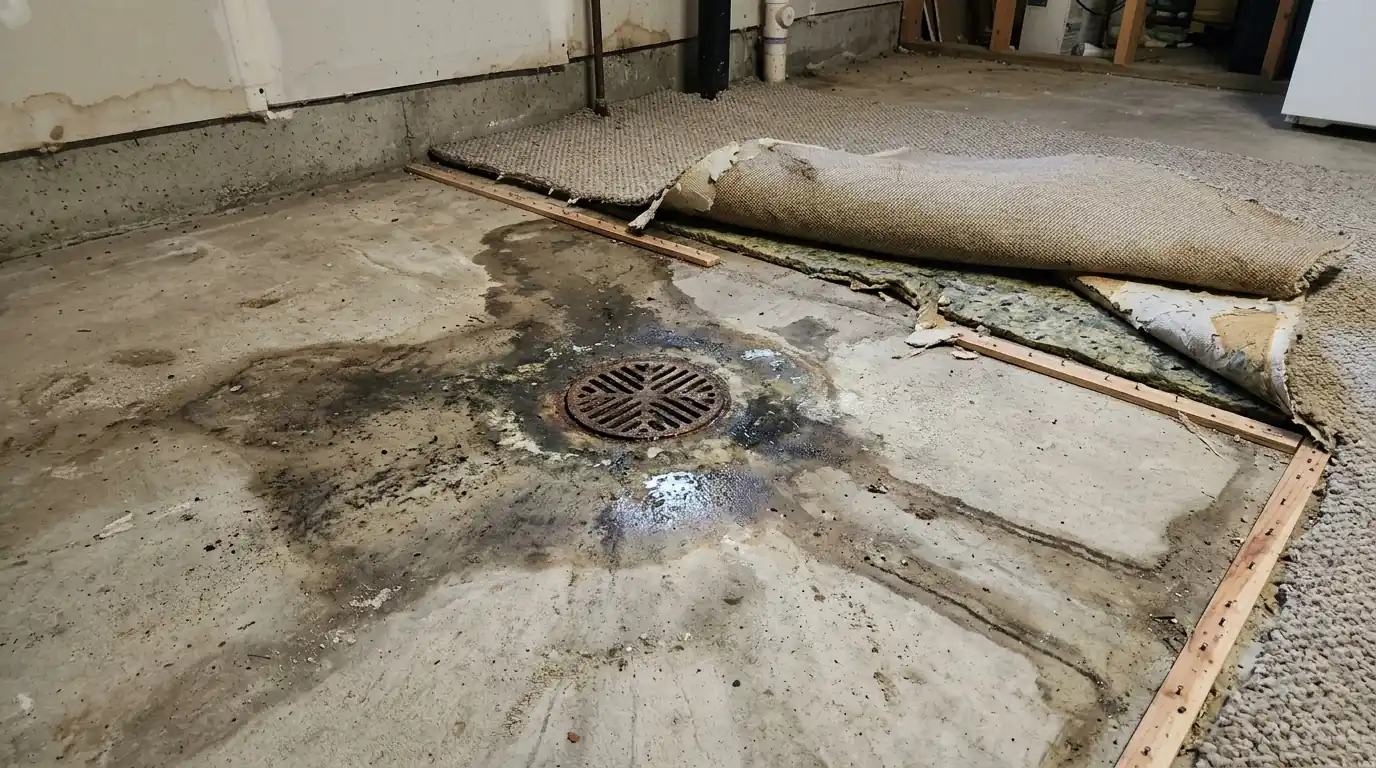
A basement floor drain is the lowest opening on the sewer line, so when the main slows or blocks, water comes up there first. We extract the water, remove wet carpet, pad and the lower drywall it reached, and clean the slab and the drain area with a disinfectant. Once the room is dry, readings confirm nothing is still wet behind the walls. The blockage itself needs a plumber to clear or camera the line, and we tell you what we saw so the right fix gets made.
Toilet and shower backups
When a toilet or shower backs up upstairs, the water spreads across tile and vinyl, runs under baseboards and into the subfloor, and often drips into the ceiling below. We clean and sanitize hard floors, lift flooring where the water got underneath, and open the ceiling below if readings show it is wet. Toilets, tubs and vanity bases are cleaned and disinfected, inside and out. Drywall and insulation in the ceiling below that took sewage water are removed rather than dried.
Older Salt Lake City basements and floor drains
With the median home in Salt Lake City built in 1965 and about a quarter built before 1940, many basements here have a floor drain in the laundry or furnace room that sits lower than every other fixture in the house. That makes the basement the first place a slow or blocked sewer line shows itself. A drain that gurgles or smells is worth attention before the day it overflows onto a finished floor.
How long sewage cleanup takes
Extraction and removal of soaked materials usually happen on the first visit. Drying takes longer and depends on how much water reached the walls and subfloor.
We keep the equipment running until readings are normal, then check again before anything is rebuilt.
What to do before we arrive
| Situation | Safe to do yourself | Leave it for us |
|---|---|---|
| Water still coming up | Stop running water and do not flush | Extraction and cleanup |
| Standing sewage on the floor | Keep kids and pets out, open a window | Anything that means wading through it |
| Soaked carpet or boxes | Take photos for your records | Removing and bagging contaminated materials |
| After the water is gone | Leave the room closed | Sanitizing, drying and checking the walls |
What sewage cleanup costs
Contaminated water costs more to clean up than a clean leak because more material has to come out.
- Area affectedSquare feet the water reached.
- Flooring and wallsCarpet, pad and lower drywall removal.
- Depth and timeLonger exposure pushes water higher into walls.
- DisposalContaminated materials bagged and hauled.
- DryingEquipment days until readings are normal.
Published price ranges
- Water damage restoration by category: clean water $3 to $4, gray water $4 to $6.50, black water $7 to $7.50 per square foot (pushleads.com, 2026)
- Water damage restoration, typical: $1,384 to $6,387, about $3,867 average (HomeAdvisor data) (pushleads.com, 2026)
National planning figures from the sources named, not our prices. Your number comes from the written scope.
Questions about sewage backup cleanup
No. Carpet and pad that touched sewage are removed and replaced.
Usually, if the affected area is closed off. Keep children and pets away from it.
It can if materials stay wet. That is why drying and removal happen quickly.
The blockage needs a plumber. We handle the cleanup and drying after it.
It depends on your policy; some need a separate backup rider. We document the damage either way.
Answered around the clock
Sewage in the basement? Call now.
Stop running water and keep people out of the area. We answer 24/7 and will walk you through the next steps.