Updated October 2026
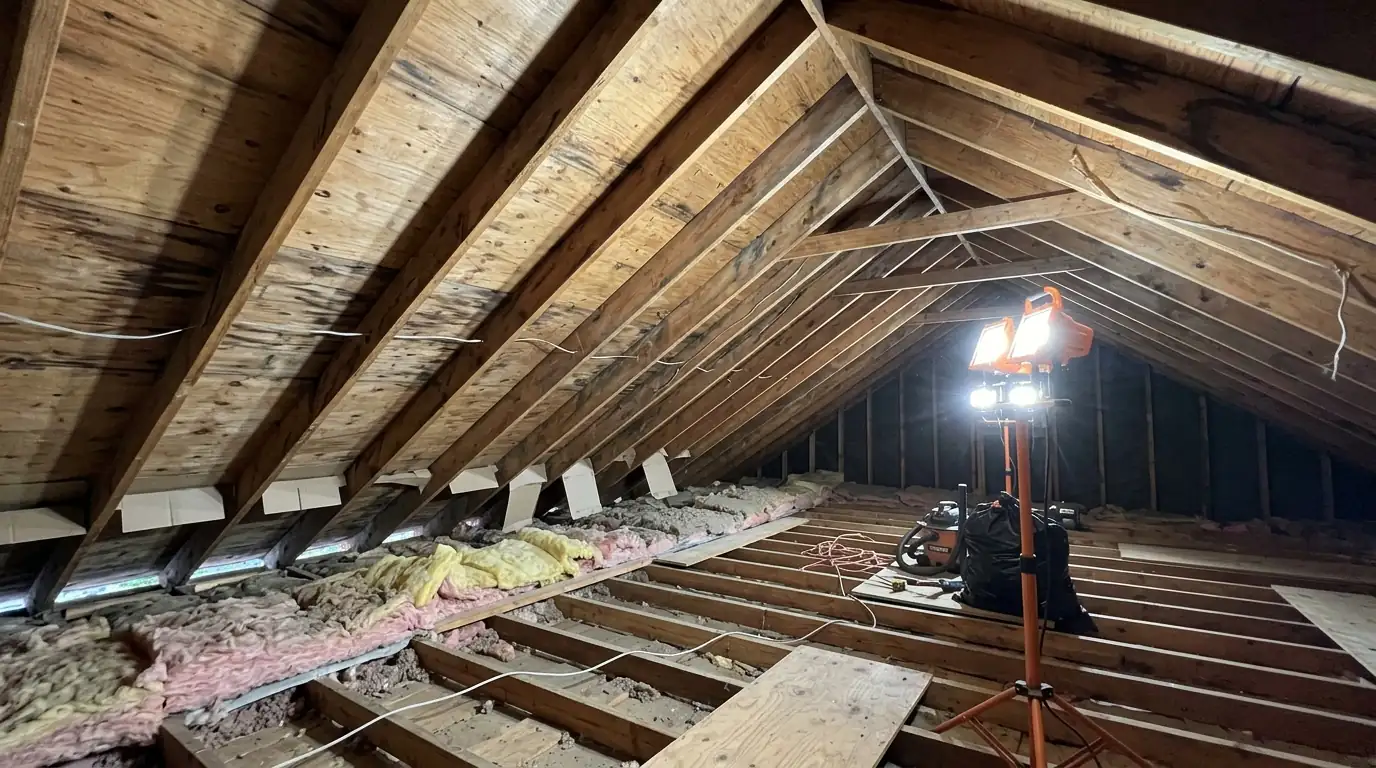
Attic mold removal in Salt Lake City means cleaning growth off the underside of the roof sheathing, removing wet or moldy insulation and correcting what put the moisture there, usually a bath fan venting into the attic, blocked eaves or ice dams. This Old House puts typical attic jobs at $1,000 to $4,000.
How an attic gets moldy in a dry climate
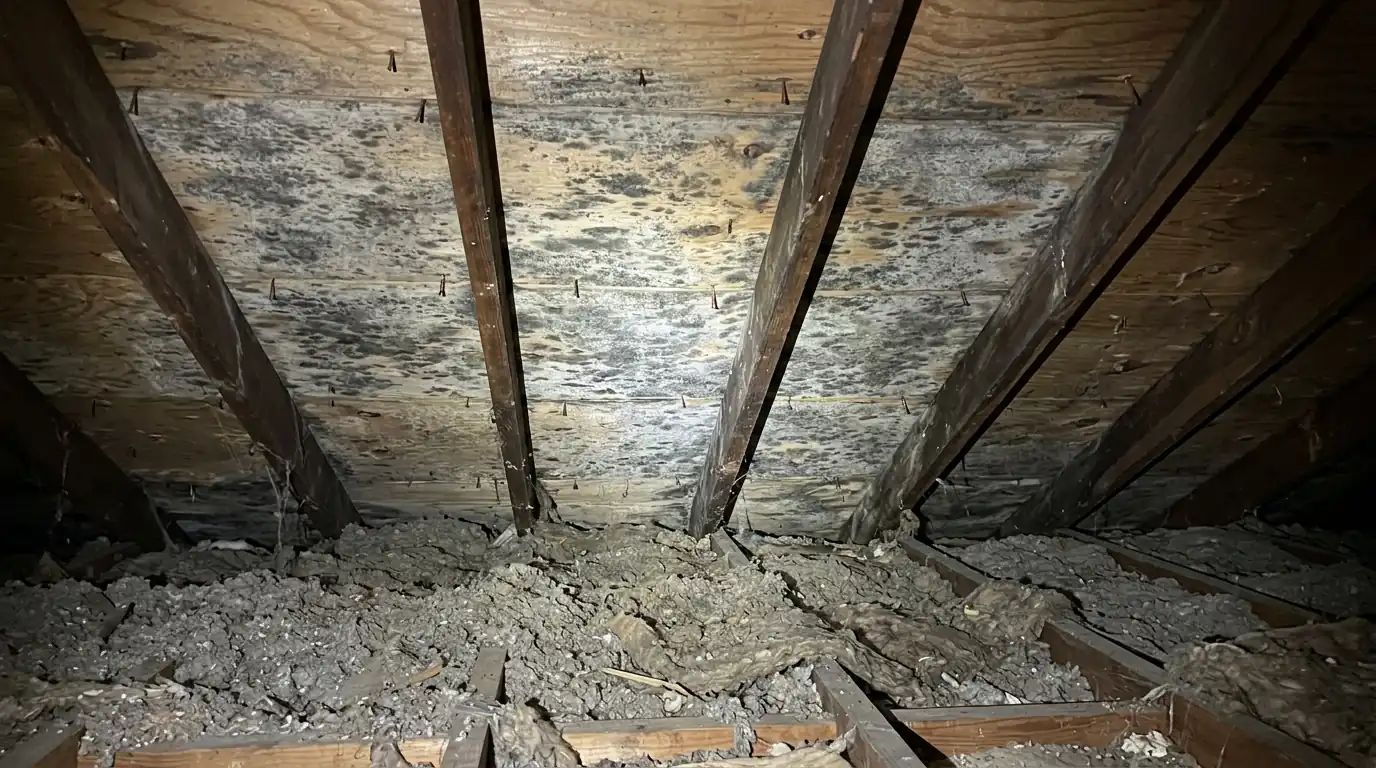
In winter, warm indoor air carries moisture up through ceiling gaps, light fixtures and bath fans into the attic. It condenses on the cold underside of the roof deck, freezes, and melts again on sunny days. Do that for a few winters and the sheathing turns gray or black.
Cleaning the wood is half the job. Stopping the warm air and venting the attic properly is the other half.
What attic mold removal costs
Attic pricing depends on how much of the deck is affected and how the wood gets cleaned.
- Area of sheathingA patch above a fan or the whole deck.
- Cleaning methodSanding versus blasting.
- InsulationRemoving and replacing wet insulation.
- AccessLow slopes and tight attics take longer.
- Fixing the causeFan ducts, baffles or vents.
Published price ranges
- Attic mold removal: $1,000 to $4,000 (thisoldhouse.com, 2026)
- Attic mold removal, partial: $1,500 to $6,000 (homeguide.com, 2026)
National planning figures from the sources named, not our prices. Your number comes from the written scope.
How the sheathing gets cleaned
| Method | What it involves | Best for |
|---|---|---|
| HEPA sanding and wiping | Sanding growth off the wood, HEPA vacuuming the dust | Light to moderate surface growth |
| Media or dry ice blasting | Blasting the surface clean with a fine media or dry ice | Large attics with growth across most of the deck |
| Sheathing replacement | Replacing panels from the roof side | Wood that is soft, delaminated or rotted |
Mold on roof sheathing
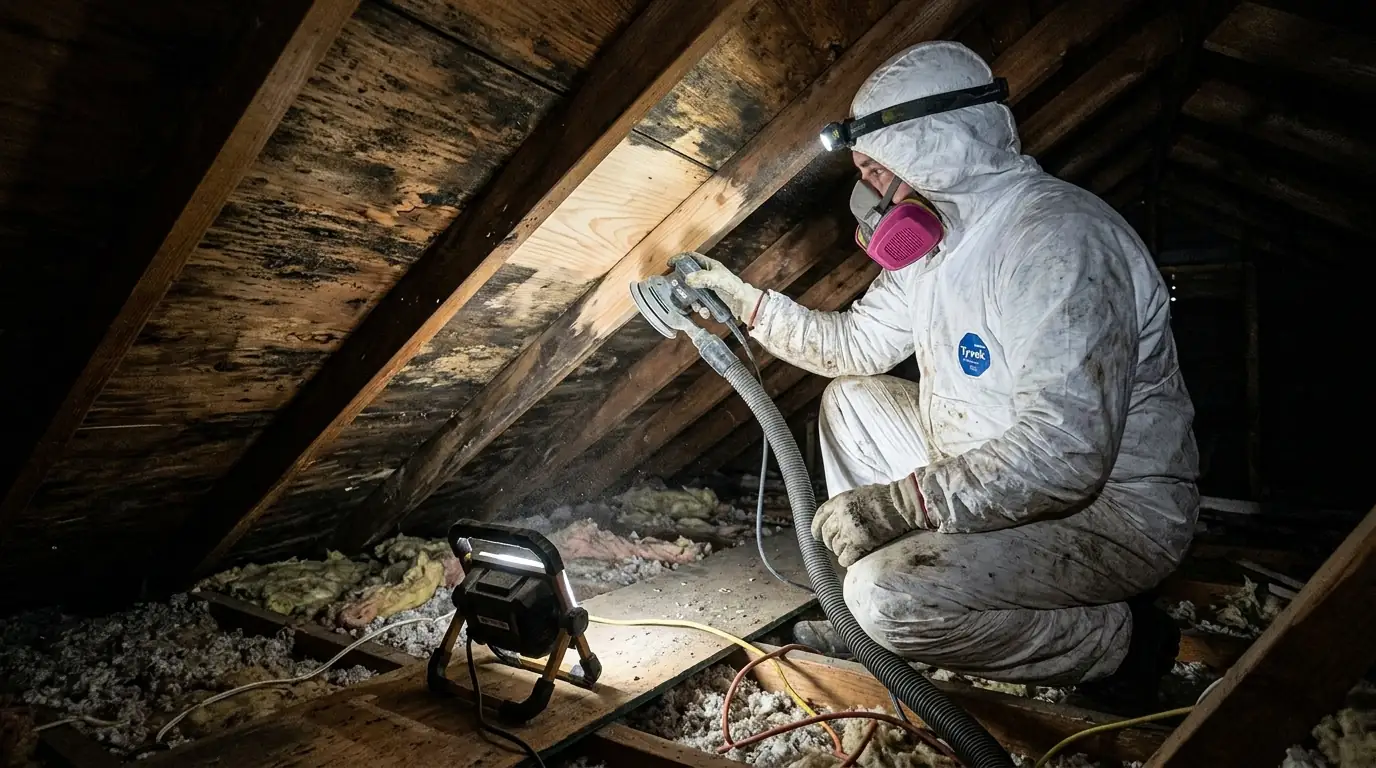
Growth on the roof deck is almost always on the surface. We contain the attic hatch so dust does not drop into the house, pull back insulation where needed, and clean the sheathing by HEPA sanding or blasting depending on how much of the deck is affected. Everything is HEPA vacuumed. The wood is checked for softness while we work, and any panels that have lost strength are flagged for your roofer. Stains that remain after cleaning are cosmetic once the growth is gone.
Bath fans venting into the attic
A bath fan that ends in the attic pumps shower moisture straight onto the roof deck, and the mold usually forms a patch right above it. It is one of the most common causes of attic mold in homes of any age, and one of the easiest to spot from the hatch. After cleaning the sheathing, the duct needs to reach a roof or wall cap outside, sealed and insulated along its run. Our bath fan installation page covers that fix in detail, and we can handle both in one visit.
Ice dam leaks at the eaves
Ice dams form when heat escaping into the attic melts snow on the roof, and the water refreezes at the cold eaves. Water backs up under the shingles and drips into the attic along the outside walls, soaking insulation and the top plates. We remove wet insulation at the eaves, clean the sheathing and framing, dry the area and check the ceiling below. Stopping the next ice dam means sealing warm air leaks and making sure the eaves are vented, which is what attic ventilation correction addresses.
Attics in older and newer Wasatch Front homes
Salt Lake City averages under 60 inches of snow a year at the airport, with much more on the benches, which is enough for ice dams on any roof that leaks heat. Housing age changes the picture. South Ogden's median home was built in 1979 and North Ogden's in 1993, and attics in those decades often have bath fans ducted a short way into the insulation and eaves blocked by blown-in fill, two of the setups that lead to sheathing mold.
Signs of trouble in the attic
Dark staining on the roof deck
Visible with a flashlight from the attic hatch.
Frost on nails in winter
Nail tips with frost or rust stains mean moisture is condensing.
Ceiling spots on the top floor
Often near bathrooms and exterior walls.
Icicles and ice dams
Heat escaping into the attic melts snow that refreezes at the eaves.
A musty smell upstairs
Worse on the first warm days after a cold snap.
How the job runs, step by step
- 1
Inspect the attic
Sheathing, insulation, ducts and vents.
- 2
Find the cause
Fans, air leaks, ice dams or blocked eaves.
- 3
Contain the hatch
So dust stays in the attic.
- 4
Remove wet insulation
Vacuumed out and bagged.
- 5
Clean the sheathing
HEPA sanding or blasting.
- 6
Fix the cause
Duct, baffles or vents corrected.
- 7
Check and reinsulate
Readings normal before new insulation.
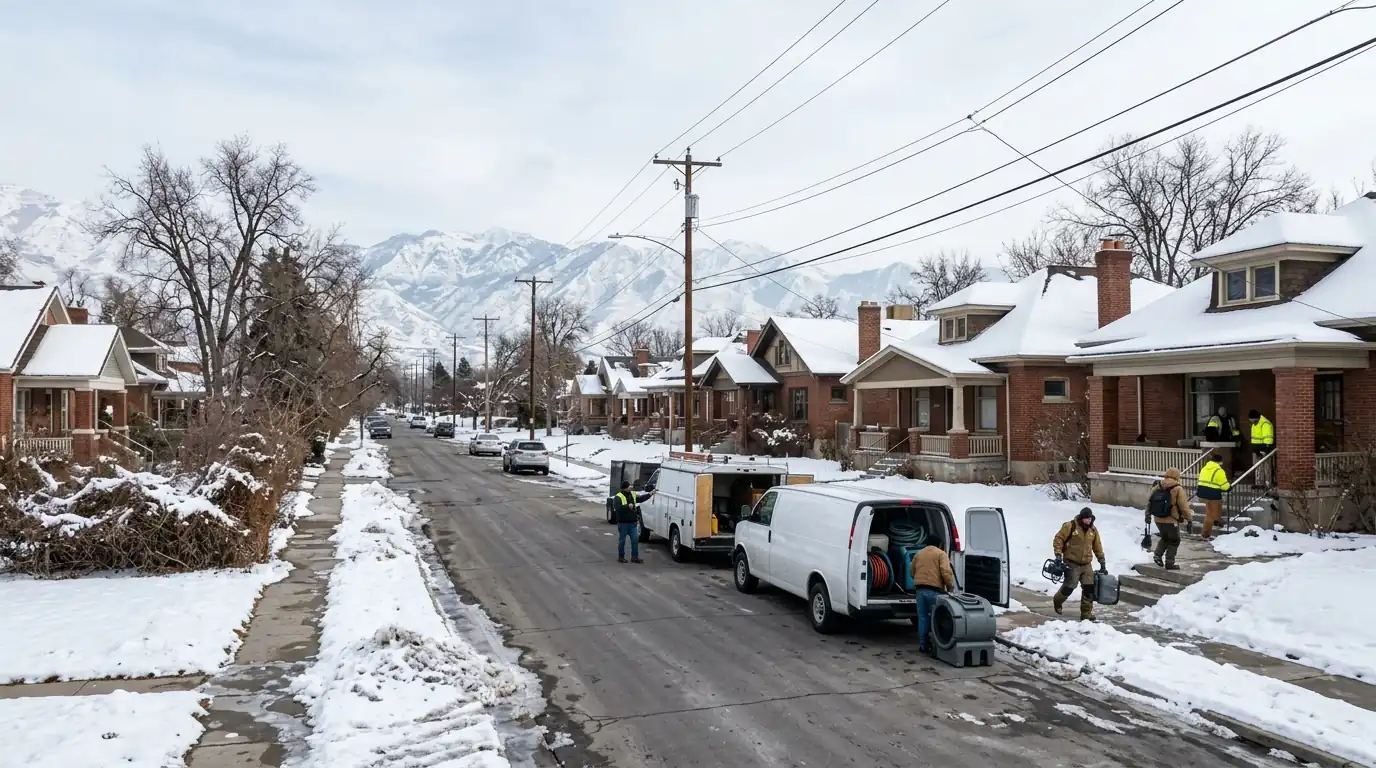
Winter starts itWarm air and cold roof decks between December and February are where most attic growth begins.
Questions about attic mold removal
Air moves between the attic and the house through gaps, so it is worth removing.
Warm, moist air condenses on the cold roof deck and freezes, then melts on sunny days.
Rarely. Most growth cleans off. Soft or delaminated panels are the exception.
Spraying alone leaves the growth in place. We remove it, then fix the cause.
Wet or moldy insulation, yes. Dry, clean insulation can often stay.
Answered around the clock
Gray spots in the attic or on the ceiling? Call us.
Tell us what you saw and whether the bath fan vents outside. We will explain what we would check.