Updated October 2026
Commercial mold remediation in Salt Lake City follows the same containment and removal steps as a home, scheduled around business hours and documented for owners, tenants and insurers. Remediation is usually priced by the square footage of affected material, which published figures put at $10 to $25 per square foot.
What changes when the building is a business
The work is the same: find the water, contain the area, remove what cannot be cleaned and dry the rest. What changes is everything around it. Customers, staff and tenants are in the building, and a health inspector or a landlord may want the paperwork.
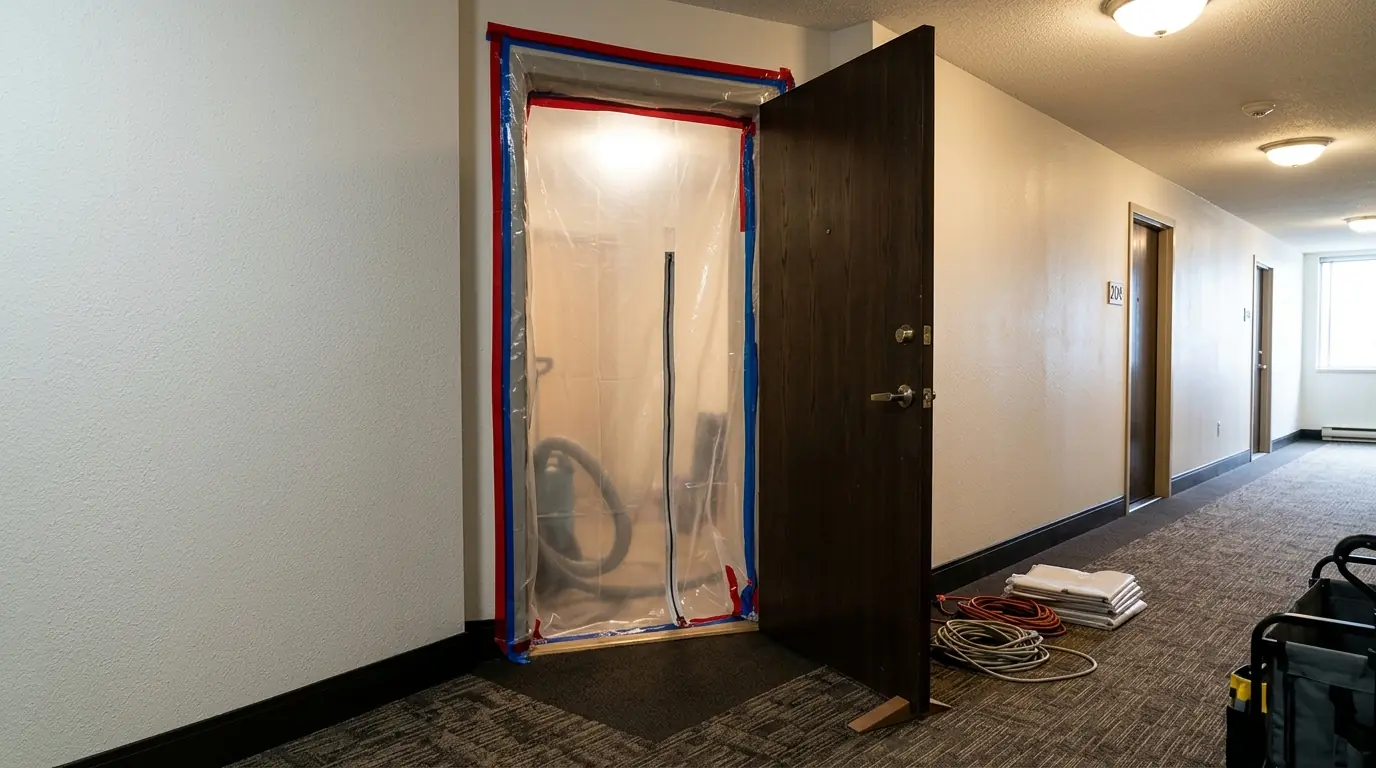
We phase the job, work after hours when it helps, and keep containment tight so the rest of the space stays open.
What commercial mold remediation costs
Commercial jobs are priced like residential ones, plus the scheduling and documentation a business needs.
- Affected areaSquare feet of material coming out.
- SchedulingAfter-hours or phased work.
- HVAC isolationSealing or shutting off zones.
- AccessHigh ceilings, lifts and tight mechanical rooms.
- DocumentationReports and clearance samples for owners.
Published price ranges
- Mold remediation per square foot: $10 to $25 per square foot (thisoldhouse.com, 2026)
- Mold remediation per square foot, higher published band: $15 to $30 per square foot, $1,500 to $6,000 average (homeguide.com, 2026)
National planning figures from the sources named, not our prices. Your number comes from the written scope.
Offices and retail spaces
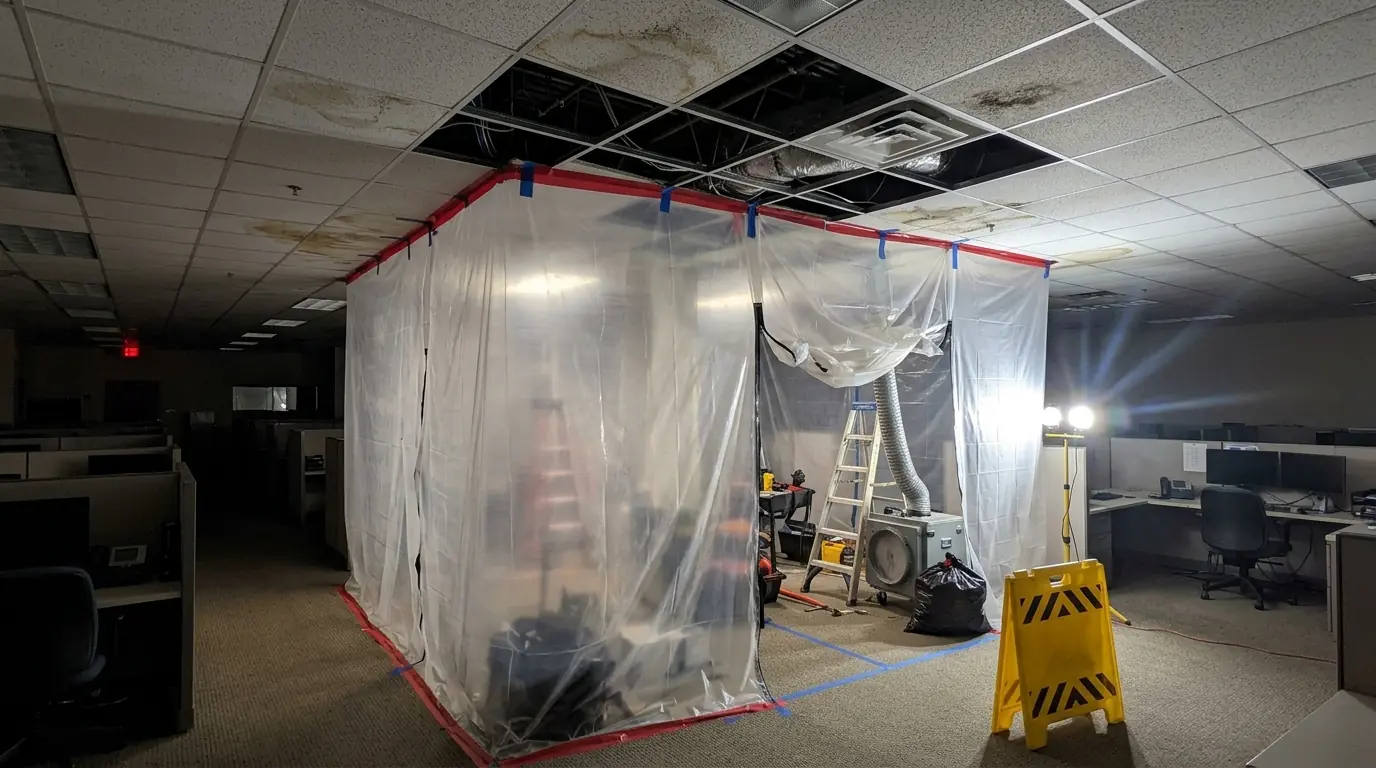
In offices and shops, mold usually shows up on ceiling tiles under a roof or HVAC leak, on drywall behind a restroom, or in the carpet near an exterior door. We work after closing or in phases, isolate the area with containment and negative air, and leave it clean for the morning. The HVAC serving that zone is shut off or sealed while we work so spores do not travel through the ducts. Managers get photos and a written summary for the building file.
Restaurants and food service
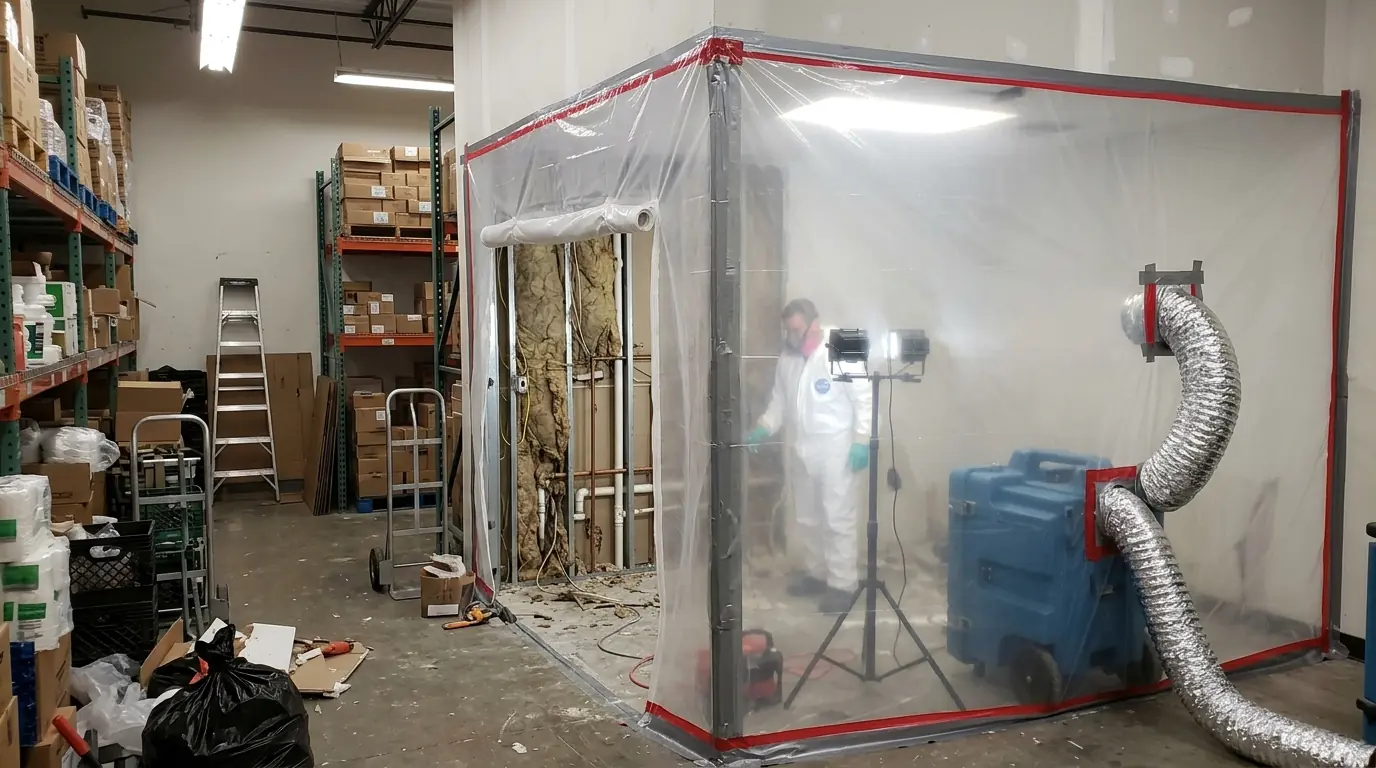
Commercial kitchens run hot and wet all day, and walk-in coolers, dish areas and mop sinks keep walls and floors damp. Mold in a food business is also a health inspection issue, so timing and documentation matter. We work outside service hours, protect food prep and storage areas, and remove damaged wall panels, ceiling tiles and baseboards under containment. Surfaces are cleaned and dried, and you get a dated record of what was found, what was removed and what was done.
Schools and daycares
Children spend hours in the same rooms, so mold in a classroom or a daycare gets attention from parents quickly. We schedule work for evenings, weekends or breaks, keep containment tight, and make sure the room is clean and dry before children come back. Air samples after the work can give administrators something concrete to share. Common sources are roof leaks over classrooms, winter condensation around old windows, and plumbing in restrooms and kitchens that nobody checks until the ceiling below stains.
What a commercial job includes
- A walk-through with the manager or owner before any work
- A schedule built around your hours or closures
- Containment and negative air around the work area
- Isolating the HVAC zone that serves the area
- Removal of moldy ceiling tiles, drywall and flooring
- Cleaning and drying of what stays
- Photos and a written summary for your records
Older downtown buildings and new ones
Our service office sits in the Exchange Place Historic District, where ten buildings went up between 1903 and 1917 with steel frames and masonry walls. Buildings of that age across Downtown Salt Lake City have plaster, old roof drains and thick masonry that holds moisture differently from a new office. A remediation plan for one of them looks nothing like one for a glass tower, and the first walk-through is where we sort that out.
How the job runs, step by step
- 1
Walk-through
Meet the manager, see the area, learn the schedule.
- 2
Find the source
Roof, plumbing, HVAC or condensation.
- 3
Plan the phases
What happens when, and what stays open.
- 4
Contain and isolate
Plastic, negative air and HVAC sealed.
- 5
Remove and clean
Damaged materials out, surfaces cleaned.
- 6
Dry and check
Readings back to normal.
- 7
Hand over records
Photos and a written summary.
How long the work takes, and how much disruption
A few ceiling tiles or a single wall can often be handled in one overnight shift. Larger areas are phased so part of the space stays open while another part is contained.
Drying is what stretches a schedule, so we start it early and check readings each visit.
Questions about commercial mold remediation
Yes. Evenings, weekends and phased schedules are common for commercial jobs.
Usually not. Containment keeps the work area separate from the rest of the building.
Yes. We coordinate access, schedules and records with managers and owners.
You get photos, readings and a written summary. Clearance samples can be added.
That has its own page: HVAC and duct mold removal.
Answered around the clock
Mold in your building? Call to schedule around your hours.
Tell us the space and the problem. We will explain how we would phase the work.