Updated October 2026
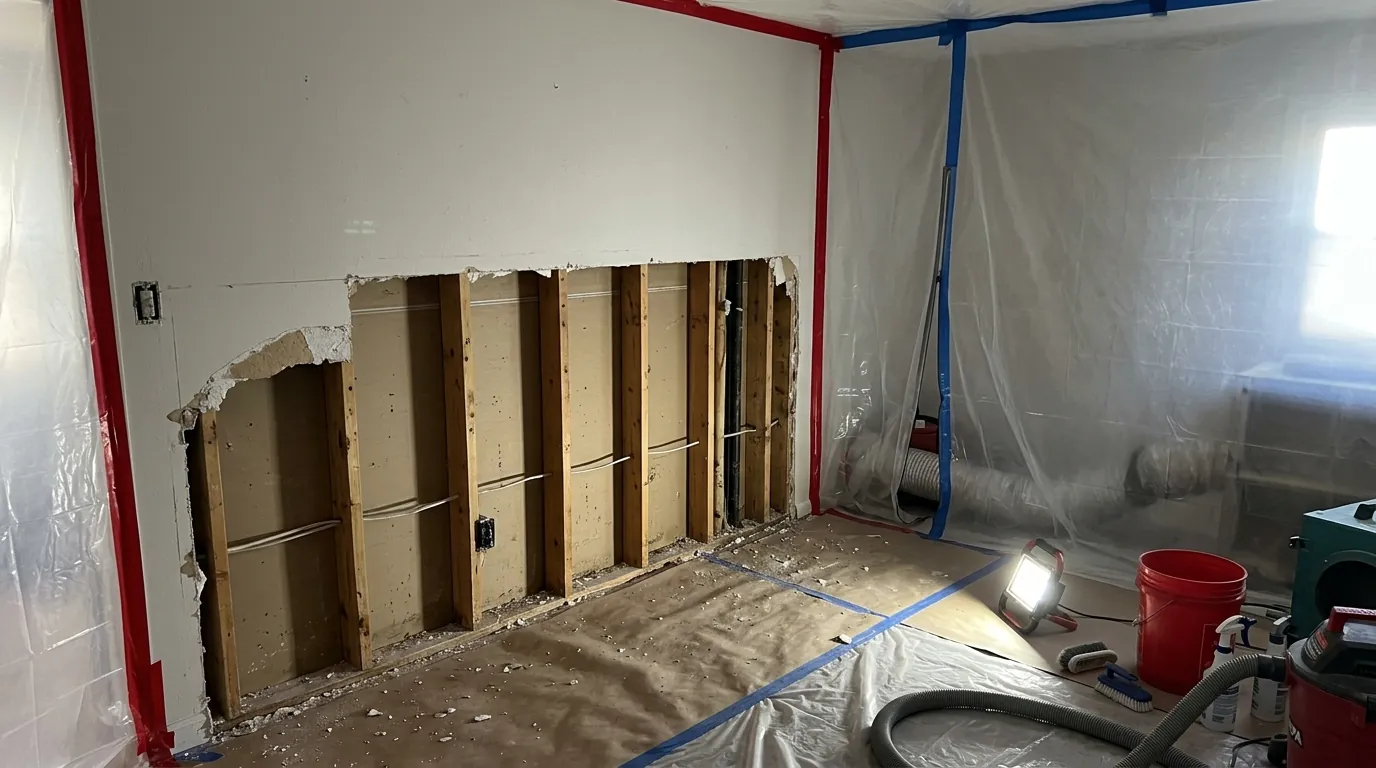
Window and sill mold removal in Salt Lake City means cleaning or replacing moldy sills and trim, checking the wall below for water that ran down inside, and reducing the winter condensation that feeds it. Surface mold on vinyl or glass cleans off; soft wood sills and stained drywall below usually come out.
Why windows grow mold here
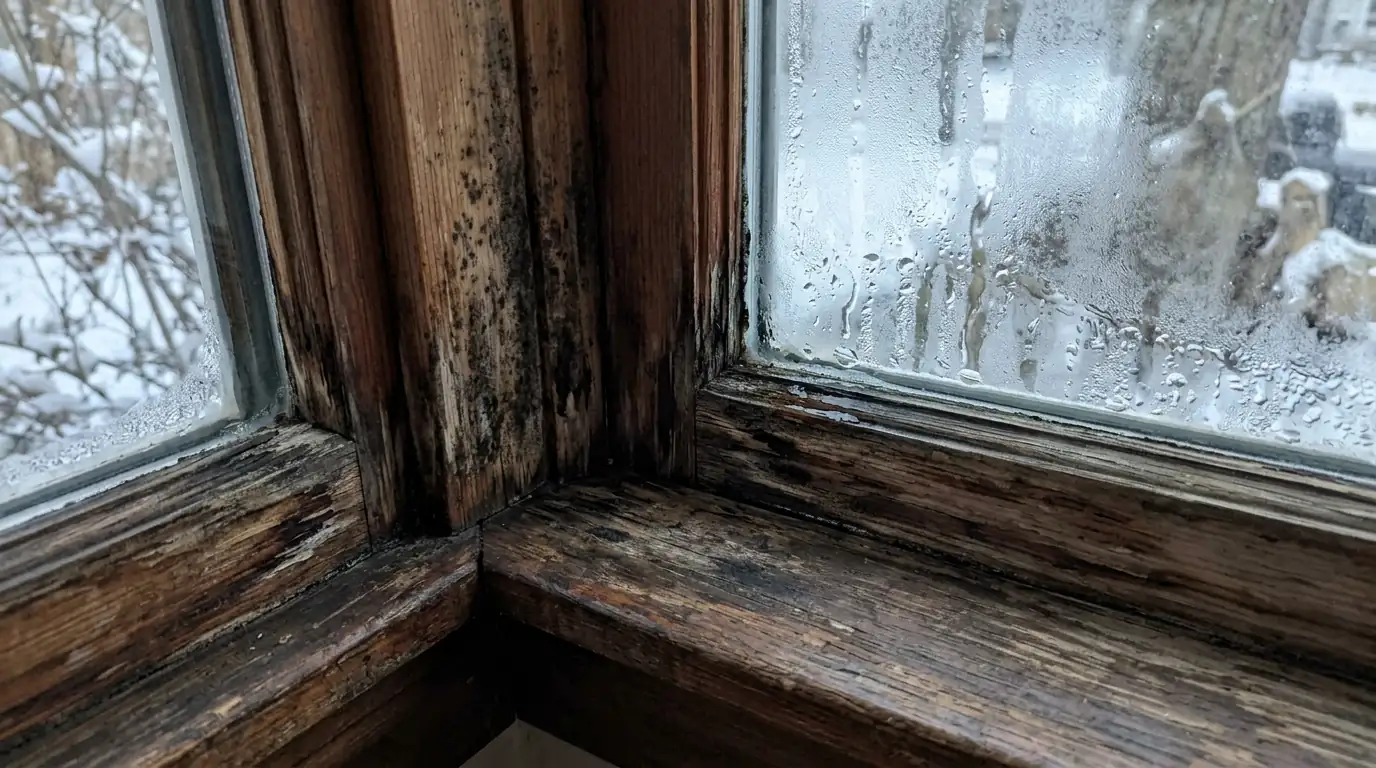
Cold glass and frames are the first place warm indoor air gives up its moisture. On winter mornings the water runs down and sits on the sill and in the frame corners, day after day.
Most of it is surface growth that cleans off. The problem is the water that soaks into wood sills and drips into the wall below.
What drives the cost of window mold removal
Window jobs are small until water gets into the wall below.
- Number of windowsOne frame or several rooms.
- Wood conditionCleaning versus replacing sills and trim.
- Wall belowWhether drywall needs opening.
- AccessTall windows and stairwells.
- Humidity fixesFans or dehumidification to stop the cause.
What you can clean yourself
| Situation | Reasonable to do yourself | Call us |
|---|---|---|
| Spots on glass or vinyl frames | Wipe with detergent and water, dry it | If it returns every week |
| Mold on painted wood trim | Clean it and watch for softness | If the wood is soft or stained through |
| Stains on the wall below the window | Leave it and check for softness | Water may be inside the wall |
| Mold in several windows | Lower indoor humidity | Humidity may be the house-wide cause |
Winter condensation on frames
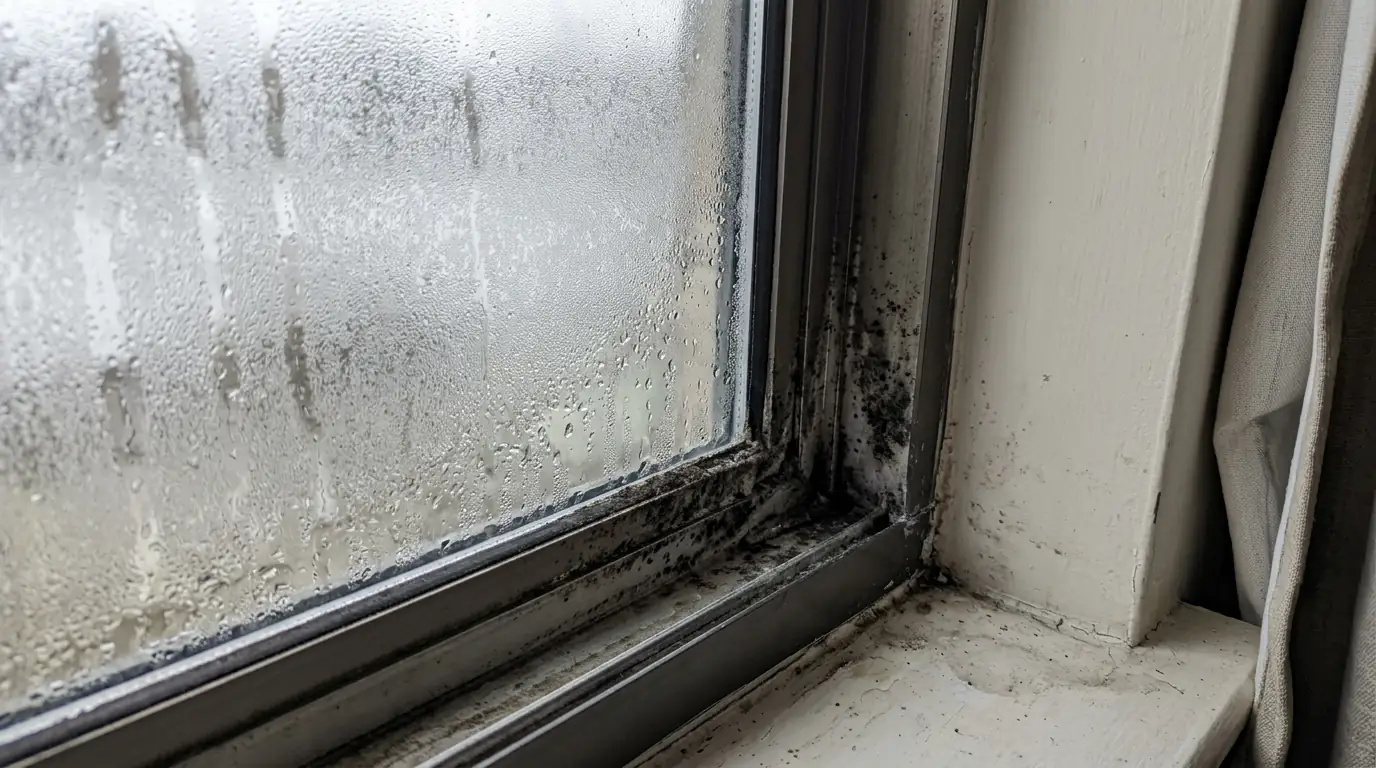
Condensation shows up worst on older single-pane and aluminum windows and in rooms with high humidity: bathrooms, kitchens and bedrooms where people sleep with the door closed. Surface mold on the frame and glass wipes off, but it will return until the moisture does not. We clean the frames and help you find the cause, whether that is a humidifier set too high, a missing bath fan, or heavy blinds that trap cold air against the glass all night long.
Soft sills and trim
Wood sills and stools soak up the water that runs off the glass. Years of it leave them black at the corners, soft when pressed and sometimes rotten through. We remove the damaged wood back to solid material, check the framing and the wall below for water that ran inside, and clean what stays. Stained drywall under a window often has growth on its back side, so we read it and open it only if the readings show moisture inside the cavity.
What a window job includes
- Checking each affected window, sill and trim piece
- Moisture readings on the wall below the window
- Cleaning surface growth on frames and glass
- Removing soft or stained wood sills and trim
- Opening the wall below only where readings call for it
- Drying and cleaning any cavity that was opened
- Advice on humidity and airflow to stop the condensation
Salt Lake winter mornings
NOAA normals put average humidity at the Salt Lake City airport near 74 percent in December and January, compared with about 36 percent in July. Cold nights and damper winter air are exactly the conditions that fog windows from the inside. It is why window mold here is a winter problem: the same frames that stay clean all summer can grow black corners by February.
How the job runs, step by step
- 1
Check the windows
Frames, sills and trim.
- 2
Read the wall below
Moisture inside the cavity.
- 3
Protect the room
Containment when wall growth is found.
- 4
Clean the surfaces
Frames and glass wiped and dried.
- 5
Remove damaged wood
Soft sills and trim bagged.
- 6
Open and dry if needed
Only where readings call for it.
- 7
Stop the cause
Humidity and airflow advice.
Questions about window and sill mold removal
Small surface spots are common. Soft wood and wall stains mean it is time for more than a wipe.
Better windows reduce condensation, but indoor humidity still matters.
Short airing helps. A bath or kitchen fan is the steadier fix.
It grows on dust and moisture sitting on vinyl, which cleans off.
The coldest walls, the dampest rooms and closed bedrooms get it first.
Answered around the clock
Black corners on your windows every winter? Call us.
Tell us how many windows and which rooms. We will explain what we would check.