Updated October 2026
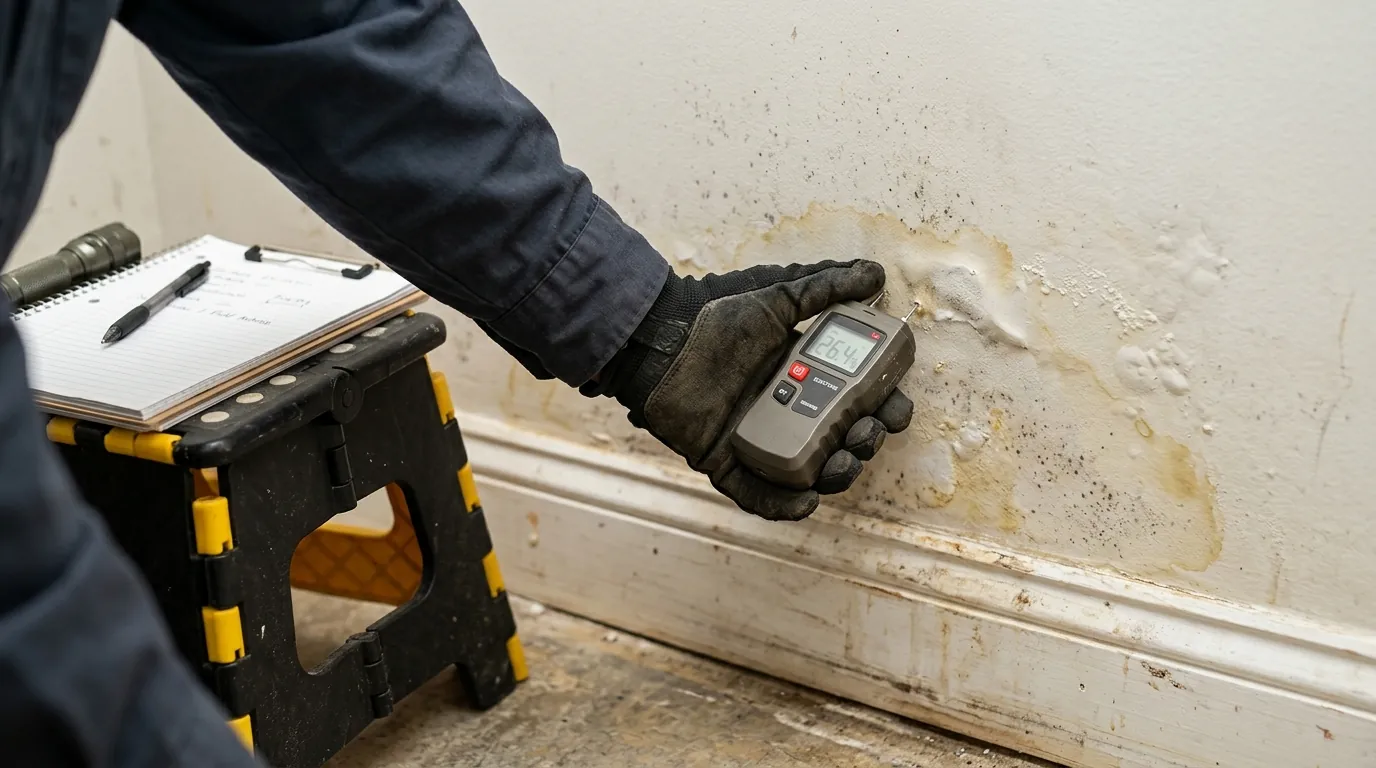
Mold insurance claim documentation in Salt Lake City means recording the damage before, during and after the work: dated photos, moisture readings mapped to rooms, a list of what was removed and why, and a written scope. Whether a claim is covered is the insurer's decision; good records make that decision faster and clearer.
Why the record matters as much as the repair
Policies treat sudden water, like a burst pipe, very differently from slow leaks and long-term seepage. The evidence of which one happened is often removed in the first hour of cleanup.
We capture that evidence first: where the water came from, how far it spread and what condition materials were in before they came out. You get it organized so you are not reconstructing it from memory later.
What documentation costs
Documentation is usually part of a drying or remediation job rather than a separate bill.
- Job sizeRooms and levels affected.
- Drying lengthDays of logged readings.
- ContentsItemized photos of belongings.
- Report formatWhat your insurer asks for.
- TestingLab results when they are needed.
Photo and moisture reading records
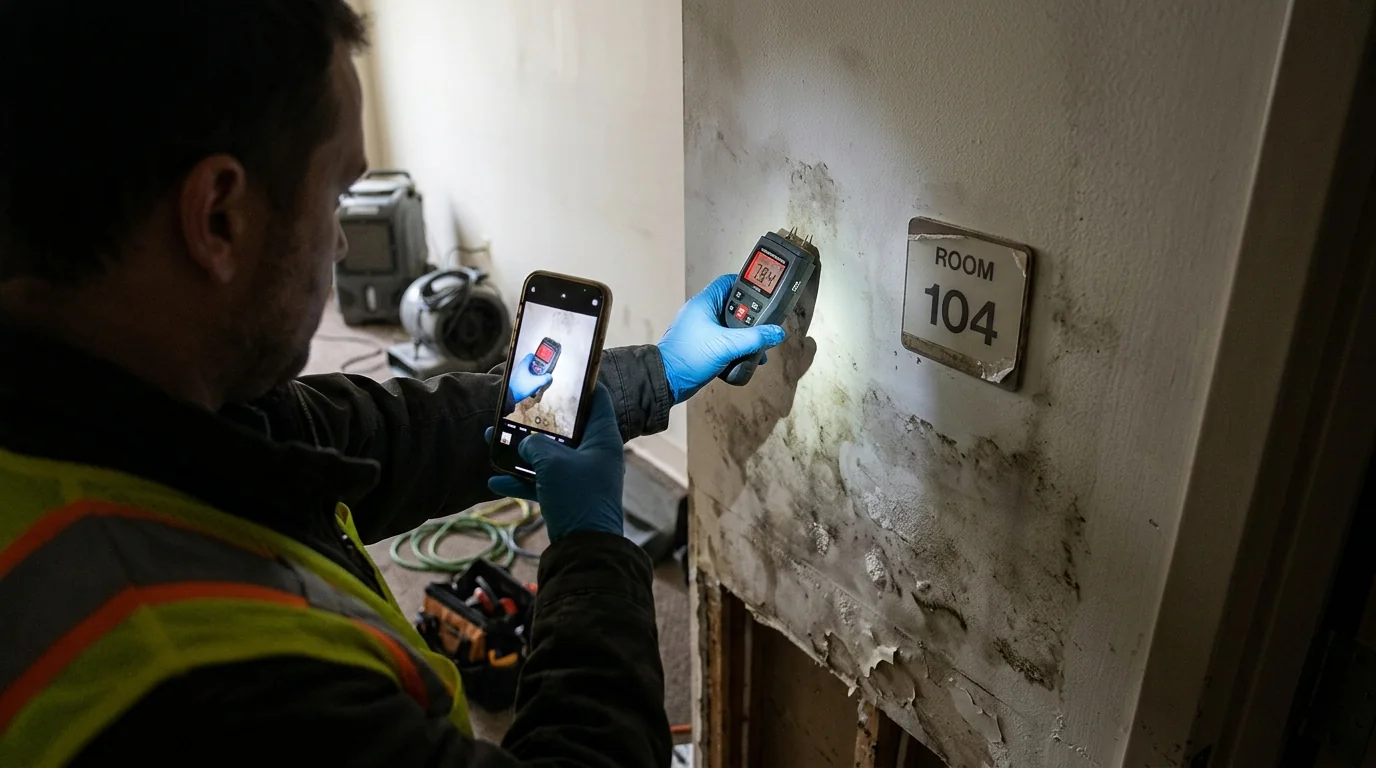
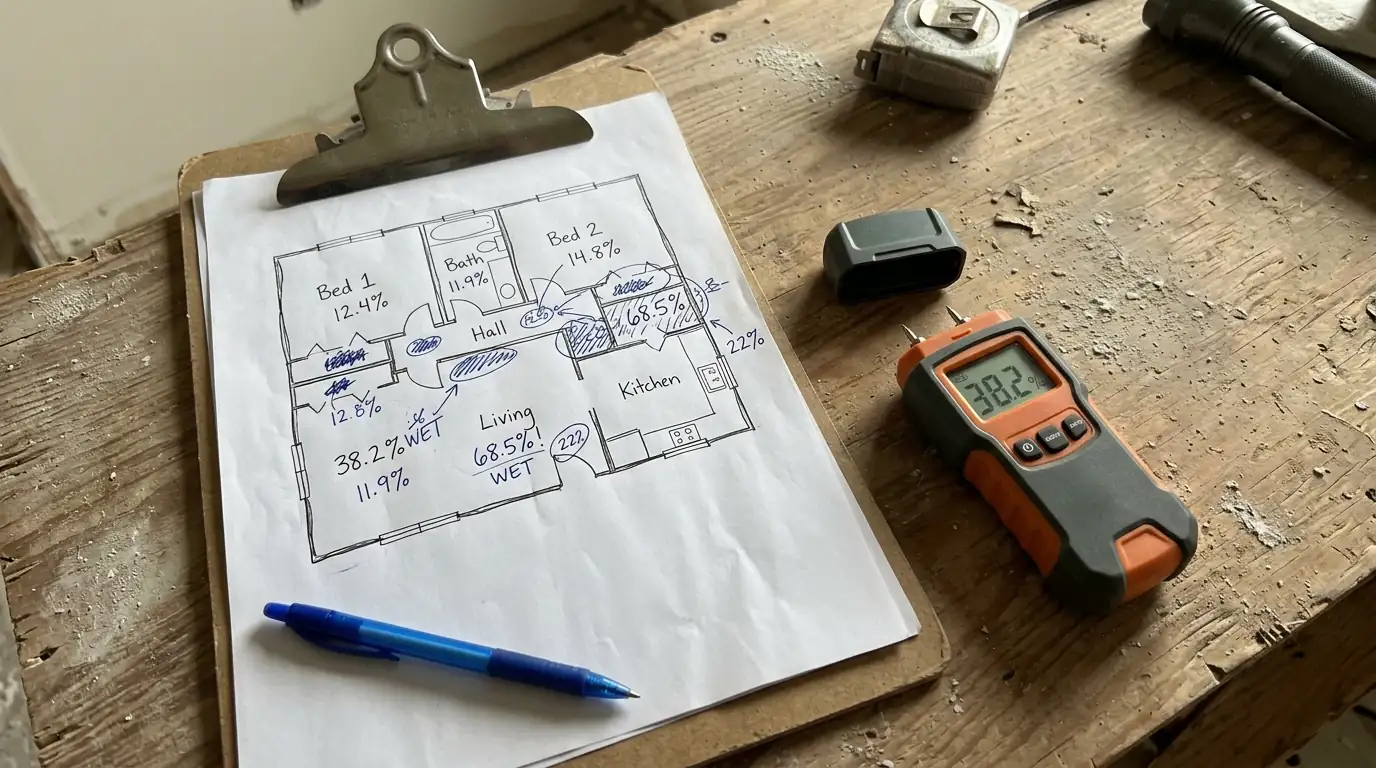
The first visit is about evidence: photos of the source before it is repaired, wide shots of each affected room, close-ups of damage, and moisture readings written onto a sketch of the space. As drying runs, we log readings at the same points each visit so the record shows how wet the materials were and when they dried. That timeline is what an adjuster needs to understand what happened and what the work involved, and it is very hard to rebuild afterward.
Written scopes for adjusters
The written scope lists what was affected, what was removed and why, how the area was contained and dried, and what testing was done. It is written plainly, in the order the work happened, with photos referenced by number. We do not decide coverage or negotiate on your behalf. What we provide is a clear, factual account of the damage and the work, which is what most adjusters ask for first. Copies go to you, and you decide who receives them.
What the claim record includes
- Dated photos of the source, the damage and each room affected
- Moisture readings marked on a simple floor sketch
- Notes on the water category: clean, gray or sewage
- A list of removed materials and the reason for each
- Daily drying readings until materials read dry
- Before, during and after photos of the remediation
- A written scope you can hand to your adjuster
A spring that filled claim files
In April 2023 Emigration Creek left its banks through Wasatch Hollow, about 100 nearby homes were under a voluntary evacuation, and 1700 South was closed between 1500 East and 1700 East. Springs like that bring a wave of water claims at once, and adjusters lean on the records homeowners can show them. Photos and readings taken on the first day are the ones that answer their first questions.
How the job runs, step by step
- 1
Photograph the source
Before it is repaired.
- 2
Map the damage
Readings on a floor sketch.
- 3
Note the water category
Clean, gray or sewage.
- 4
Record removals
What came out and why.
- 5
Log drying
Same points, every visit.
- 6
Photograph the finish
After cleaning and drying.
- 7
Hand over the file
Organized for your adjuster.
When you get the records
Photos and readings start on the first visit and continue through drying and remediation. The organized record and written scope follow once the work is finished.
If your adjuster needs something sooner, such as first-visit photos, tell us and we will send what we have.
Questions about mold insurance claim documentation
That depends on your policy and how the damage happened. We document; the insurer decides.
We provide the records and answer the adjuster's factual questions about the work.
Stop the water and take photos, then start drying. Waiting too long makes damage worse.
We record what we find honestly. Slow leaks and sudden ones look different, and the record shows which.
Yes. See contents cleaning and pack-out.
Answered around the clock
Filing a claim for water or mold? Call us first.
Tell us what happened and when. We will start the record before anything is removed.