Updated October 2026
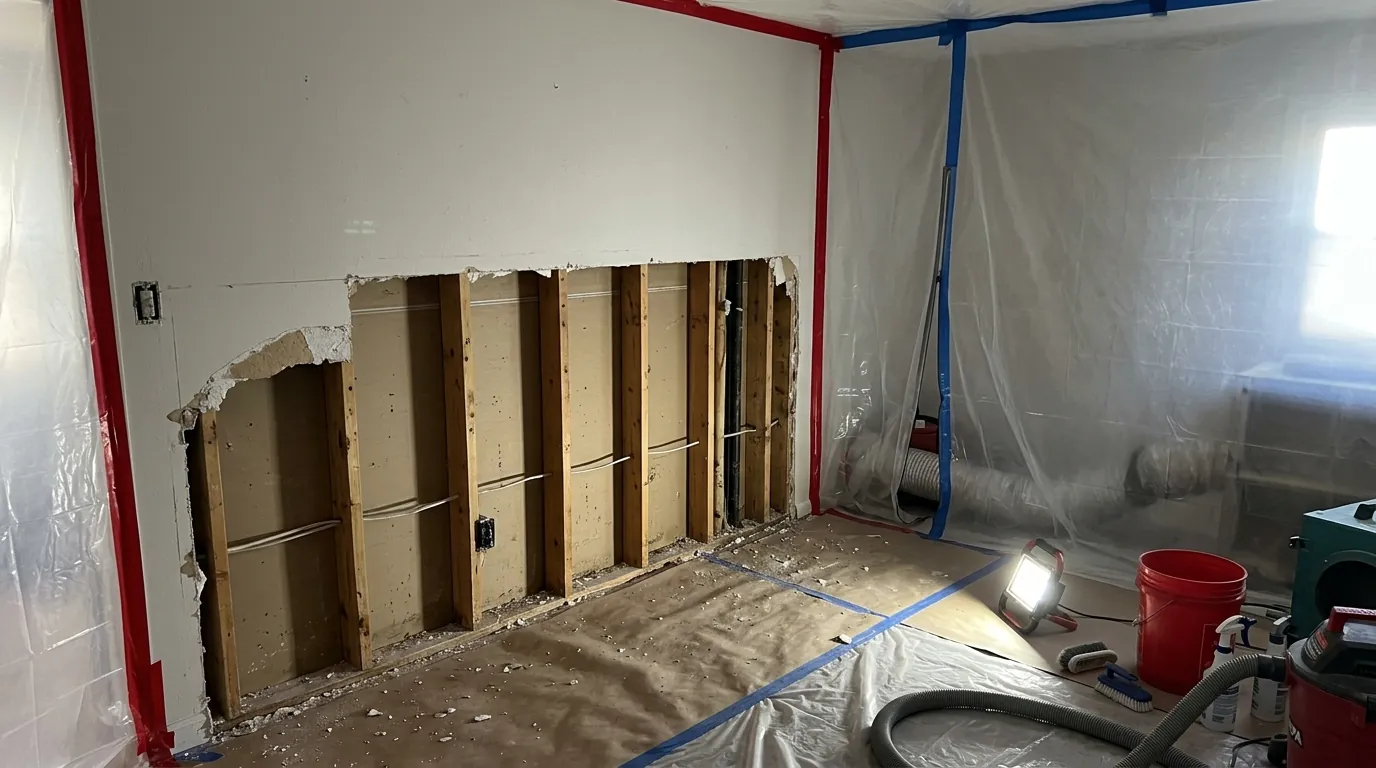
Subfloor and carpet mold removal in Salt Lake City starts by lifting the flooring to check the pad, tack strip and wood underneath. EPA guidance says drying within 24 to 48 hours prevents growth, so pad that stayed wet longer is usually replaced. Subfloor with surface mold can often be cleaned and kept.
Why the damage hides under the floor
Carpet backing and pad hold water like a sponge, and the subfloor under them dries last. A leak from a water heater, a dishwasher or snowmelt through a basement wall can leave the carpet surface dry in a day while the pad stays wet for a week.
We take readings across the room, lift the flooring where they are high, and decide piece by piece what can be dried, cleaned or has to go.
What drives the cost of floor mold removal
Floor jobs are priced by the area affected and what has to come out.
- Area affectedA corner of one room or a whole basement.
- Flooring typeCarpet comes up faster than glued plank or tile.
- Subfloor conditionCleaning costs less than cutting out panels.
- Water sourceClean-water leaks cost less than contaminated water.
- Drying timeHow long equipment runs before readings are normal.
Published price ranges
- Mold remediation per square foot: $10 to $25 per square foot (thisoldhouse.com, 2026)
- Basement mold removal: $500 to $3,000 (thisoldhouse.com, 2026)
National planning figures from the sources named, not our prices. Your number comes from the written scope.
What you can do yourself and what you should not
| Situation | Reasonable to do yourself | Call us |
|---|---|---|
| Clean-water spill caught within hours | Extract water, run fans, lift a corner to check the pad | If the pad is still wet the next day |
| Mold on the carpet back or pad | Leave it covered | Pulling it up spreads spores across the room |
| Laminate or plank edges swelling | Stop the leak and take photos | The subfloor needs readings |
| Water from a drain, toilet or sewer | Keep people and pets out | Always: that water is contaminated |
Carpet and pad removal
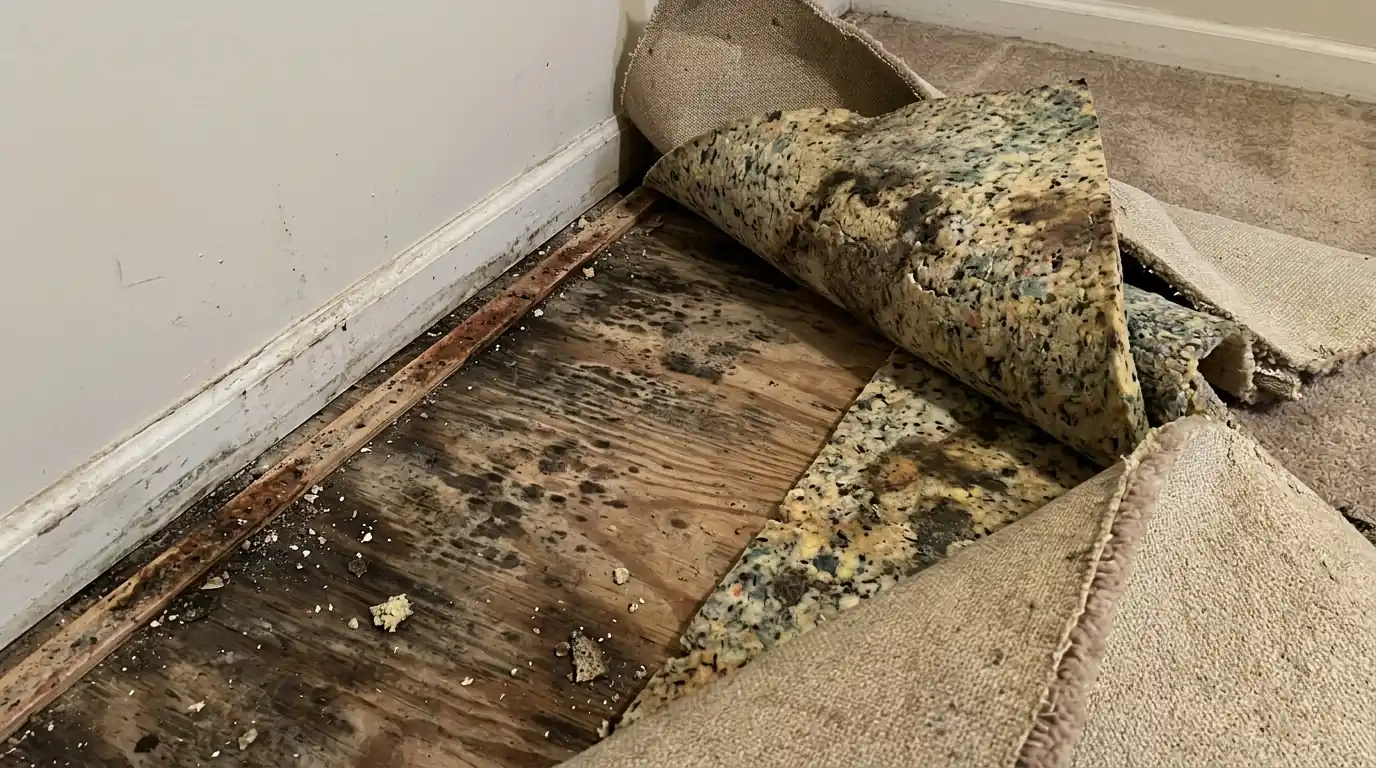
Pad is cheap and soaks up the most water, so it is almost always replaced once it grows mold. Carpet can sometimes be dried and saved after a clean-water leak caught quickly, but not after days of wet or anything from a drain or toilet. We cut carpet and pad into strips and bag them inside the work area so spores do not travel through the house, leaving the tack strip exposed so the edges can be checked. Photos of what came out go to you for any insurance claim.
Subfloor and tack strip mold
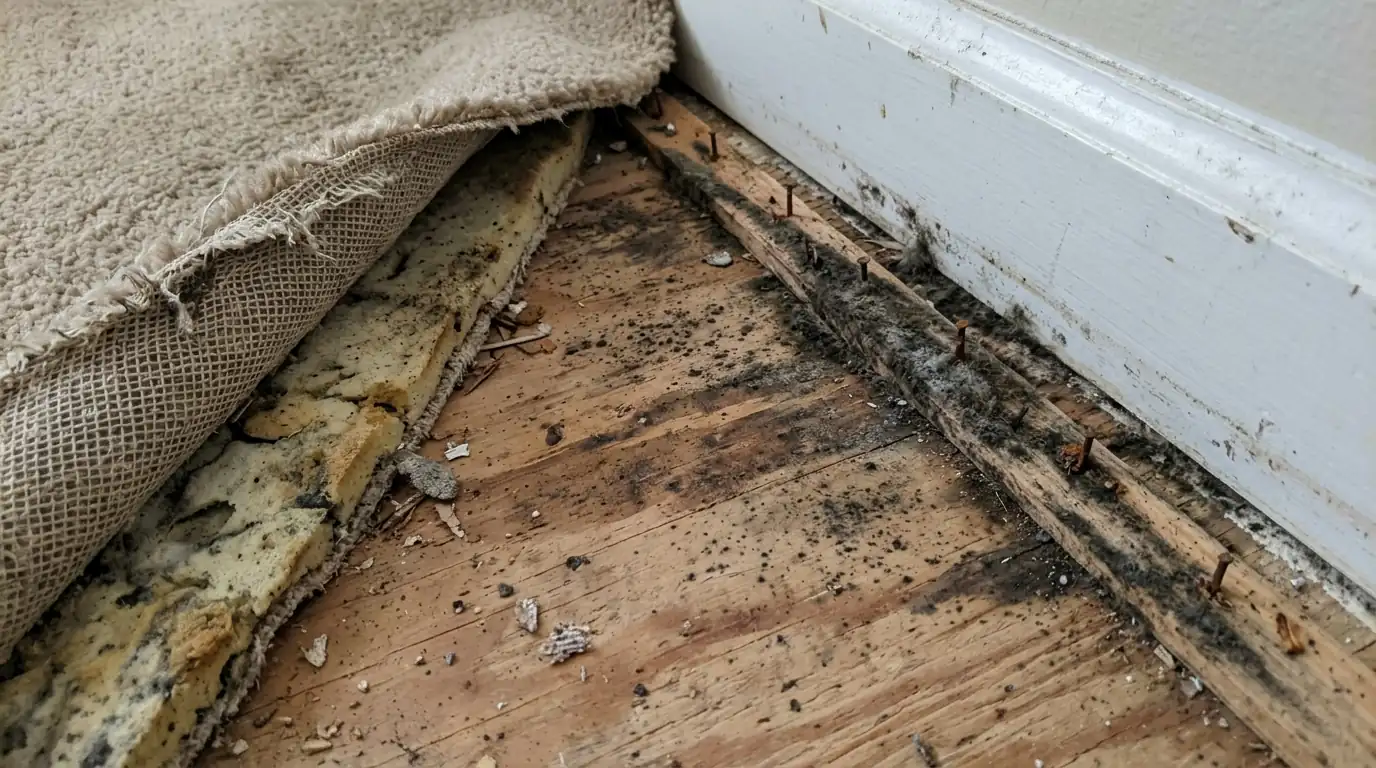
Tack strip sits right where water pools against the wall, so it stays wet longer than anything else. Moldy strips are pulled and replaced rather than cleaned. The subfloor is usually plywood or OSB upstairs and concrete in basements. Surface growth on plywood can be sanded or HEPA vacuumed and cleaned, while OSB that has swollen or softened gets cut out. Concrete is cleaned and dried, then checked again with the same meter before any new flooring or underlayment goes down.
Mold under laminate and vinyl plank
Floating floors trap water between the planks and the subfloor, and plastic underlayment keeps it from drying. Growth under laminate often shows up as a musty smell, swollen plank edges or dark lines at the seams. Swollen laminate is not salvageable. Vinyl plank can sometimes be lifted, cleaned and reinstalled if the click joints survive. We lift enough rows to find the edge of the wet area, clean and dry the subfloor, and tell you honestly whether the planks can go back.
Newer homes flood too
Floor damage is not only an old-house problem. In April 2023 about two dozen new homes in Kaysville in Davis County were told to evacuate when spring runoff collapsed sections of their streets. Newer basements are usually finished with carpet over a slab, so water that gets in through a window well or foundation crack goes straight into the pad, where nobody sees it until the smell arrives.
Signs the problem is under the floor
Musty carpet after a leak
The smell comes back even after the surface dries.
Cupped or swollen planks
Edges lift near a tub, dishwasher or wall.
Damp carpet along a wall
Especially basement walls after spring snowmelt.
Dark staining on the carpet back
Visible when you lift a corner near the wet area.
Soft spots underfoot
The subfloor may have lost strength, not only grown mold.
How the job runs, step by step
- 1
Readings across the room
Find where the wet area starts and ends.
- 2
Contain the area
Plastic and negative air when growth is present.
- 3
Lift and bag
Carpet, pad and tack strip bagged in the room.
- 4
Clean the subfloor
HEPA vacuum, sand if needed, wipe down.
- 5
Cut out bad panels
Swollen or soft sections removed.
- 6
Dry and recheck
Equipment runs until readings are normal.
- 7
Ready for flooring
Photos and readings for your installer.
Questions about subfloor and carpet mold removal
Sometimes, after a clean-water leak dried within a day or two. Pad soaked longer, or anything touched by drain water, gets replaced.
It grows on the dust, pad and backing on the concrete more than the concrete itself. Cleaning and drying the slab usually handles it.
That depends on your policy and the cause. We document everything so your adjuster can decide.
Readings. We check the same points until they match dry areas of the house.
Not if there is visible mold on the back. Dragging it across the room spreads spores.
Answered around the clock
Musty carpet or a soft floor? Call now.
Tell us where the water came from and how long it sat. We will tell you what to do tonight and when we can be there.