Updated October 2026
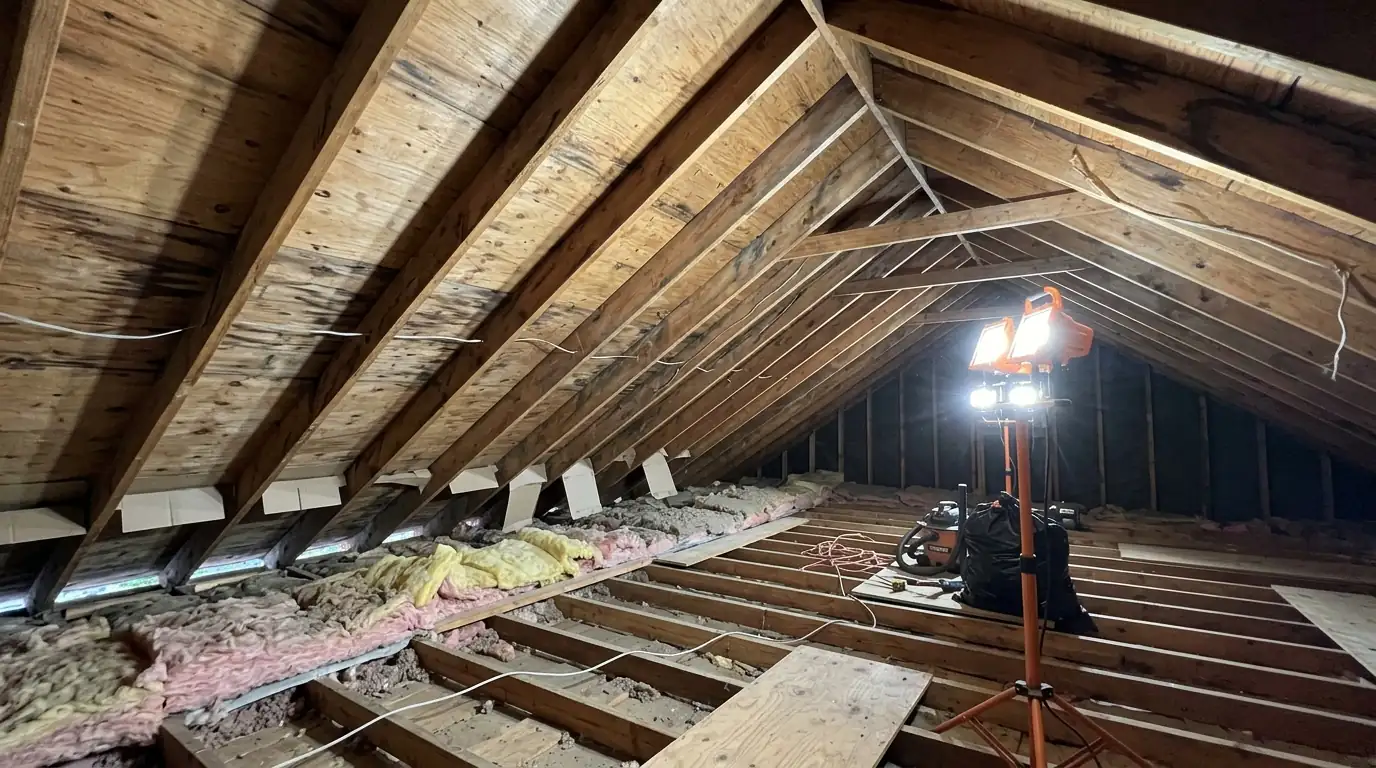
Crawl space mold removal in Salt Lake City means HEPA cleaning growth off floor joists, beams and subfloor, removing wet debris and insulation, and controlling the moisture coming off the soil. This Old House puts typical crawl space jobs at $500 to $2,000, more when access is tight.
Why crawl spaces grow mold
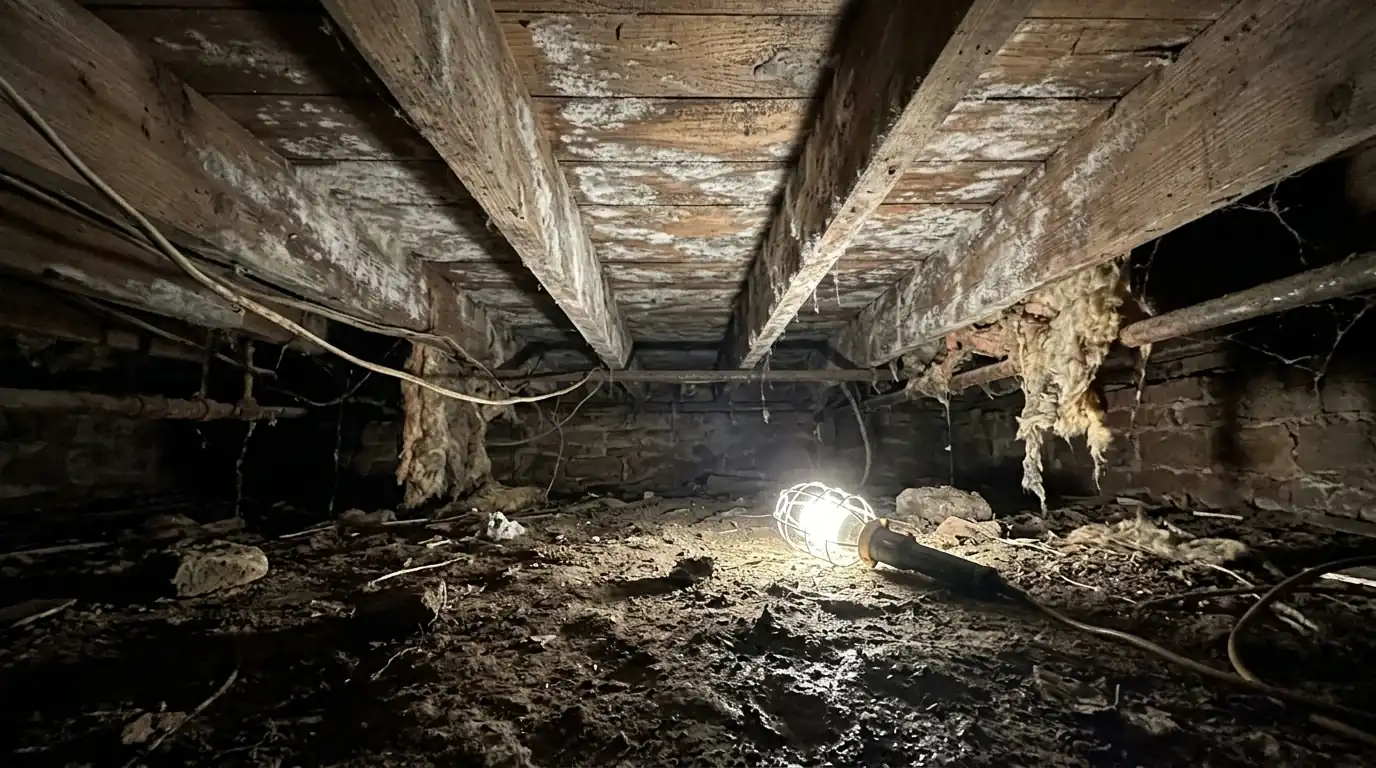
A crawl space sits over bare soil that gives off moisture all year, and snowmelt that pools against the foundation soaks it further. The wood above stays cool and damp, and growth spreads along the joists before anyone upstairs notices.
Air rises from the crawl space into the house, so a musty crawl space usually means a musty first floor.
What crawl space mold removal costs
Access drives crawl space pricing more than anything else.
- ClearanceTight crawl spaces take longer per square foot.
- Area affectedA corner or the whole footprint.
- InsulationRemoving and bagging wet batts.
- DebrisOld plastic, wood scraps and trash.
- Moisture controlVapor barrier or encapsulation afterward.
Published price ranges
- Crawl space mold removal: $500 to $2,000 (thisoldhouse.com, 2026)
- Crawl space vapor barrier: $2 to $4 per square foot installed (homeguide.com, 2026)
National planning figures from the sources named, not our prices. Your number comes from the written scope.
Clean it, or clean it and seal it?
| Approach | What it involves | Best when |
|---|---|---|
| Clean the framing only | HEPA vacuum and clean joists and beams | The soil is dry and the growth came from a one-time leak |
| Clean and add a vapor barrier | Cleaning plus a plastic ground cover | Damp soil is the steady moisture source |
| Clean and encapsulate | Cleaning, sealed liner, vents and rim joists sealed | Standing water or high humidity every summer |
Mold on floor joists and beams
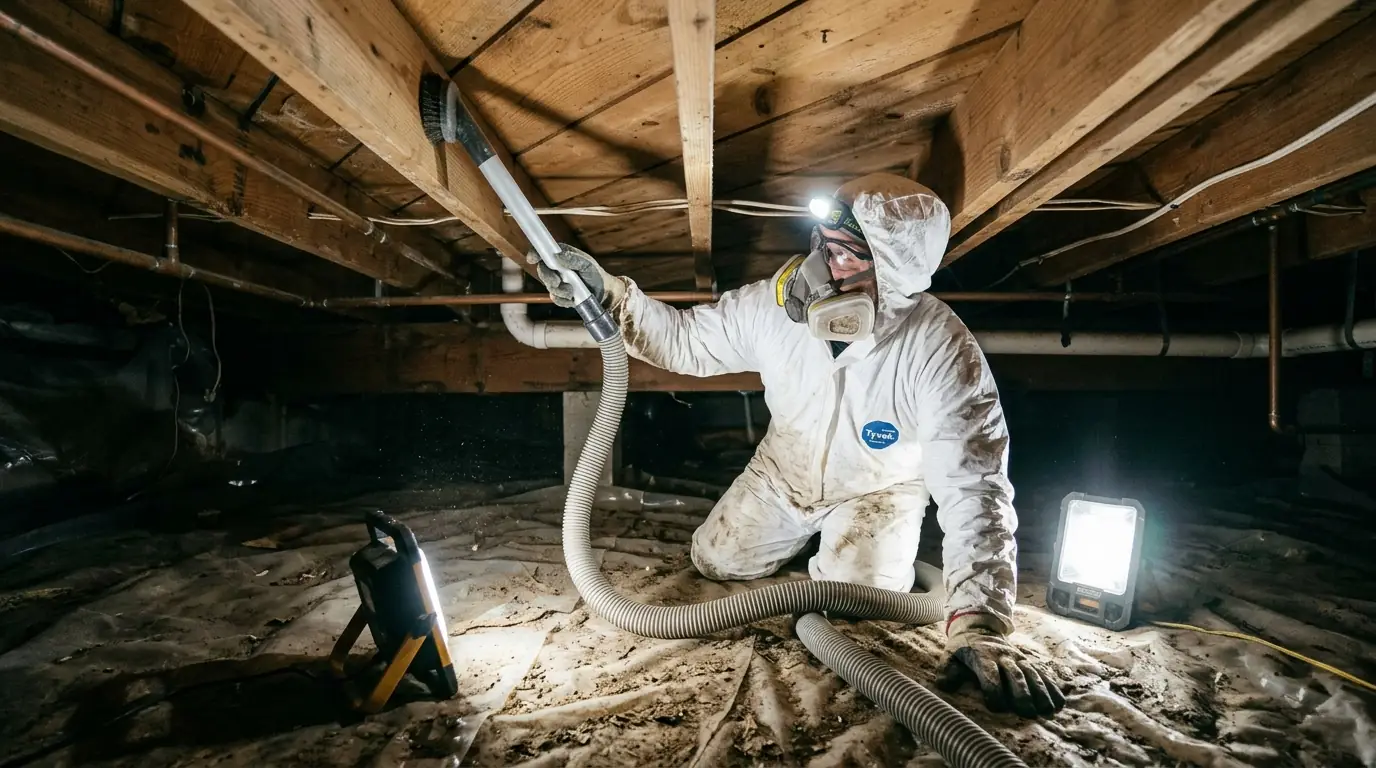
Growth in a crawl space shows up first on the underside of the subfloor and the sides of joists near the foundation walls, where the wood stays coolest. We HEPA vacuum the framing, clean it with a detergent or antimicrobial solution and let it dry. Heavier growth gets sanded back to clean wood. Wet or fallen insulation between the joists comes out and is bagged. We check readings in the sill plates and rim joists too, because rot there is a structural question and not only a mold one.
Wet soil and standing water
Cleaning the wood does not help for long if the soil below keeps the space damp. Standing water after snowmelt points to grading, downspouts or a foundation crack that needs attention outside. Damp soil with no puddles is usually handled with a heavy ground cover. We remove wet debris and old plastic, let the space dry out, then point you to the right next step, whether that is a full encapsulation or simple fixes to the gutters, downspouts and grading that cost far less.
Snowmelt and crawl spaces along the Wasatch Front
Salt Lake City averages under 60 inches of snow a year at the airport, with far more in the mountains above the Wasatch Front. When that melts, water moves through the soil and collects against foundations, and a crawl space is the lowest open space it can reach. That is why crawl space calls pick up in spring, and why a crawl space that looked fine in October can be damp and musty by May.
Signs the problem is under the floor
Musty first-floor rooms
Worse in summer and near floor registers.
Soft or bouncy floors
Wood that stayed damp for years loses strength.
Sagging or torn insulation
Wet batts drop out of the joist bays.
Standing water after snowmelt
Puddles in low spots of the soil.
White or dark fuzz on joists
Visible with a flashlight from the access hatch.
How the job runs, step by step
- 1
Look in first
Readings and photos from the hatch and inside.
- 2
Find the water
Soil, plumbing, grading or condensation.
- 3
Remove debris
Wet insulation and old plastic bagged.
- 4
Clean the framing
HEPA vacuum, clean and sand where needed.
- 5
Dry it out
Air movers and a dehumidifier.
- 6
Recheck readings
Joists and sills back to normal.
- 7
Plan moisture control
Barrier, encapsulation or outside fixes.
Questions about crawl space mold removal
Yes. Air from the crawl space rises into the living space above it.
Spraying without cleaning leaves the growth in place. We remove it, then treat if needed.
Not always. A dry crawl space with a one-time leak may only need cleaning.
Most. Very low spaces take longer and cost more per square foot.
No. Softness means the wood lost strength and may need repair.
Answered around the clock
Musty floors? Let us look underneath.
Tell us about the smell and the house. We will explain what we check in the crawl space.