Updated October 2026
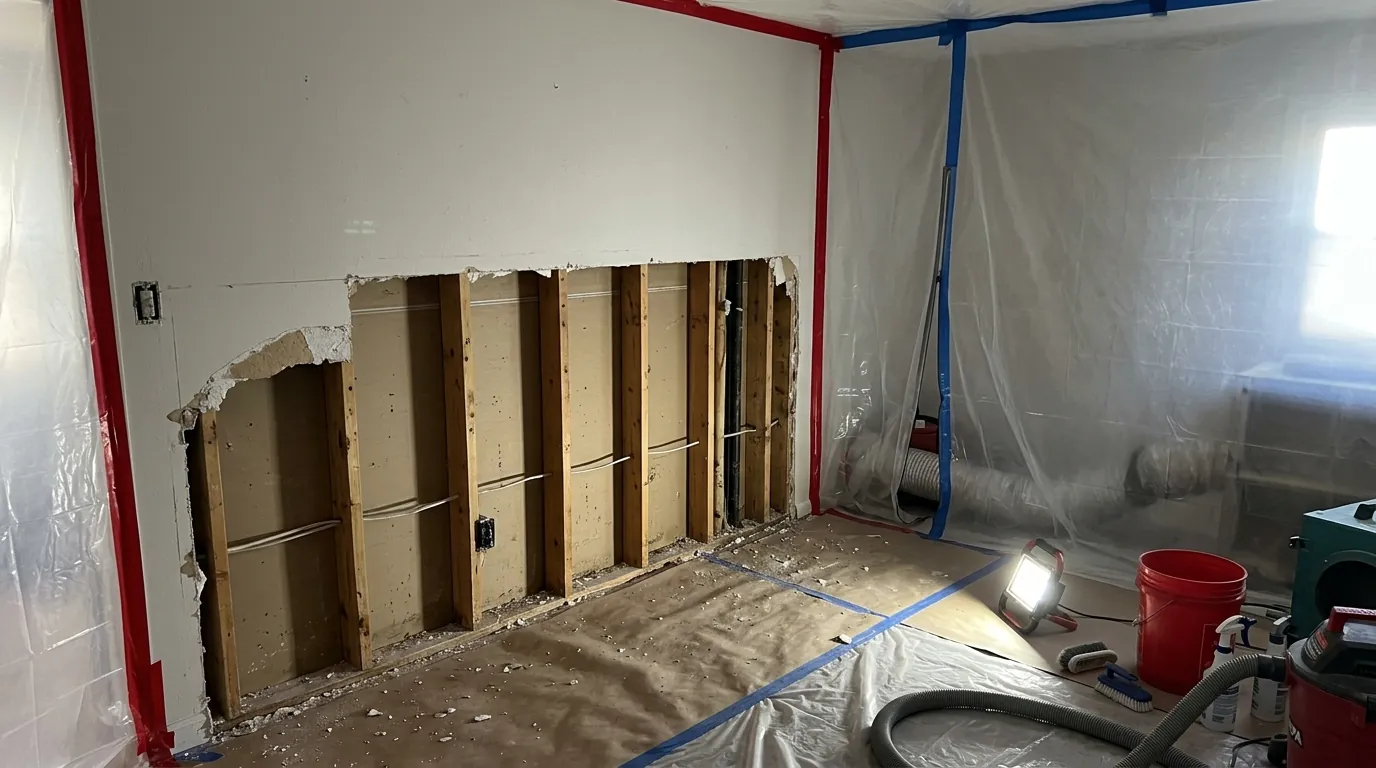
Mold removal in Salt Lake City is done inside plastic containment under negative air, so spores stay in the work area while moldy drywall, insulation and carpet come out and framing is HEPA cleaned. Public health guidance citing the EPA suggests a professional once growth covers more than about 10 square feet.
What professional mold removal involves
Mold removal is three jobs. First, stop the water, because growth returns on anything that stays wet. Second, remove porous materials like drywall, insulation and carpet that cannot be cleaned. Third, clean and dry what stays: studs, joists and concrete.
All of it happens inside containment. That is what separates remediation from a scrub-down, because without it the demolition itself spreads spores into rooms that were clean.
What mold removal costs
Remediation is usually priced by the square footage of affected material, plus containment and any testing.
- Affected areaSquare feet of drywall, insulation or flooring coming out.
- AccessAttics, crawl spaces and wall cavities take longer.
- Containment sizeA closet versus a whole basement level.
- Moisture sourceSome jobs need drying before removal starts.
- TestingClearance samples add lab cost when needed.
Published price ranges
- Mold remediation per square foot: $10 to $25 per square foot (thisoldhouse.com, 2026)
- Mold remediation, typical total: $1,200 to $3,750, about $2,300 average (thisoldhouse.com, 2026)
- Mold remediation per square foot, higher published band: $15 to $30 per square foot, $1,500 to $6,000 average (homeguide.com, 2026)
National planning figures from the sources named, not our prices. Your number comes from the written scope.
When a small patch is yours and when it is ours
| Situation | Reasonable to handle yourself | Better left to us |
|---|---|---|
| Spots on grout or a window frame | Scrub with detergent and water, dry it, watch it | If it keeps coming back |
| A patch under about 10 square feet on paint | Clean it and fix the moisture | If the wall behind feels damp |
| Growth on soft or stained-through drywall | Not a DIY job | Always: the back side is usually worse |
| Anything after sewage or a flooded basement | Not a DIY job | Always: contaminated water changes the job |
Containment and negative air
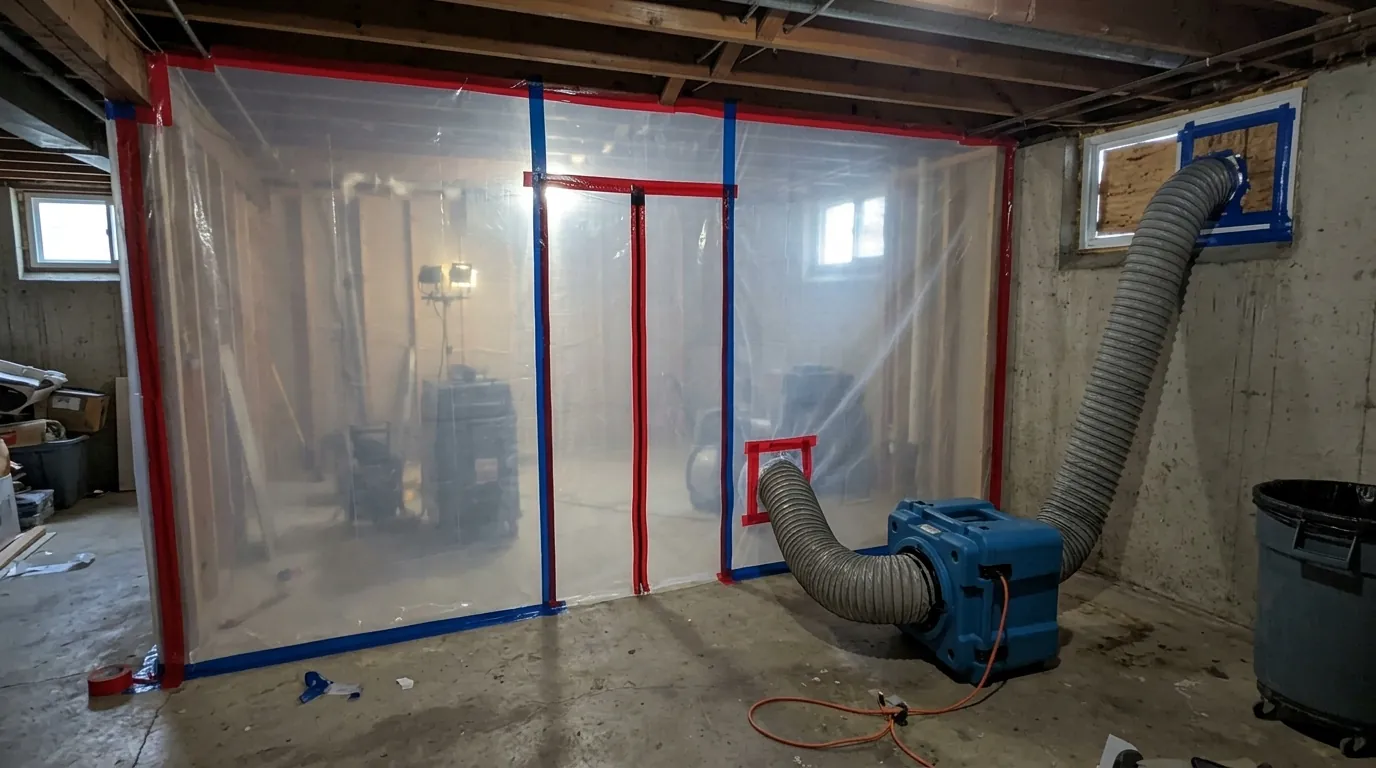
Containment means plastic sheeting taped floor to ceiling around the work area, a zipper door to get in and out, and the HVAC registers inside sealed off. A HEPA air scrubber pulls air out of the space and exhausts it, keeping the pressure inside lower than the rest of the house so air leaks in, not out. For a closet or a small patch, a mini containment around the spot is enough. For a finished basement, the whole level gets sealed.
Removing moldy drywall and insulation
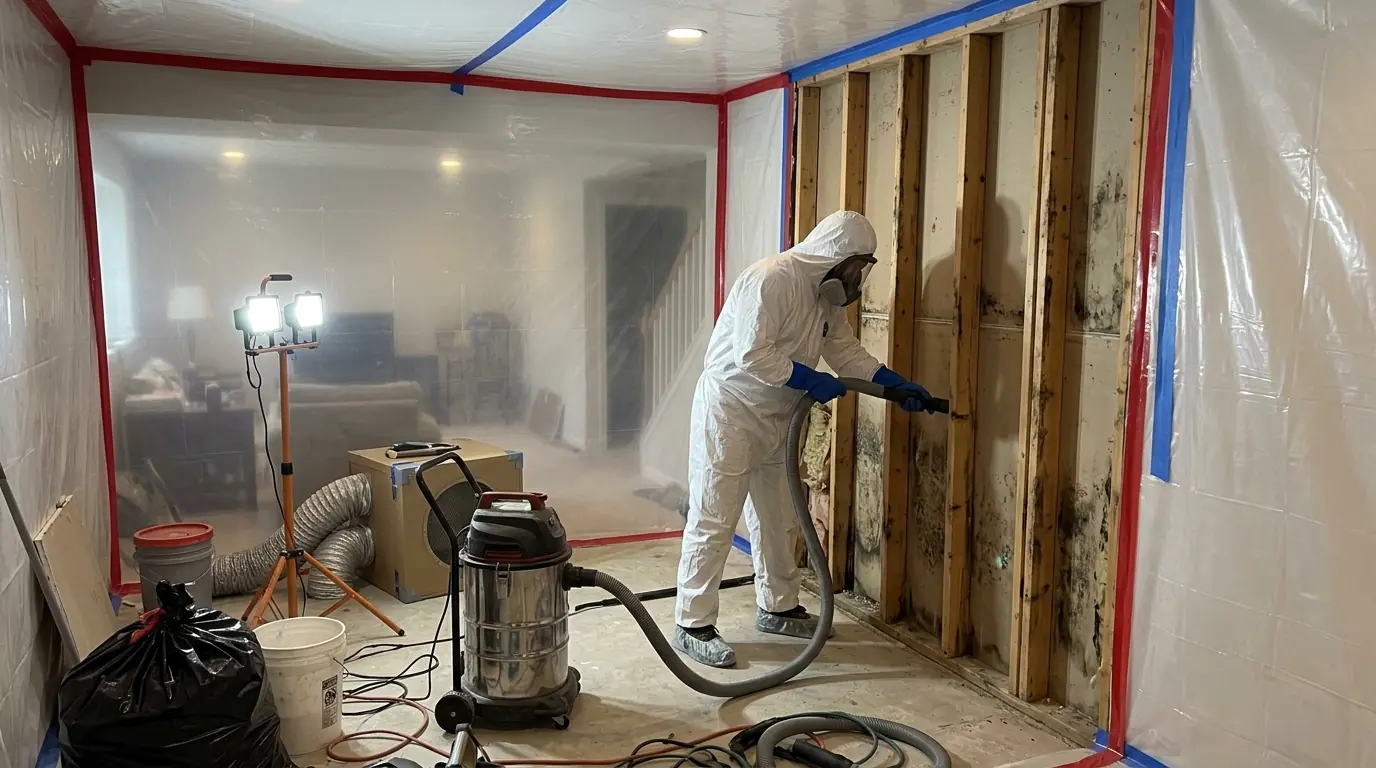
Drywall paper and insulation feed mold and cannot be cleaned once growth gets into them. We cut drywall past the visible growth to where readings are normal and the back side is clean, then bag it inside the containment. Wet or moldy insulation comes out the same way, bagged before it leaves the room. Cutting past the edge matters because growth on the back of drywall is often wider than the stain on the front. Cut lines are left straight and clean for whoever rebuilds.
HEPA vacuuming and cleaning framing
Studs, joists and sheathing usually stay. Once the drywall is out, we HEPA vacuum every exposed surface to pick up loose spores, wipe it with a detergent or antimicrobial cleaner and let it dry. Staining that remains after cleaning is usually cosmetic, and wood that is still sound does not need to be replaced. Where growth has gone deeper than the surface, sanding or media blasting takes it back to clean wood. Framing is dried to normal readings before anyone thinks about insulation.
What a remediation includes
- An inspection and moisture map before any demolition
- Containment with a zipper door and sealed HVAC registers
- A HEPA air scrubber running for the whole job
- Bagged removal of moldy drywall, insulation and flooring
- HEPA vacuuming and wiping of framing and concrete
- Drying back to normal moisture readings
- A clearance check before the containment comes down
Finished basements across the valley
Across Salt Lake County the median home was built in 1986, and many have basements finished later with carpet, drywall and a bedroom or two. Those basements are where hidden growth tends to show up, because finished walls hide a foundation leak until the drywall stains or the carpet smells. The fix depends on the source: grading and window wells for snowmelt, plumbing for supply leaks, and humidity control where nothing leaks at all.
How the job runs, step by step
- 1
Inspect and map moisture
We find the source before scoping removal.
- 2
Write the scope
What comes out, what gets cleaned, what gets tested.
- 3
Seal the area
Plastic, a zipper door and sealed registers.
- 4
Start negative air
The HEPA scrubber runs until the end.
- 5
Remove and bag
Porous materials come out inside containment.
- 6
Clean and dry
HEPA vacuum, wipe down and dry the framing.
- 7
Clear, then open up
A final check before the plastic comes down.
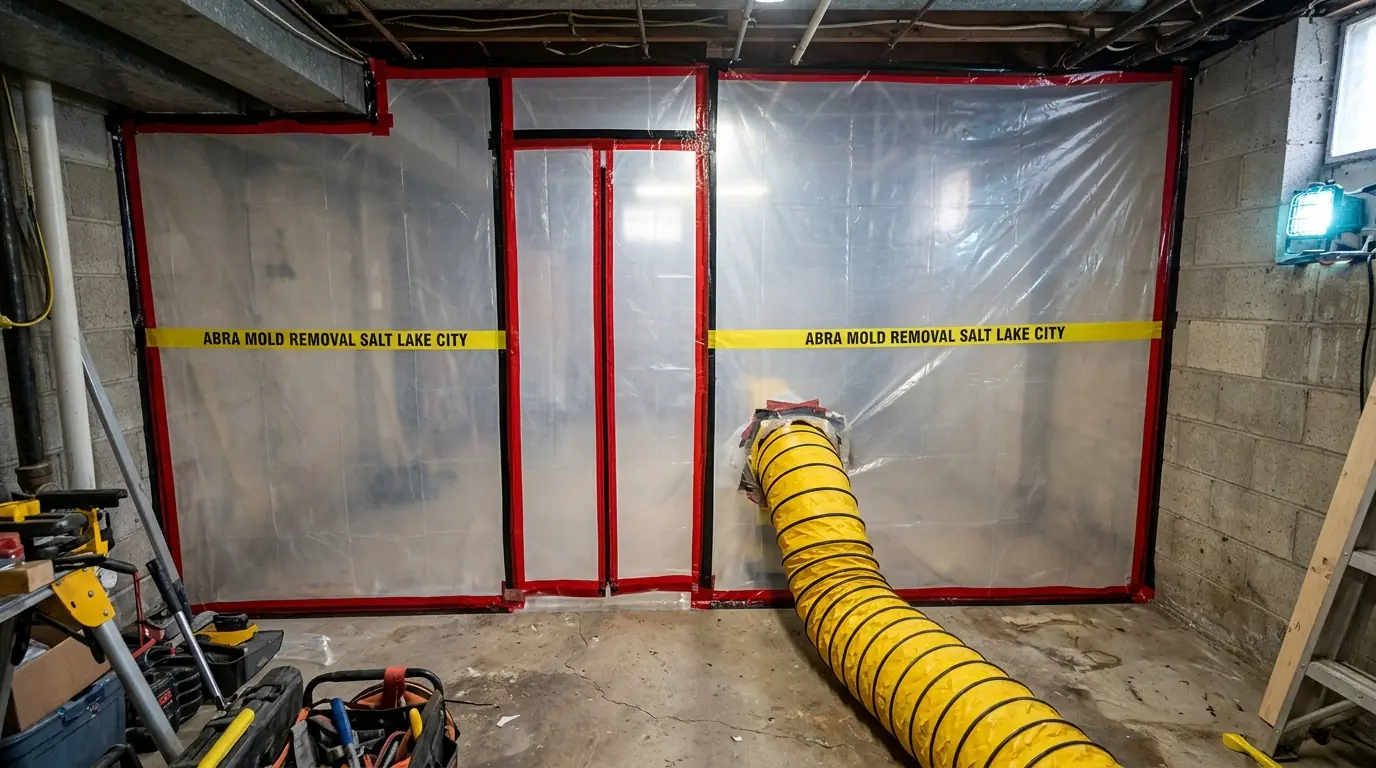
Nothing leaves unbaggedDrywall, pad and insulation are bagged inside the containment before they are carried out.
Questions about mold removal
Remove it. Spraying without removal leaves dead spores and staining behind, and dead spores can still bother sensitive people.
Usually. Containment keeps the work area separate. People with asthma may prefer to stay elsewhere during larger jobs.
It returns only if the moisture does, which is why we deal with the source and dry everything before it is closed.
The containment and removal are the same. See black mold removal for what does change.
Not when growth is visible and the source is clear. Mold testing helps when growth is hidden.
Answered around the clock
Found mold? Keep the door closed and call us.
Tell us where it is and what got wet. We will explain the next steps and when we can be there.