Updated October 2026
Bathroom mold removal in Salt Lake City starts with finding where water gets behind the surface: failed grout or caulk, a leaking shower valve or pan, or a toilet or vanity leak. SERVPRO puts bathroom jobs at $500 to $1,000; removing tile or a tub surround costs more.
Surface mold versus mold behind the wall
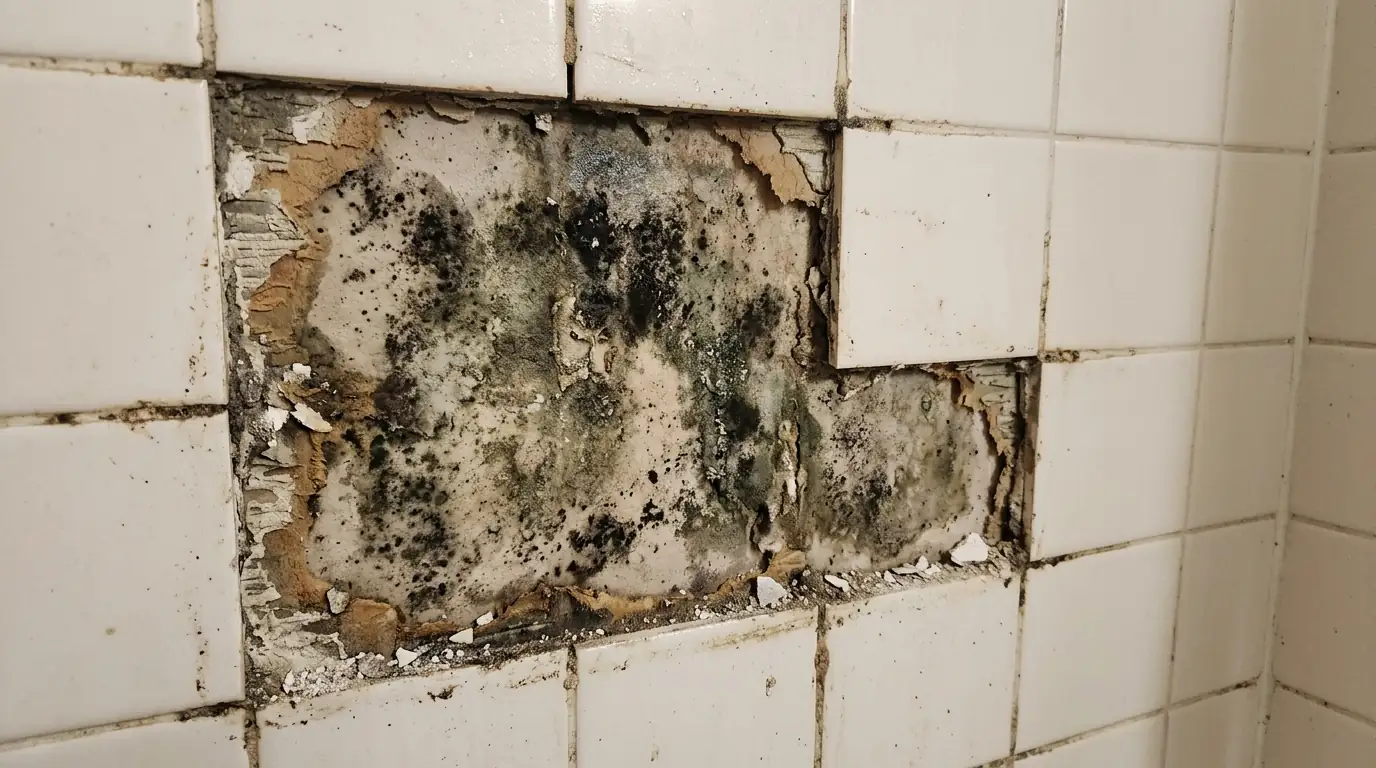
Every shower grows a little mildew on grout and caulk. That is cleaning. The problem starts when water gets through the tile, the caulk or a valve and soaks the wall behind, where it stays wet and hidden.
We read the walls and floor around the tub, shower and toilet to tell the two apart before anything is torn out.
What bathroom mold removal costs
Bathroom costs depend on whether the growth is on the surface or behind finished tile.
- Surface or behindCleaning paint versus removing tile and board.
- Tile removalTub surrounds and shower walls take longer.
- SubfloorSoft floor around a toilet needs replacing.
- Fan fixesUndersized or attic-vented fans.
- PlumbingValve or supply repairs while the wall is open.
Published price ranges
- Bathroom mold removal: $500 to $1,000 (servpro.com, 2026)
- Mold remediation per square foot: $10 to $25 per square foot (thisoldhouse.com, 2026)
National planning figures from the sources named, not our prices. Your number comes from the written scope.
What you can clean and what you should not
| Situation | Reasonable to do yourself | Call us |
|---|---|---|
| Spots on grout and caulk | Scrub, rinse, dry and run the fan longer | If it comes back within weeks |
| Mold on the painted ceiling | Clean it and check the fan | If the paint is peeling or the drywall is soft |
| Loose tile or cracked grout lines | Stop using that shower | Water is likely behind the tile |
| Soft floor by the toilet | Stay off the soft area | The subfloor needs readings |
Shower and tub surrounds
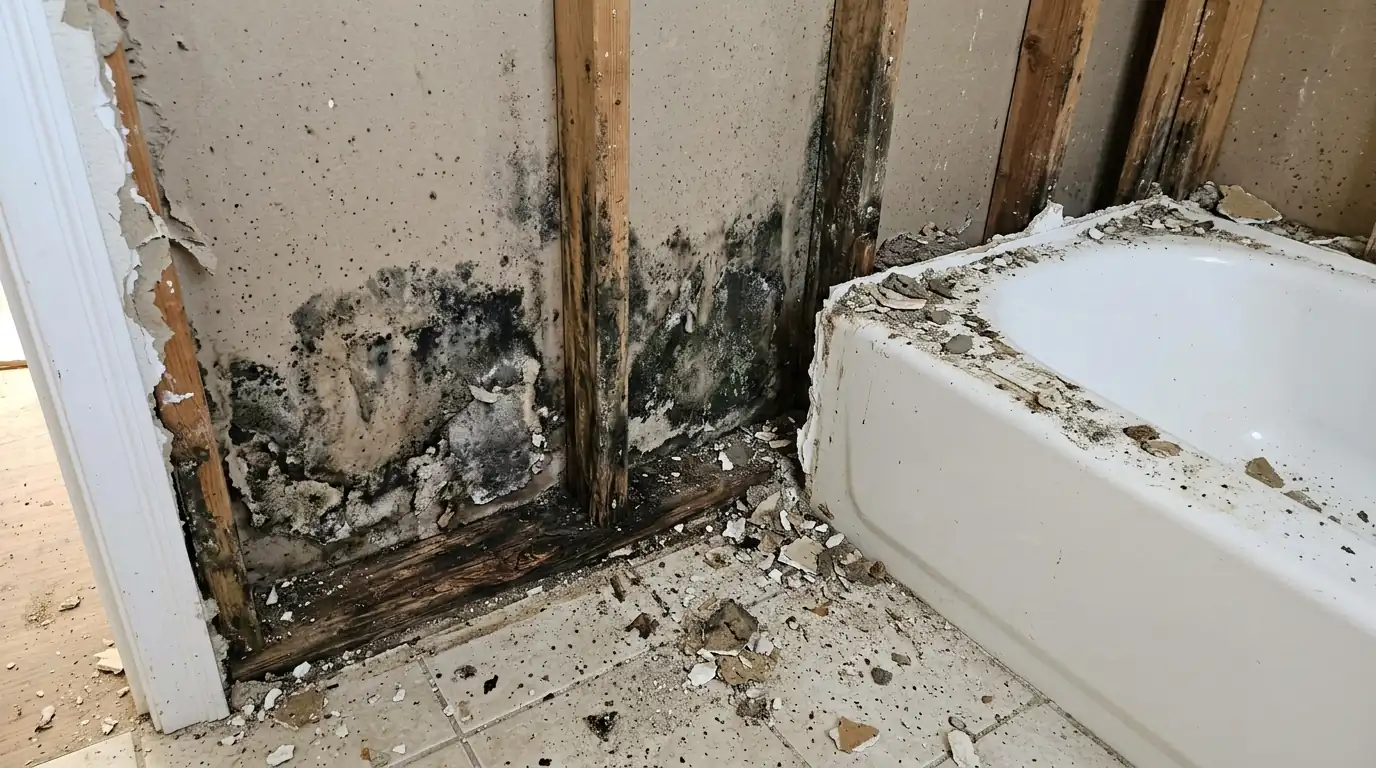
Tile and grout are not waterproof on their own. Once grout cracks or caulk fails at the tub line, water reaches the backer board or drywall behind and stays there. Old showers built on drywall rather than cement board fail fastest. We read the wall, remove the tile and wet board where growth is found, clean the studs and dry the cavity. Readings also tell us whether the shower valve is leaking inside the wall, which is a plumbing fix that has to happen before rebuild.
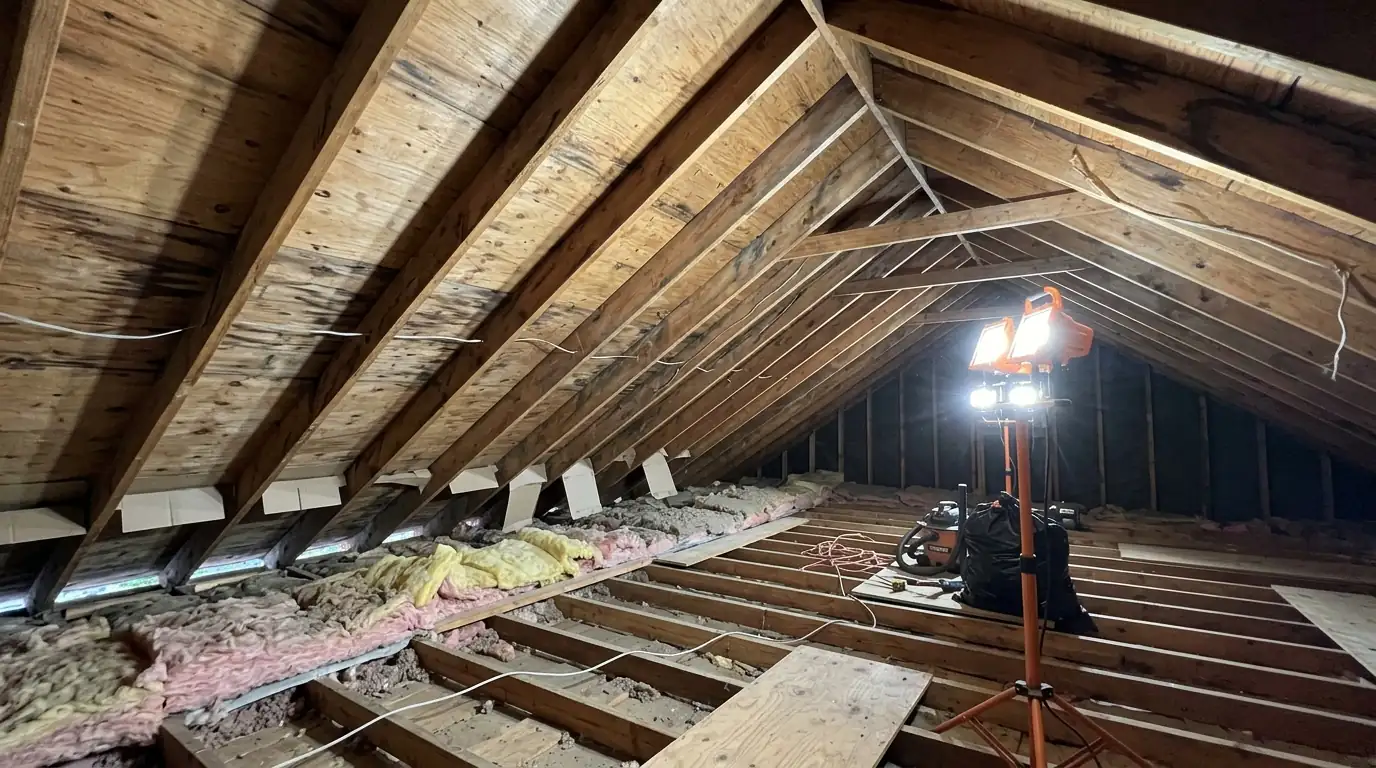
Ceiling mold above the shower
Gray spots on the ceiling above a shower usually mean steam is condensing faster than the fan removes it. Sometimes the fan is too small, sometimes it vents into the attic, and sometimes nobody runs it long enough. Light surface growth on paint cleans off. Peeling paint or soft drywall means the moisture has soaked in, and that section comes out. We check the fan duct in the attic at the same time, because a ceiling cleaned under a failed fan will grow back by spring.
Leaks behind toilets and vanities
A toilet that rocks slightly or a supply line that weeps can soak the subfloor for months without a visible puddle. Vanity drains and supply valves leak into the cabinet and the wall behind it. We pull the vanity or read around the toilet base, remove moldy drywall and flooring, and clean and dry the framing and subfloor. Soft subfloor around a toilet flange is a structural repair and gets flagged before the new floor goes down, so the toilet is reset on solid wood.
Mid-century bathrooms in Davis County
About 41 percent of Bountiful's homes were built from the 1940s through the 1960s, and many of their bathrooms still have original tile set over plaster or early drywall rather than cement board. Those walls hold up for decades until the grout gives out, and then they soak up water fast. When we open a shower wall in a house from that era, the board behind the tile is usually the first thing that has to go.
Signs the problem is behind the tile
Loose or hollow-sounding tile
Tiles that move or sound hollow when tapped.
Stains on the other side of the wall
Paint bubbling in the next room or closet.
Ceiling spots above the shower
Steam condensing where the fan does not reach.
A soft floor near the toilet
Water under the vinyl or tile around the base.
A musty smell after showers
Worse when the door stays closed.
How the job runs, step by step
- 1
Read the room
Walls, floor and ceiling around the fixtures.
- 2
Find the leak
Grout, valve, pan, toilet or vanity.
- 3
Contain the bathroom
Door sealed and negative air.
- 4
Remove damaged materials
Tile, board, drywall or flooring.
- 5
Clean the framing
HEPA vacuum and wipe down.
- 6
Dry and fix
Cavity dried, leak repaired.
- 7
Ready to rebuild
Readings normal before new board.
Questions about bathroom mold removal
On the surface, no. Clean it and run the fan longer. Mold behind the tile is different.
Only when the wall behind reads dry. Otherwise the tile has to come off.
Usually the fan is too weak, vents into the attic or does not run long enough.
Once the wall is rebuilt, which happens after the cavity is dry.
Yes. See bathroom exhaust fan installation.
Answered around the clock
Bathroom mold that keeps coming back? Call us.
Tell us where it grows and how long it has been happening. We will explain what we would check.