Updated October 2026
Attic ventilation correction in Salt Lake City means clearing insulation away from the eaves, installing baffles so outside air can enter at the soffits, and making sure there is enough exhaust at the ridge or roof vents. A balanced attic stays cold and dry in winter, which prevents both sheathing mold and ice dams.
What attic ventilation is supposed to do
In winter, a well-vented attic stays close to the outdoor temperature. Cold air comes in at the eaves, sweeps across the underside of the roof and leaves at the top, taking any moisture that leaked up from the house with it.
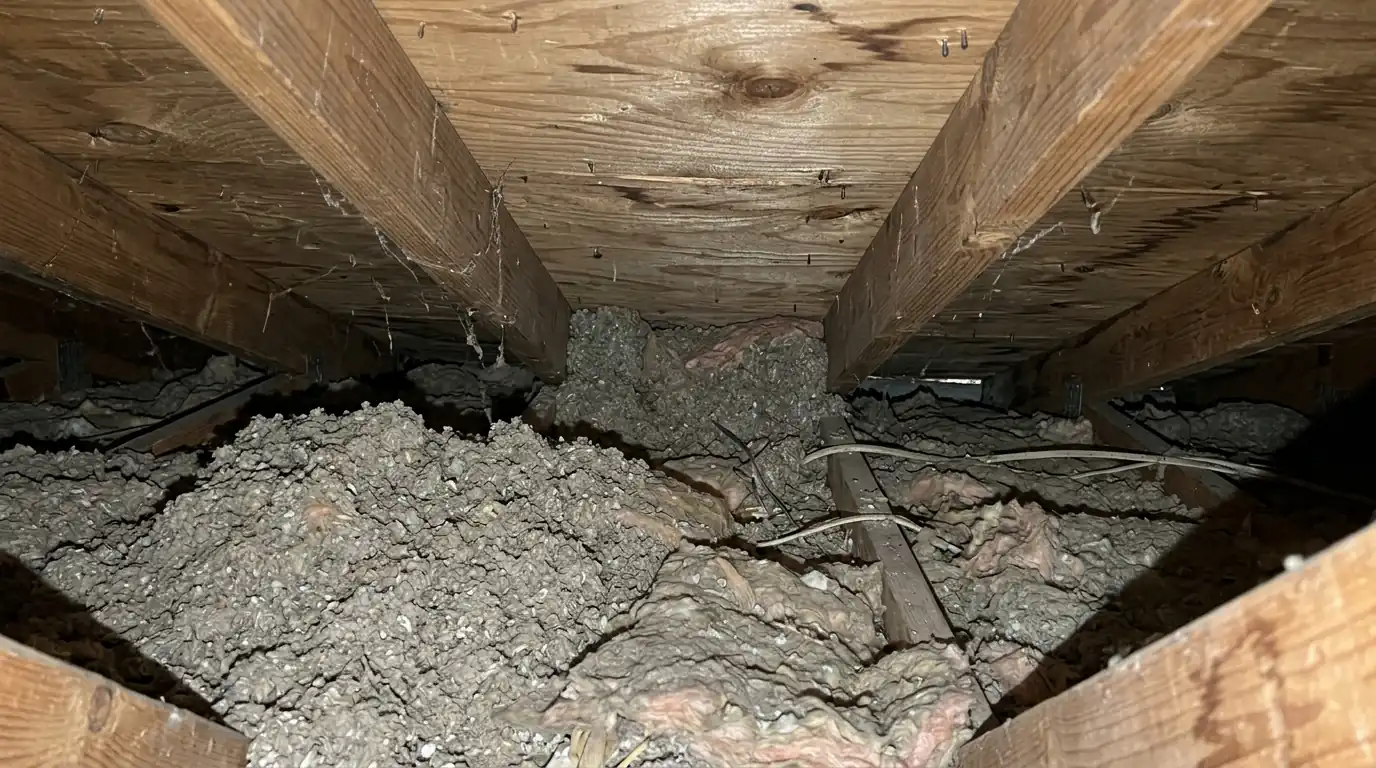
When insulation blocks the eaves or the exhaust vents are too few, that airflow stops, and moisture sits on the sheathing.
What a ventilation correction includes
- Checking every soffit, gable, roof and ridge vent
- Pulling insulation back from the eaves
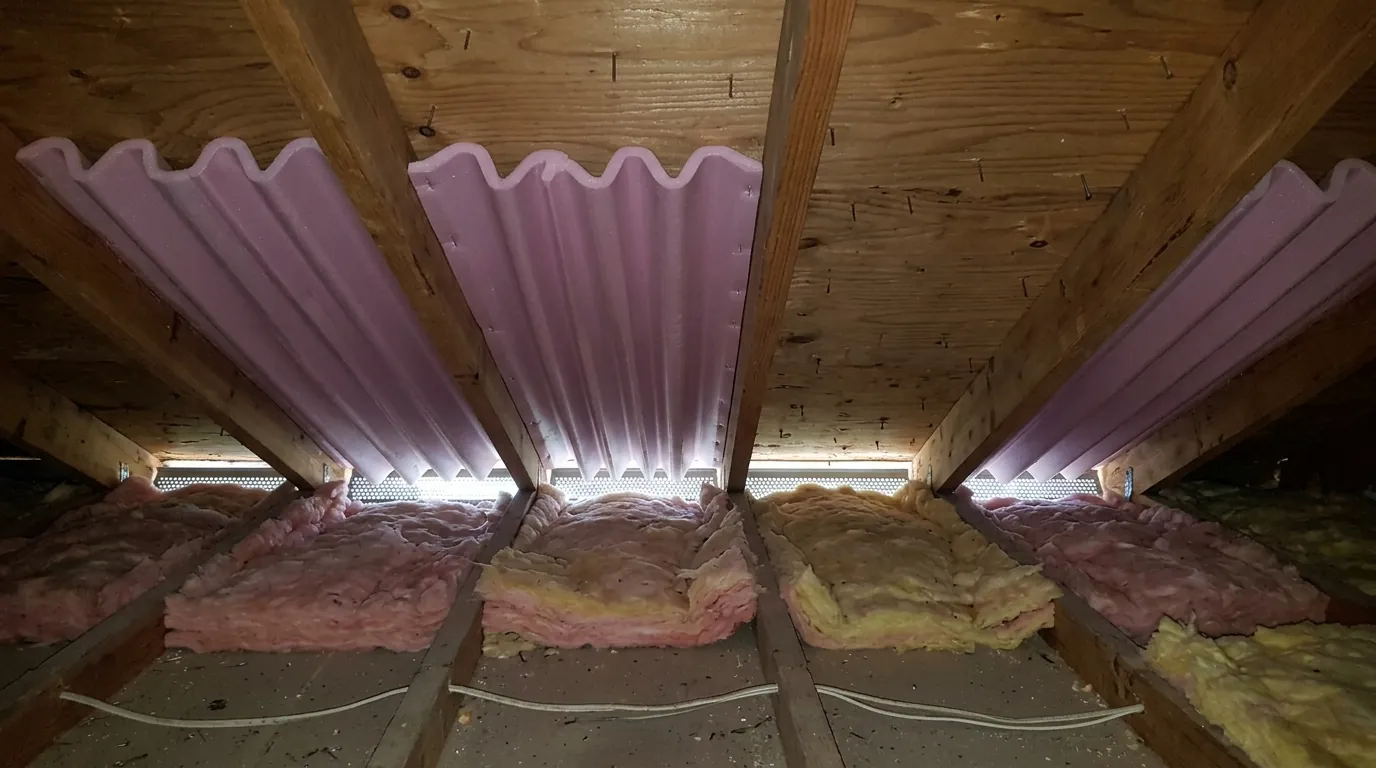
- Installing baffles in each rafter bay at the eaves
- Adding or clearing intake vents where airflow is short
- Adding exhaust at the ridge or high on the roof if needed
- Sealing obvious air leaks from the house into the attic
- Restoring insulation behind the baffles
Baffles at the eaves
Baffles are channels fastened between the rafters at the eaves that hold insulation back and leave an open path for air from the soffit vents into the attic. Without them, blown insulation drifts into the eaves and seals them shut, which is common in attics that were topped up with more insulation over the years. We pull the insulation back, fit a baffle in each rafter bay, and put the insulation back behind them so the ceiling stays insulated right to the outside wall.
Roof and ridge vents
Air that enters at the eaves needs somewhere to leave. That is the ridge vent or a set of roof vents near the peak. Too little exhaust, or gable vents working against a ridge vent, can leave dead spots where moisture sits. We check the balance between intake and exhaust, clear vents that have been blocked, and recommend adding exhaust where the attic needs it. New roof penetrations are coordinated with your roofer when that is part of the fix, so the roof stays watertight.
Newer valley homes and topped-up attics
The median home across Salt Lake County was built in 1986, and many of those attics have since had extra insulation blown in to cut heating bills. It is a sensible upgrade that often buries the soffit vents at the same time. The attic gets warmer and wetter in winter as a result, and the first signs show up at the eaves: frost on the nails, stains on the sheathing and ice dams along the gutter line.
What you can check yourself
| Check | Do it yourself | When to call us |
|---|---|---|
| Soffit vents from outside | Look for painted-over or blocked vents | If the attic side is packed with insulation |
| Frost on nails in winter | Look from the hatch with a flashlight | If frost or rust is widespread |
| Bath fan ducts | See where they end in the attic | If any duct stops short of a cap |
| Ice dams and icicles | Note where they form each winter | If they return every year |
How the job runs, step by step
- 1
Inspect the attic
Vents, insulation line and sheathing.
- 2
Check from outside
Soffits, gables and the ridge.
- 3
Pull insulation back
At the eaves in each bay.
- 4
Install baffles
One per rafter bay.
- 5
Balance the vents
Clear intake, add exhaust if needed.
- 6
Seal air leaks
Obvious gaps from the house.
- 7
Restore insulation
Behind the baffles, to the right depth.
What drives the cost of ventilation work
Ventilation fixes range from a few baffles to new roof vents.
- Number of rafter baysBaffles are fitted bay by bay.
- InsulationPulling back and restoring it.
- Intake ventsClearing or adding soffit vents.
- Exhaust ventsRidge or roof vents added with a roofer.
- Air sealingClosing leaks from the house below.
Questions about attic ventilation correction
They help, together with sealing the warm air leaks that melt the snow.
Mixed vent types can work against each other. Balance matters more than count.
Yes, after cleaning. See attic mold removal.
Not usually. It is pulled back and restored behind the baffles.
Baffles and eave work are ours. New roof vents are coordinated with a roofer.
Answered around the clock
Ice dams or frost in the attic? Call us.
Tell us what you see each winter. We will explain what we would check in the attic.