Updated October 2026
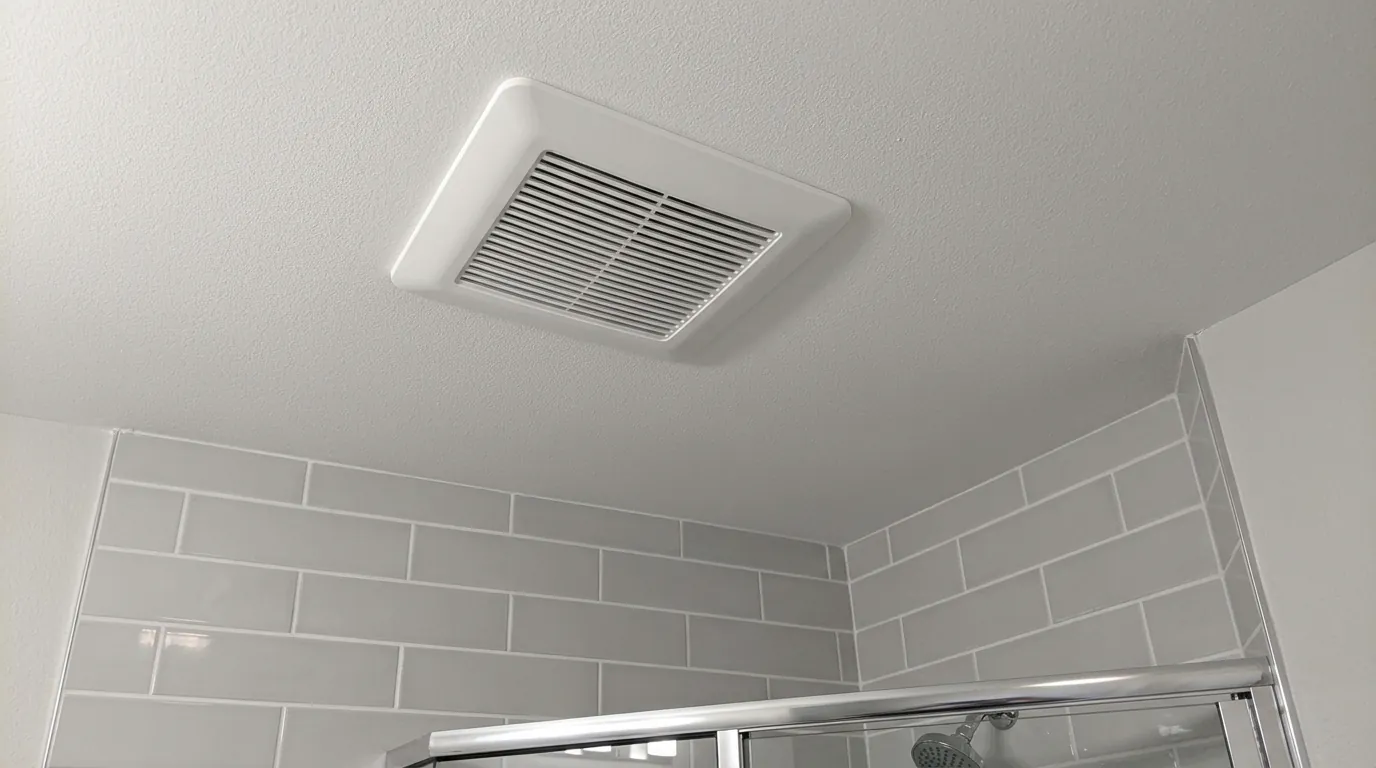
Bathroom exhaust fan installation in Salt Lake City means fitting a fan sized to the room and running a sealed, insulated duct to a roof or wall cap outside, never into the attic. A humidity-sensing control keeps it running until the room dries, which is what actually stops ceiling and attic mold.
Why the fan matters more than the paint
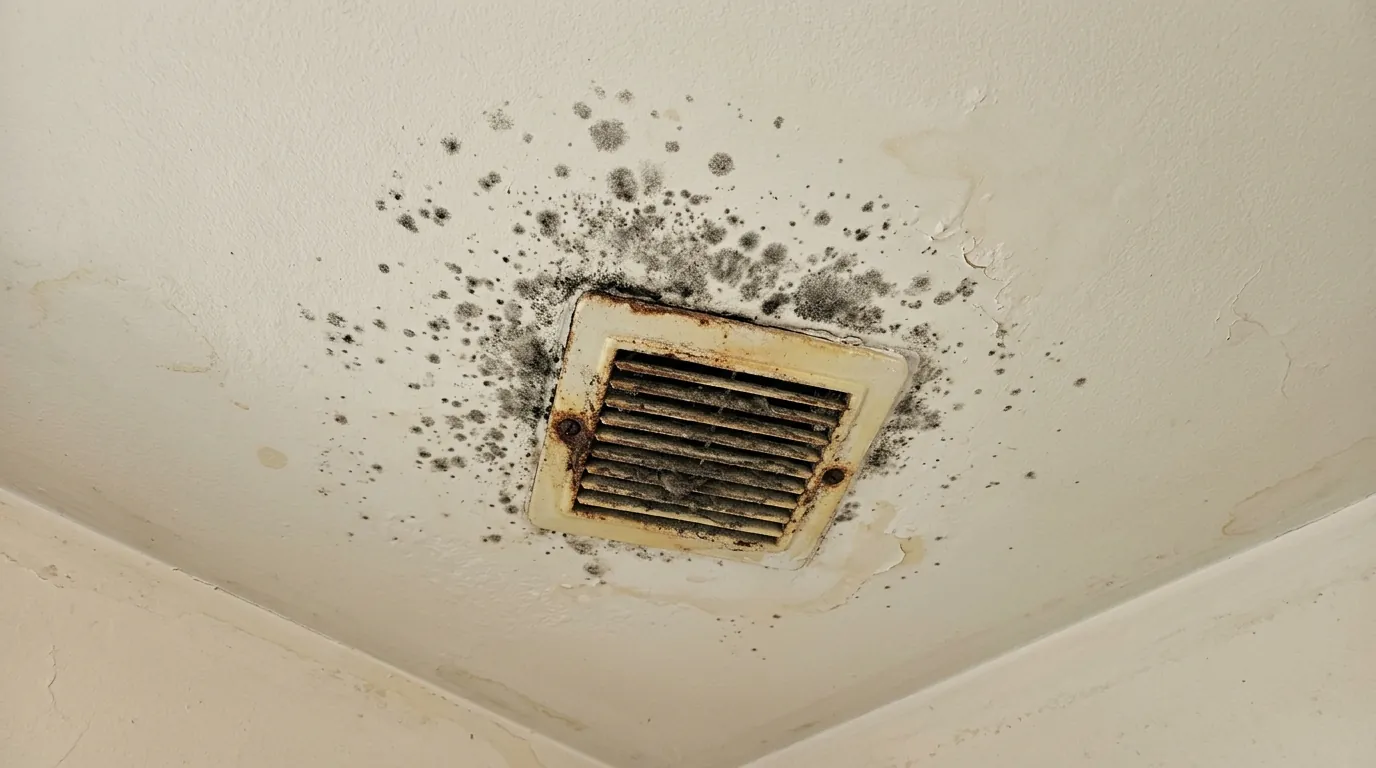
A shower puts a lot of water into the air in a few minutes. If the fan is undersized, so loud that nobody runs it, or ducted into the attic, that moisture ends up on the ceiling or the underside of the roof deck. In a Salt Lake winter it freezes there and drips back down when it thaws.
We replace weak original fans in older homes, add fans to bathrooms that only had a window, and fix ducts that stop short in the attic insulation.
What drives the cost of a new bath fan
Fan jobs vary more with the duct run than with the fan itself.
- Duct routeA short run to a wall cap is simpler than a long attic run.
- Roof or wall openingA new flashed roof cap takes more time than reusing one.
- Fan typeHumidity-sensing and inline fans cost more.
- WiringA separate switch or control adds labor.
- Ceiling repairEnlarging an old opening or patching around it.
Which fan setup fits your bathroom
| Setup | Best for | Trade-off |
|---|---|---|
| Ceiling fan on a switch | Guest baths used now and then | Only works if someone leaves it running |
| Ceiling fan with a humidity sensor | Family baths and kids' bathrooms | Costs more than a basic fan |
| Inline fan in the attic | Large baths or two grilles on one fan | More duct to install and maintain |
Venting outside instead of into the attic
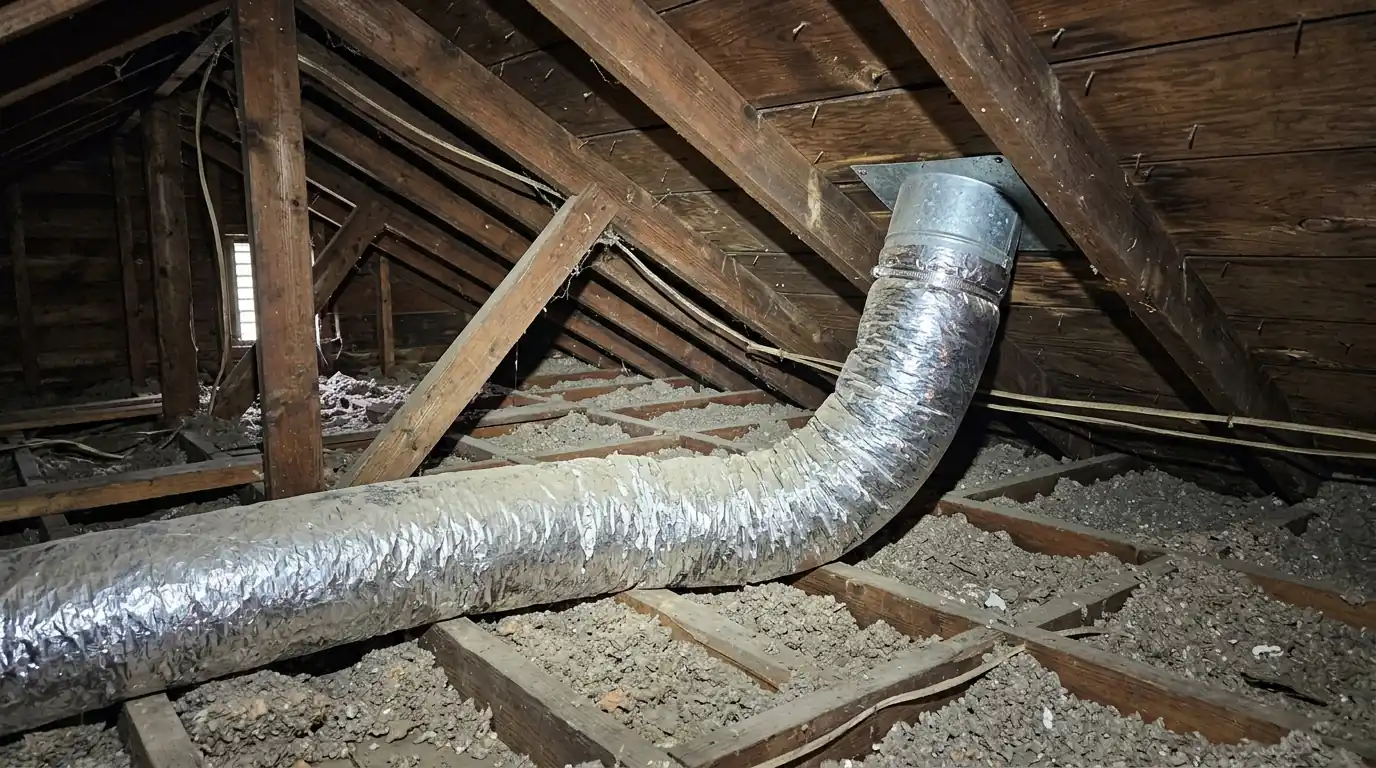
Many older bath fans in Salt Lake homes were ducted a few feet into the attic and left there, or the duct slipped off over the years. The warm air meets a cold roof deck in winter, condenses and feeds mold on the sheathing. We run rigid or insulated duct with as few bends as the layout allows to a roof or wall cap with a damper, seal every joint and insulate the run so it does not drip. If the attic already shows growth, attic mold removal comes first.
Humidity-sensing fans
The best fan does nothing if it gets switched off after two minutes. A humidity-sensing fan turns itself on when the room gets steamy and keeps running until the air drops back down, so it works even in a kids' bathroom where nobody touches the switch. Some models also run quietly at low speed all day. We match the fan to the room and the duct, because a long run with several elbows moves far less air than the rating on the box suggests.
What an installation includes
- Checking where the existing duct actually ends
- A fan sized to the room and the length of the duct run
- A roof or wall cap with a backdraft damper
- Rigid or insulated duct, sealed at every joint
- Insulation around the duct where it crosses the attic
- Connection to the existing switch or a humidity control
- An airflow check at the grille before we leave
Mid-century bathrooms and the fans they came with
About 41 percent of the homes in Bountiful were built from the 1940s through the 1960s, and bathrooms of that era across Davis County often had a window and no fan, or a small fan added later with a short duct into the attic. That pairing is a common cause of gray spots on a bathroom ceiling in winter. Replacing the fan fixes half of it. Running the duct outside fixes the rest.
How the job runs, step by step
- 1
Look at the old fan
Where it is, how loud, and where the duct ends.
- 2
Size the new fan
Room size and duct length decide it.
- 3
Plan the route
The shortest path outside with the fewest bends.
- 4
Cap and flash
A damper cap on the roof or wall, sealed.
- 5
Run and seal the duct
Sealed joints, insulated through the attic.
- 6
Mount and connect
Fan in the ceiling, control on the wall.
- 7
Test the airflow
The grille pulls air and the cap flap opens.
We install bath fans from Panasonic, Broan-NuTone, Delta Breez and Fantech, and basement dehumidifiers from Aprilaire and Santa Fe.
Questions about bathroom exhaust fan installation
No. Air near a gable or soffit vent still stays in the attic and condenses on the roof deck in cold weather. The duct needs its own cap outside.
Until the mirror clears and a little longer. A humidity-sensing fan handles that on its own.
Often, if the new housing fits and the duct can be rerouted outside.
Nobody opens a window in January. A fan moves shower moisture outside all year.
No, it stops new growth. Existing growth needs bathroom mold removal first.
Answered around the clock
Foggy mirror and gray ceiling spots? Call us.
Tell us about the bathroom and the fan you have now. We will explain the fix and when we can install it.