Updated October 2026
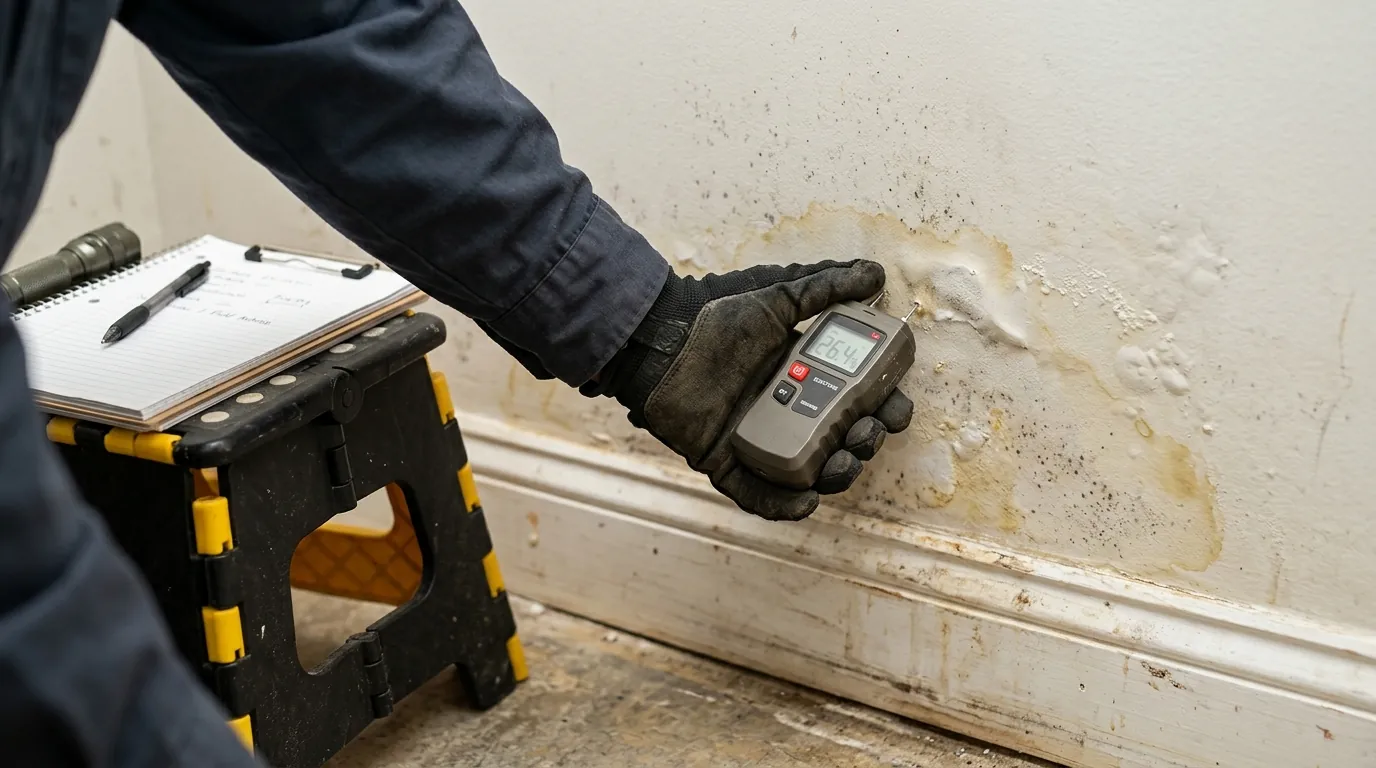
A mold inspection in Salt Lake City is a walk-through with moisture readings, thermal imaging and a look inside suspect cavities, ending in a written scope. HomeGuide puts typical inspections at $300 to $650 nationally. Lab samples are added only when they would change the plan.
What a mold inspection actually tells you
Visible spots are rarely the whole story. What matters is how far the moisture has spread and what is feeding it, because that decides whether the job is a wipe-down, a small cut-out or a sealed containment.
We start at the stain or the smell and work outward with a pin meter and a thermal camera, checking the rooms above and below. You get photos, readings and a plain recommendation, even when the answer is that you do not need us.
What the inspection covers
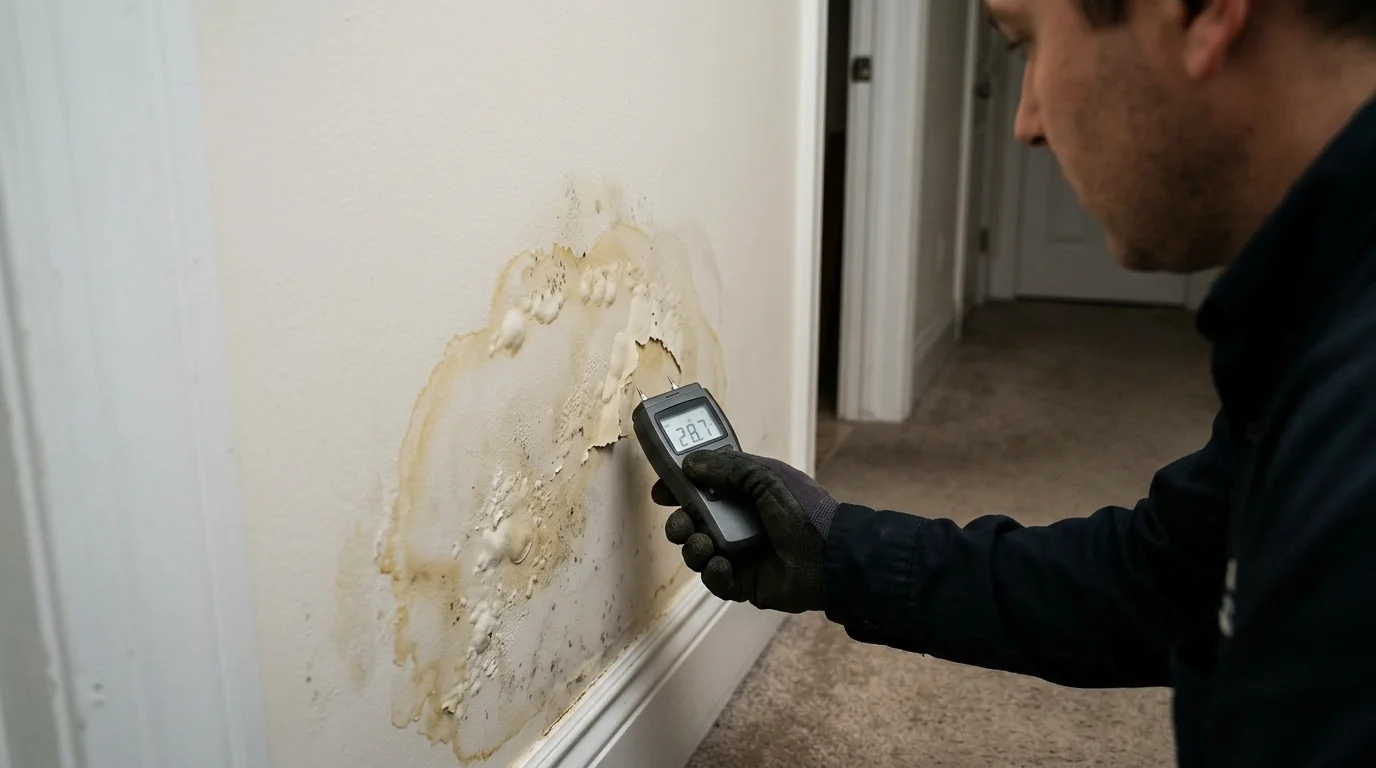
- Moisture readings on walls, floors and ceilings around the problem area
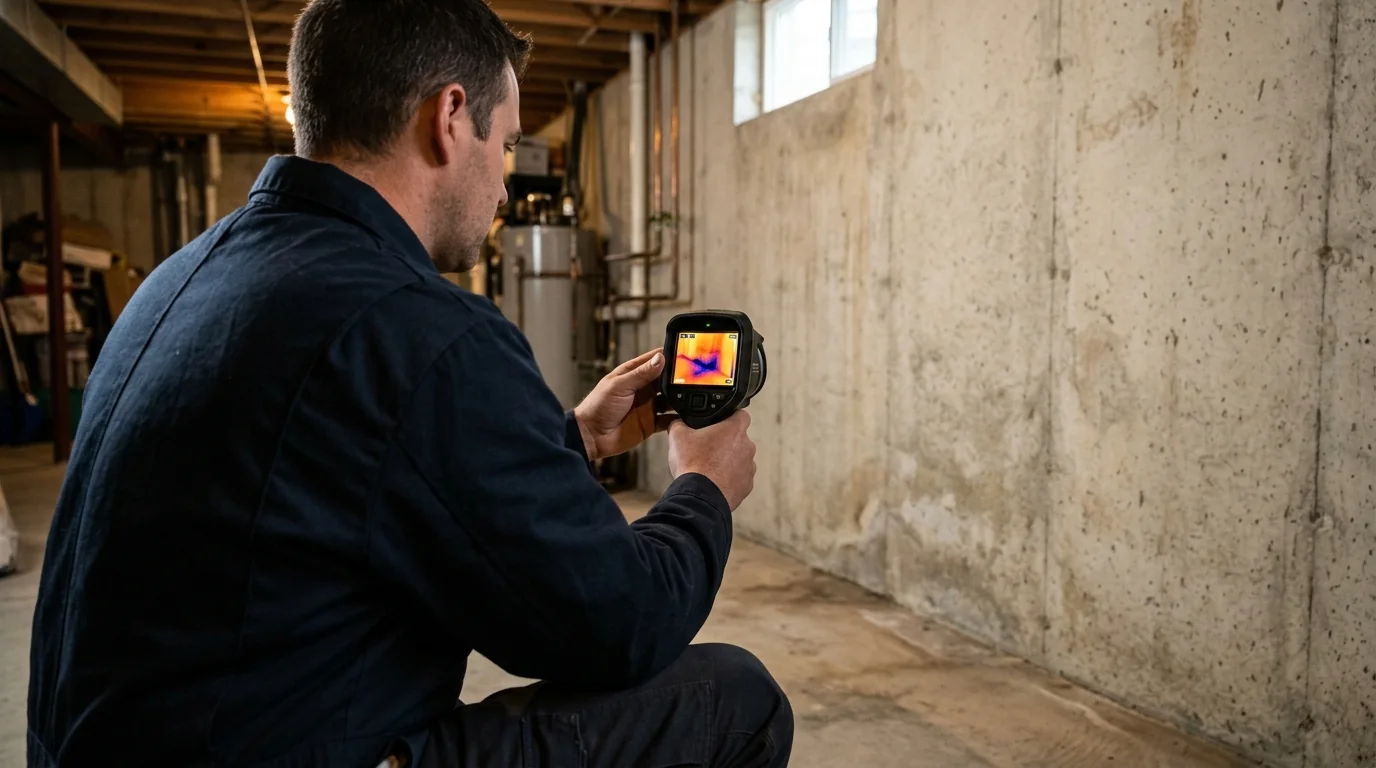
- Thermal imaging to find cold, damp patches that are not visible yet
- A check of the rooms and cavities above, below and beside the stain
- Small inspection openings where readings point, with your OK first
- Attic, crawl space or ductwork checks when the source could be there
- Photos of everything we find, with the readings marked
- A written scope that says what needs removal, cleaning or nothing at all
Moisture mapping and thermal imaging
A moisture meter tells us how wet a material is right now. A thermal camera shows where surfaces run colder than they should, which is often where water is moving. Used together they turn one stain into a map, so a spot under a bathroom can be traced to a shower valve, a cold exterior corner or a supply line inside the wall. We mark readings on the photos so the numbers still make sense later, and we recheck the same points after a repair to confirm things dried.
Borescope checks inside walls
When readings point inside a finished wall, a borescope lets us look without tearing out drywall. We drill a small hole behind a switch plate, a baseboard or another spot that is easy to patch, then look at the back of the drywall, the framing and the insulation. It answers the question homeowners care about most: is there growth in there, or only damp material? If the camera shows clean surfaces, the hole gets patched and the wall stays closed.
Musty odor with no visible growth
A musty smell with nothing to see usually means growth on the back side of something: drywall behind furniture, the underside of carpet pad, a closet on an exterior wall, or ductwork. We follow the smell with readings rather than guesses, check the HVAC return and the lowest level first, and look for slow leaks that never leave a stain, like a weeping supply line behind a vanity. When nothing turns up, we say so, and a mold test becomes the next sensible step.
Where Salt Lake City homes hide moisture
Salt Lake City's housing changes where we look first. The median home in the city was built in 1965 and about a quarter predate 1940, so plaster walls, original bath fans and unsealed foundations are common. The season matters too. NOAA normals put average humidity near 74 percent in December and January, which is when condensation shows up on cold exterior walls and in attics.
Inspection only, or inspection with testing?
Most homes need the first column; the others earn their cost in specific situations.
| Compared | Inspection | Inspection plus air samples | Inspection plus clearance check |
|---|---|---|---|
| Best for | A visible stain or musty smell with a likely source | Hidden growth, health concerns or a sale that needs documentation | Confirming a finished cleanup before walls close |
| What we collect | Moisture readings, thermal images, photos | Everything in the inspection plus indoor and outdoor air samples | Readings, a visual check and clearance samples |
| What you receive | A written scope and photos | The scope plus lab results | Clearance results for your records |
How the job runs, step by step
- 1
Tell us what you are seeing
Where the stain or smell is, when it started and what got wet.
- 2
Start at the problem
Readings at the stain, then outward in every direction.
- 3
Check above and below
Plumbing, roof and exterior walls that could feed the spot.
- 4
Thermal pass
A camera sweep for cold, damp areas you cannot see.
- 5
Look inside if needed
A borescope or small opening, only with your OK.
- 6
Photos and readings
Every finding photographed with its number.
- 7
Written scope
What needs removal, what needs cleaning, and what needs nothing.
What a mold inspection costs
Inspection pricing follows the size of the home, how many areas need checking and whether lab samples are added.
- Home size and accessA crawl space or attic adds time.
- How many areasOne stain is quicker than a whole basement.
- Lab samplesEach air or surface sample adds lab cost.
- OpeningsBorescope holes are small but still need patching.
- Report depthA sale or a lease may need more documentation.
Published price ranges
- Mold inspection: $300 to $650, about $450 national average (homeguide.com, 2026)
- Mold air sample: $100 to $300 per test (homeguide.com, 2026)
- Mold inspection, wider band: $303 to $1,045, about $671 average (homeadvisor.com, 2026)
National planning figures from the sources named, not our prices. Your number comes from the written scope.
Questions about mold inspection
No. An inspection finds moisture and growth and explains the cause. A test sends samples to a lab. Many homes only need the inspection.
Only if readings point inside a wall and you agree. Usually that means a borescope hole behind a plate or baseboard, patched afterward.
Yes. Our real estate mold inspection covers contingency timelines and what the report includes.
Then we tell you, with readings to back it up. A clean inspection is a useful result.
Yes. Checking the same points after a repair shows whether materials dried or still need attention.
Answered around the clock
Smell something musty? Let us find the source.
Call and tell us what you are seeing. We will explain what the inspection involves and when we can be there.