Updated October 2026
Basement mold removal in Salt Lake City means finding whether water comes through the foundation or from plumbing above, then removing moldy drywall, carpet and insulation under containment and cleaning the concrete. This Old House puts typical basement jobs at $500 to $3,000, while a fully finished basement costs far more.
Why basements are where mold hides
A basement sits against wet soil, holds the water heater and the laundry, and is often the coolest and least ventilated part of the house. Finish it with carpet and drywall and a slow leak can run for months unseen.
Our first job is separating the water sources, because snowmelt seepage, a weeping supply line and summer humidity each need a different fix.
What basement mold removal costs
Basement jobs range widely because finished space means more material to remove.
- Finished or unfinishedDrywall, insulation and carpet add removal and disposal.
- Area affectedOne wall or the whole level.
- Water sourceSeepage may need drying and outside fixes first.
- ContentsStored items to move, clean or discard.
- TestingClearance samples when a sale or a lease needs them.
Published price ranges
- Basement mold removal: $500 to $3,000 (thisoldhouse.com, 2026)
- Basement mold removal, full basement: $6,000 to $15,000 (homeguide.com, 2026)
National planning figures from the sources named, not our prices. Your number comes from the written scope.
Clean it, cut it out, or rebuild it differently?
| What we find | Usual fix | What changes after |
|---|---|---|
| Surface growth on concrete or block | HEPA vacuum and clean the concrete | Deal with the seepage so it stays dry |
| Mold on finished drywall or carpet | Remove it under containment | Rebuild with a gap at the floor and no carpet on bare slab |
| Recurring damp with no leak | Clean and control humidity | A basement dehumidifier set to hold humidity down |
Finished basement drywall
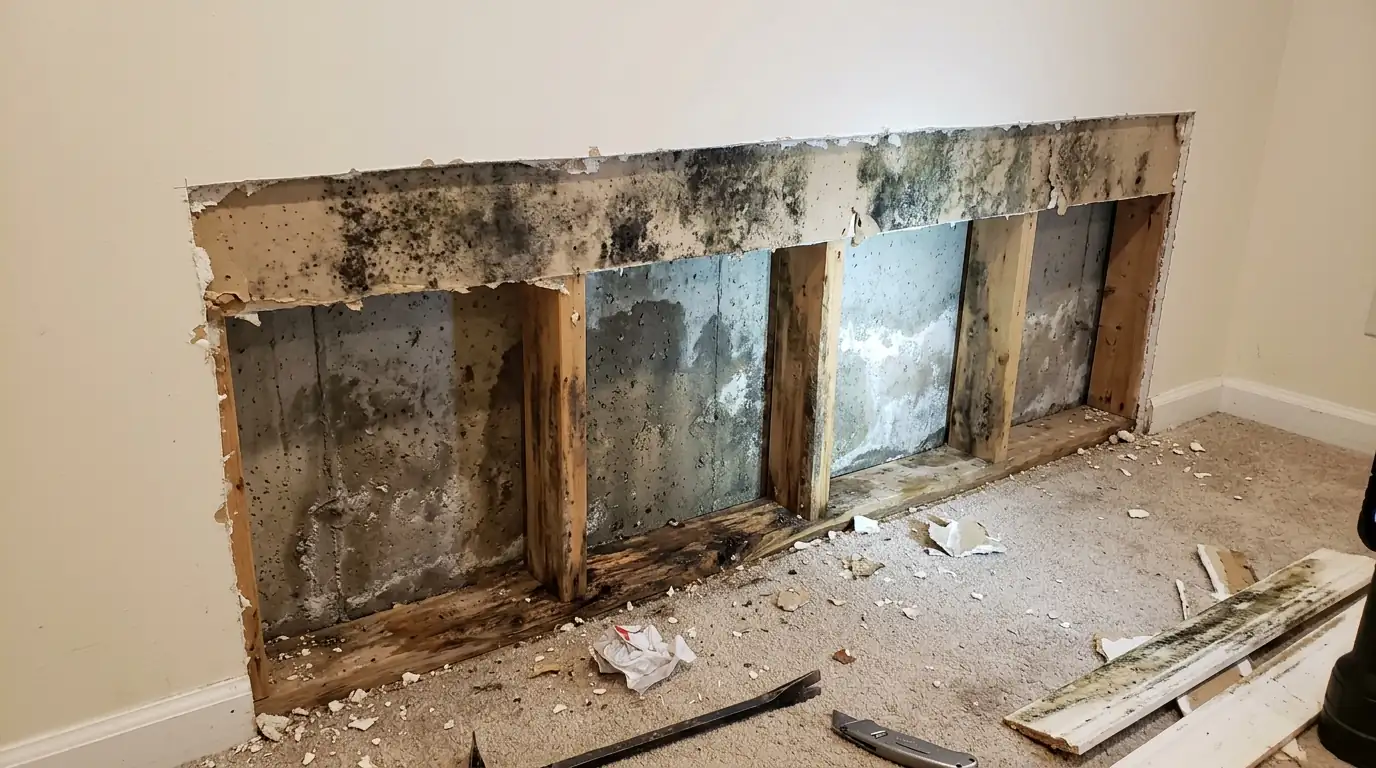
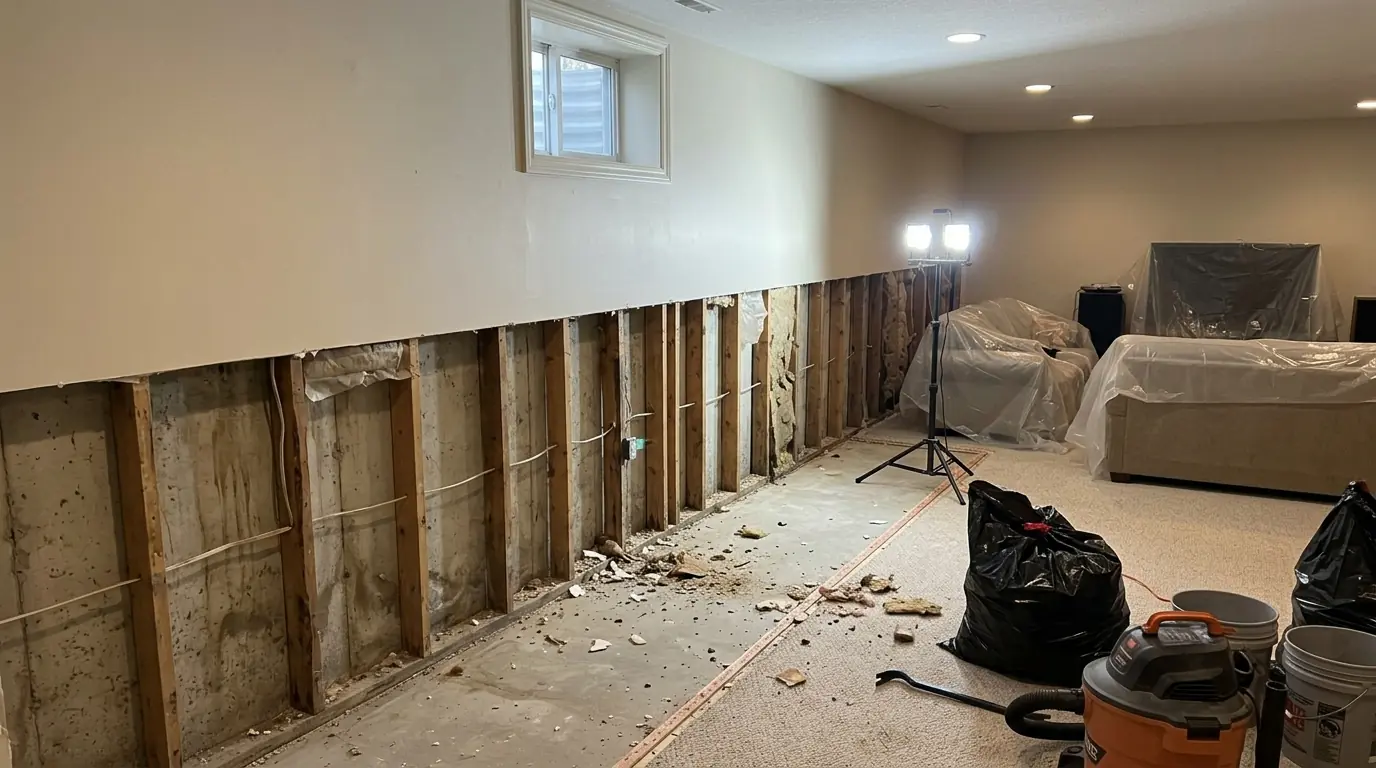
Finished walls hide the foundation, so growth usually starts on the back of the drywall and the bottom plate long before the front shows a stain. We read the walls from the outside first, cut the drywall past the growth to where readings are normal, and pull the insulation behind it. The framing is HEPA vacuumed and cleaned. Where the rebuild will happen, we point out simple changes that help: a small gap above the slab, and no carpet pad against a damp wall.
Concrete and block foundation walls
Concrete does not feed mold, but the dust, paint and stored boxes against it do. Growth on foundation walls usually means water is coming through the wall or condensing on it. White crust and bubbling paint point to seepage, while beads of water on a cool summer wall point to humidity. We clean the concrete, check the grading, gutters and window wells outside, and tell you which problem you have before anything is sealed, painted or covered with new framing.
Storage rooms and basement carpet
Unfinished storage rooms collect cardboard boxes, old carpet remnants and clothing, all of which grow mold faster than the walls around them. We help you sort what can be cleaned from what should go, remove moldy carpet and pad, and clean the shelving and slab. Hard items like plastic bins and metal shelving usually clean up fine. Paper, cardboard and upholstered pieces that grew mold rarely come back, and we would rather tell you that than bill you to try.
Spring runoff and east bench basements
The 2023 runoff showed how fast a basement season can arrive. In April, Emigration Creek left its banks through Wasatch Hollow, about 100 nearby homes were under a voluntary evacuation, and county crews found the retention basin outlet clogged 25 feet below the water. Neighborhoods downstream toward Sugar House dealt with water in window wells and seepage for weeks. Basements that stayed wet that spring are the ones that grow mold behind finished walls the following winter.
Signs the basement has more than a surface problem
A musty smell at the bottom of the stairs
It fades upstairs and returns every time you go down.
Tide lines after spring melt
Stains a few inches up the wall that return each April or May.
Paint bubbling on foundation walls
Water pushing through concrete lifts paint and leaves white crust.
Damp carpet along exterior walls
The pad soaks it up before the surface looks wet.
Water in the window wells
Wells that fill after storms push water in around the frame.
How the job runs, step by step
- 1
Find the water
Readings along walls, floor and plumbing.
- 2
Check outside
Grading, gutters and window wells.
- 3
Contain the area
Plastic, a zipper door and negative air.
- 4
Remove damaged material
Drywall, insulation and carpet bagged in place.
- 5
Clean the concrete
HEPA vacuum and wipe walls and slab.
- 6
Dry it down
Dehumidifiers until readings are normal.
- 7
Clear it for rebuild
A final check before the plastic comes down.
Questions about basement mold removal
No. Paint traps moisture and the growth continues underneath. Clean it and fix the water first.
The concrete itself is fine. The growth on dust, paint and stored items is what needs cleaning.
Sometimes, but grading, gutters and window well covers fix a lot of seepage for far less.
It stops humidity-driven growth. It will not stop water coming through a wall.
Often. We cut out only what the readings and the back of the drywall show is affected.
Answered around the clock
Musty basement? Call before you finish or paint.
Tell us what you see and when it started. We will explain what to check first and when we can be there.