Updated October 2026
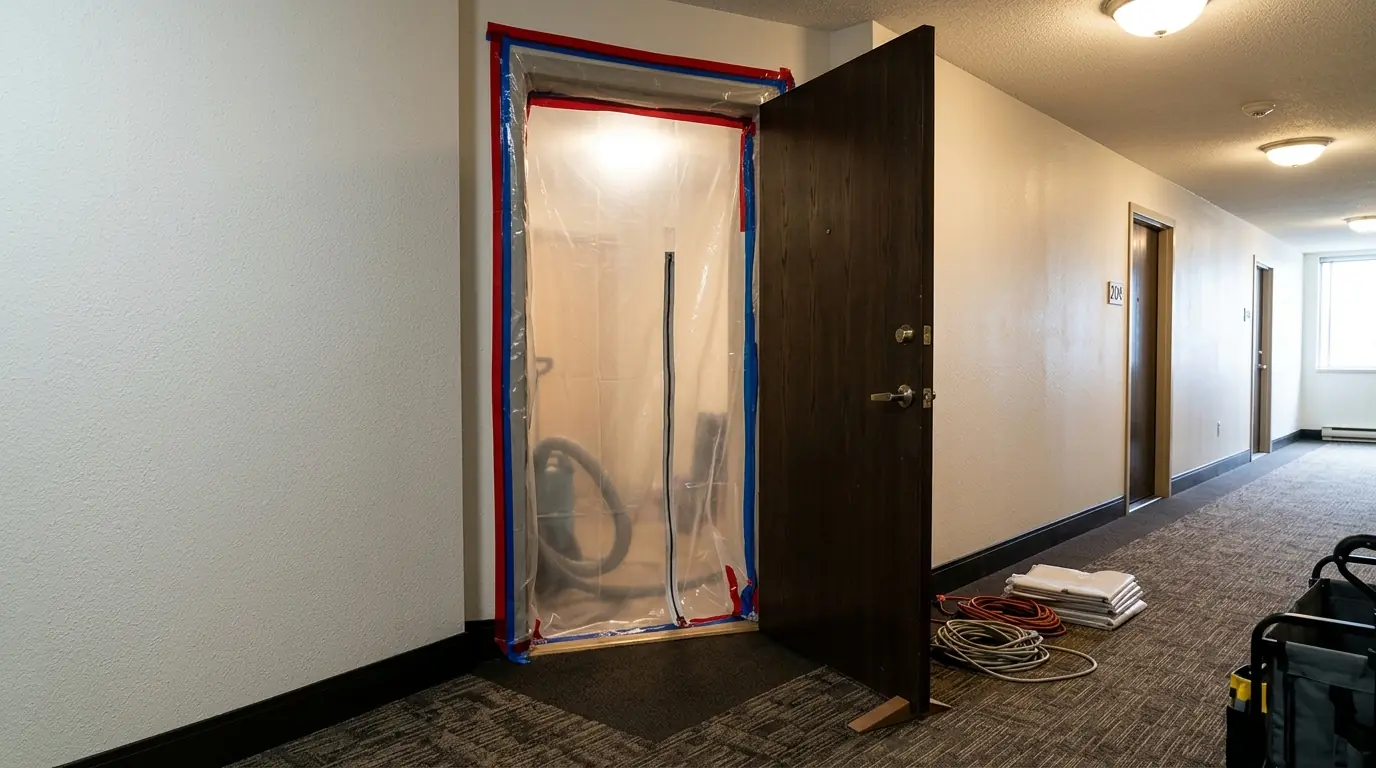
Condo and HOA mold remediation in Salt Lake City starts with tracing the water, often from one unit into the ceiling or wall of the unit below, then remediating each affected space under containment. Boards, managers and owners each get photos and readings so responsibility can be sorted out from facts rather than guesses.
Why shared walls change the job
A supply line fails in the unit above, and the mold shows up on the ceiling below. A roof drain leaks into a common hallway wall. The work is the same as in a house, but more people need to know what happened, where, and when.
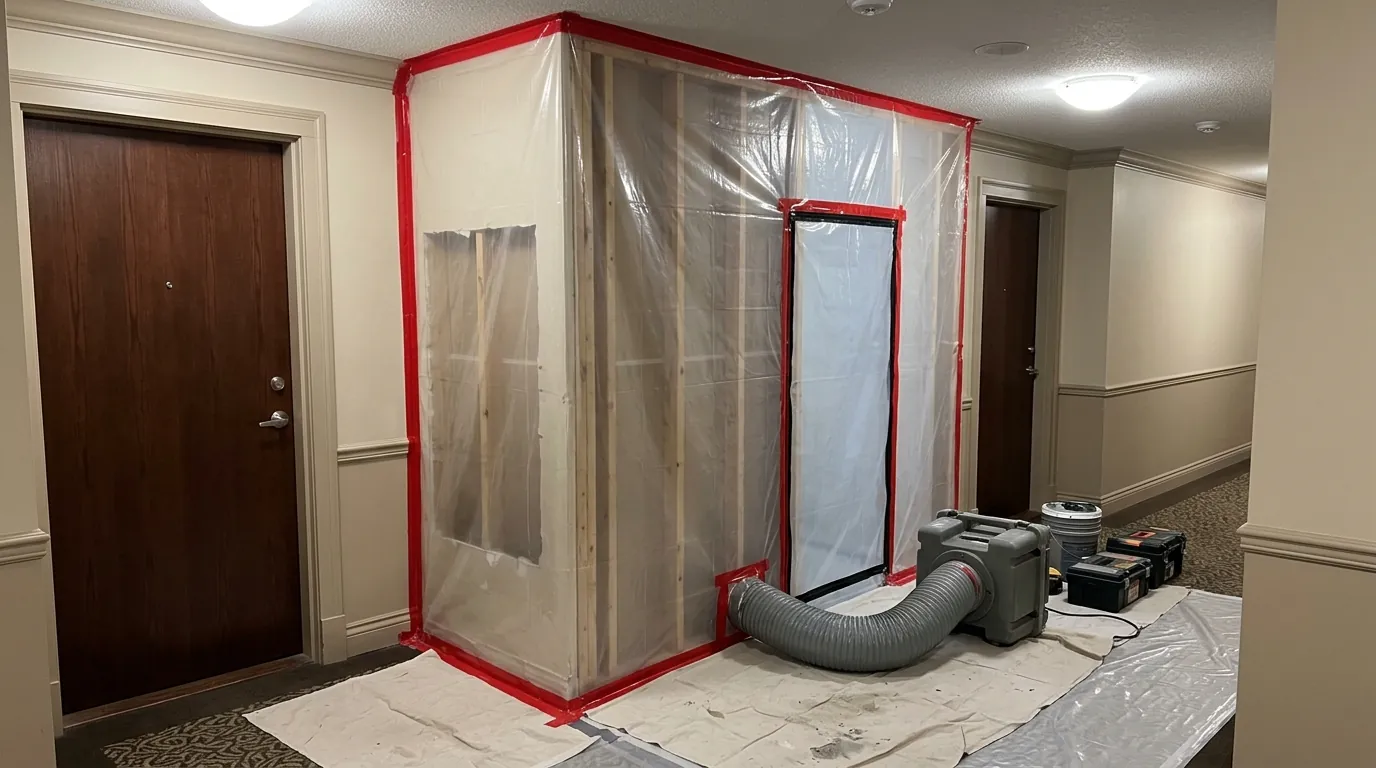
We coordinate access with each owner and the manager, keep containment tight in occupied units and report findings in a way everyone can read the same way.
What condo mold remediation costs
Condo jobs are priced by the area affected in each space, plus coordination.
- Spaces affectedOne unit, several units or common areas.
- AccessScheduling owners and occupied units.
- TracingReadings across unit lines.
- DocumentationRecords for the board and insurers.
- ClearanceOptional checks before units reopen.
Published price ranges
- Mold remediation per square foot: $10 to $25 per square foot (thisoldhouse.com, 2026)
- Clearance re-inspection after remediation: $200 to $400 (restoreadvisor.com, 2026)
National planning figures from the sources named, not our prices. Your number comes from the written scope.
Unit, shared wall or common area?
| Where it is | Who usually coordinates | What we provide |
|---|---|---|
| Inside one unit | The unit owner, sometimes with the manager | Findings and a scope for that unit |
| Between units | The manager or board with both owners | Readings on both sides showing where the water traveled |
| Hallways, garages, roofs | The board or management company | A scope and record for the association file |
Leaks between units
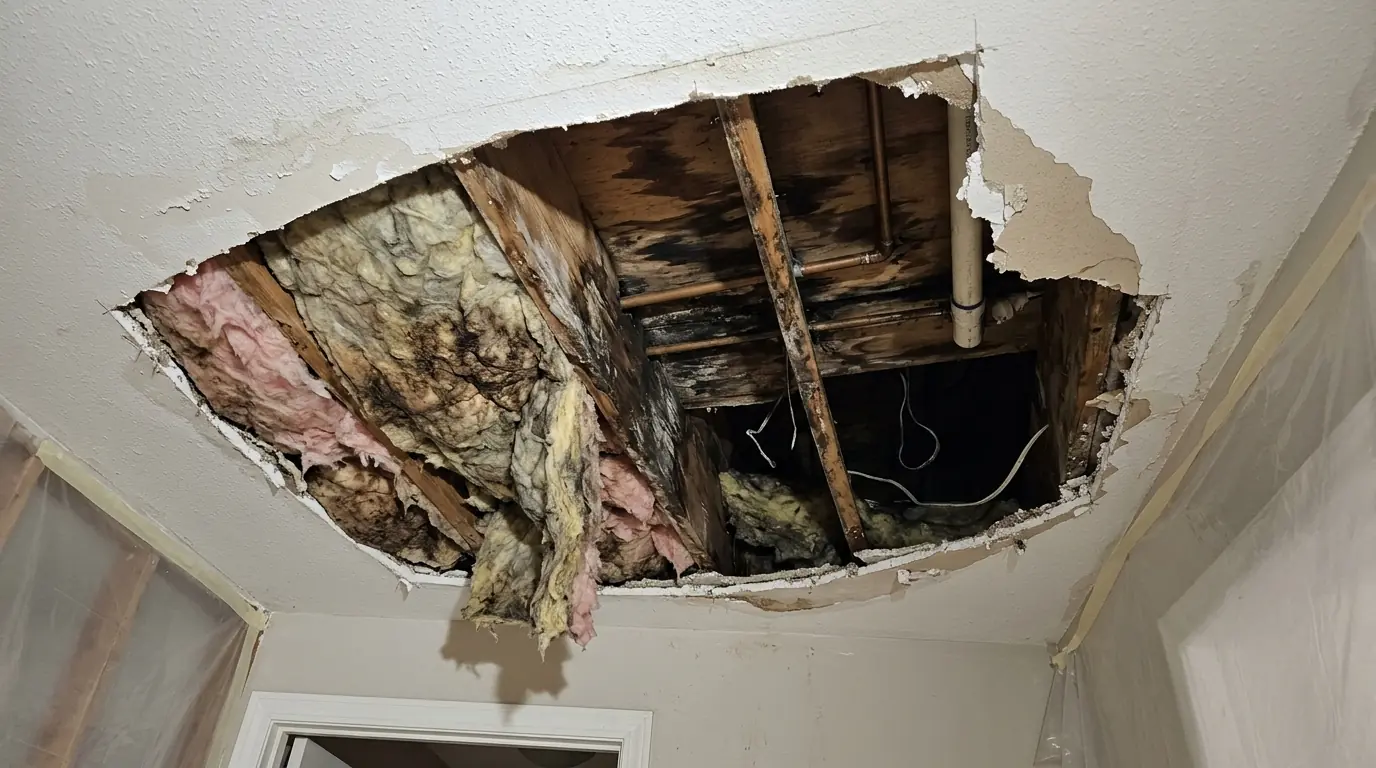
Water moves through a building the easy way: along pipes, down through ceiling cavities and across the top of shared walls. We take readings in the unit where the damage shows and in the units around it until the source turns up, and we photograph each reading so the path is clear to everyone involved. Remediation then happens in each affected space, scheduled with each owner. The source unit gets the plumbing repair; the unit below gets its ceiling or wall remediated and dried.
Common areas and shared walls
Hallways, stairwells, parking levels and utility rooms belong to everyone, which can mean nobody notices a problem for months. Common-area mold usually traces to roof drains, window leaks, condensation in unheated spaces or a failed sprinkler or supply line. We work with the manager on access and notices to residents, contain the area so hallways stay usable, and leave the board a record of what was found, what was removed and what fixes are recommended for the building itself, in plain language.
Downtown's newer condo buildings
About 27 percent of the housing in Downtown Salt Lake City was built between 2010 and 2019, and another 12 percent since 2020. Newer condo buildings stack kitchens and bathrooms directly over each other, so a single failed supply line or shower valve on an upper floor can reach two or three units below before anyone sees water. That makes tracing the path through each unit the first step of every job here.
How the job runs, step by step
- 1
Call with the manager or owner
Where the damage shows.
- 2
Trace the water
Readings in surrounding units.
- 3
Coordinate access
Owners, tenants and notices.
- 4
Contain and remove
Each space handled separately.
- 5
Clean and dry
Readings normal in every space.
- 6
Fix the source
Repair in the source unit.
- 7
Report
Photos and findings for every party.
How long it takes when several owners are involved
The remediation itself runs like any other job. What adds time is access: scheduling several units, notices for common areas and approvals from the board.
We start with the areas that are actively wet and move through the rest as access allows.
Questions about condo and hoa mold remediation
That depends on your governing documents and insurance. We document where the water came from.
Yes. We coordinate access, notices and records with managers and boards.
Only those the readings point to, plus the ones directly around the source.
Usually. Containment keeps work areas separate from living space.
Yes, with notices and scheduling arranged through the board or manager.
Answered around the clock
Leak between units? Call to trace it.
Tell us which units and what you are seeing. We will explain how we would trace and handle it.