Answering 24/7 in Salt Lake City
Mold removal in Salt Lake City, starting with the water
Mold only grows where something stays wet. We find that moisture, seal off the room, remove what cannot be saved and dry the rest before anything gets rebuilt.
- Phones answered 24/7
- Service office on Exchange Place downtown
- Inspection, removal and drying
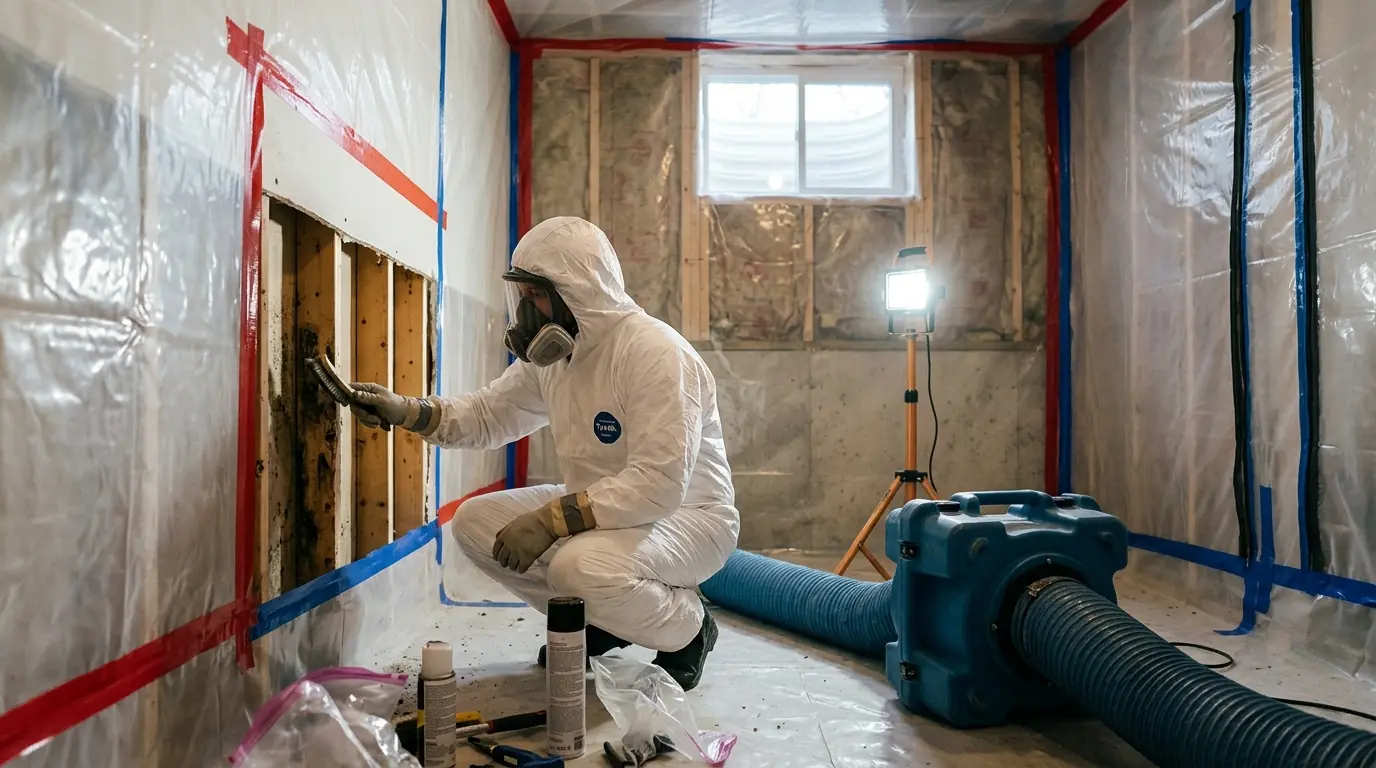
Sealed off before anything comes out
Start here
What mold removal involves, in plain terms
Mold removal in Salt Lake City usually means sealing off the affected area, cutting out moldy drywall or insulation, HEPA cleaning what stays and fixing the leak that fed it. Public health guidance citing the EPA puts the do-it-yourself line at about 10 square feet. Past that, or when growth is hidden inside a wall, containment matters.
Not sure it is mold? A mold inspection settles it before anyone opens a wall.
While you wait for us
- Stop the water if you can: close the fixture valve or the main shutoff.
- Keep fans from blowing across visible growth, which carries spores into clean rooms.
- Leave dry, moldy drywall alone instead of scrubbing it.
- Photograph stains and damaged belongings before anything is moved.
Services
Where is the mold? Pick the room or the problem
35 jobs, grouped the way calls come in. Each page covers the work, the cost drivers and what we check first.
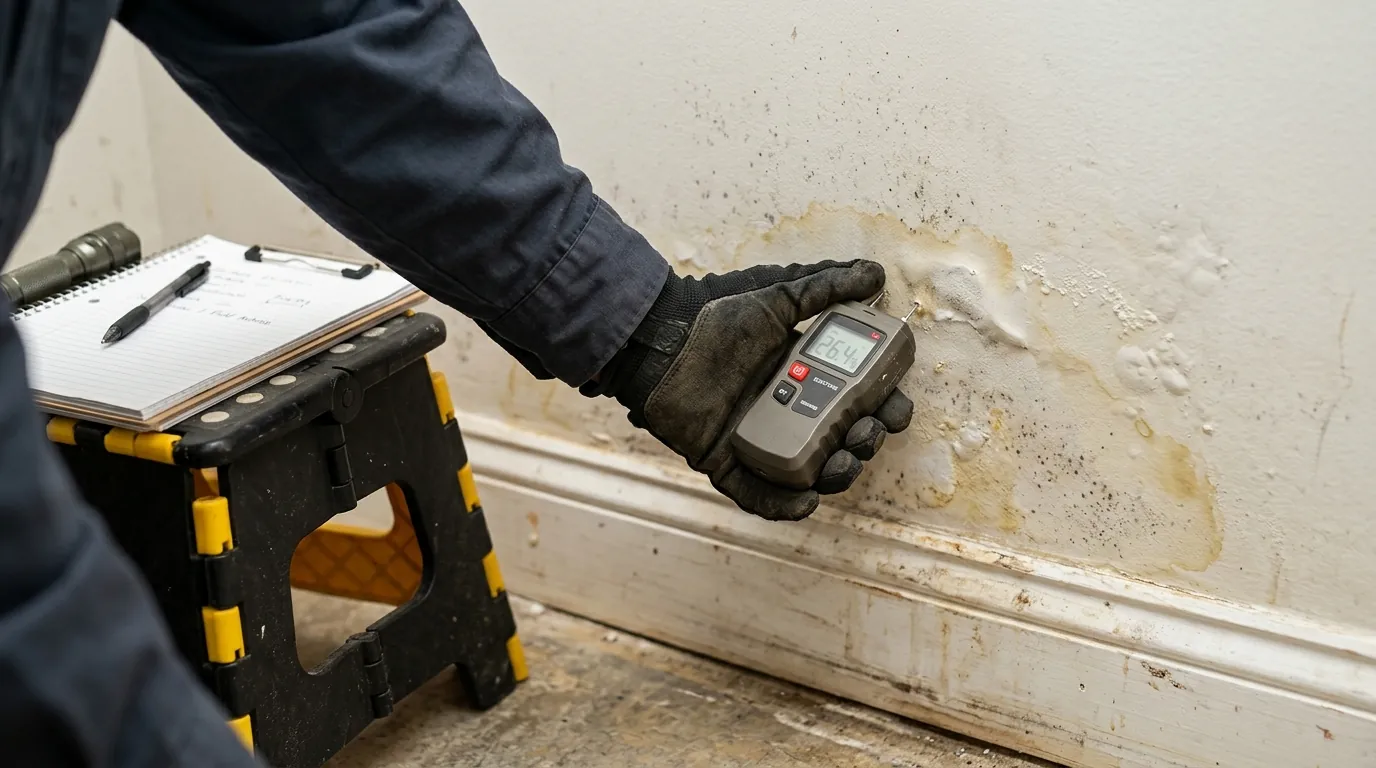
Inspection and testing
Start here when you smell it but cannot see it, when a sale or a claim depends on it, or when a house will sit empty.
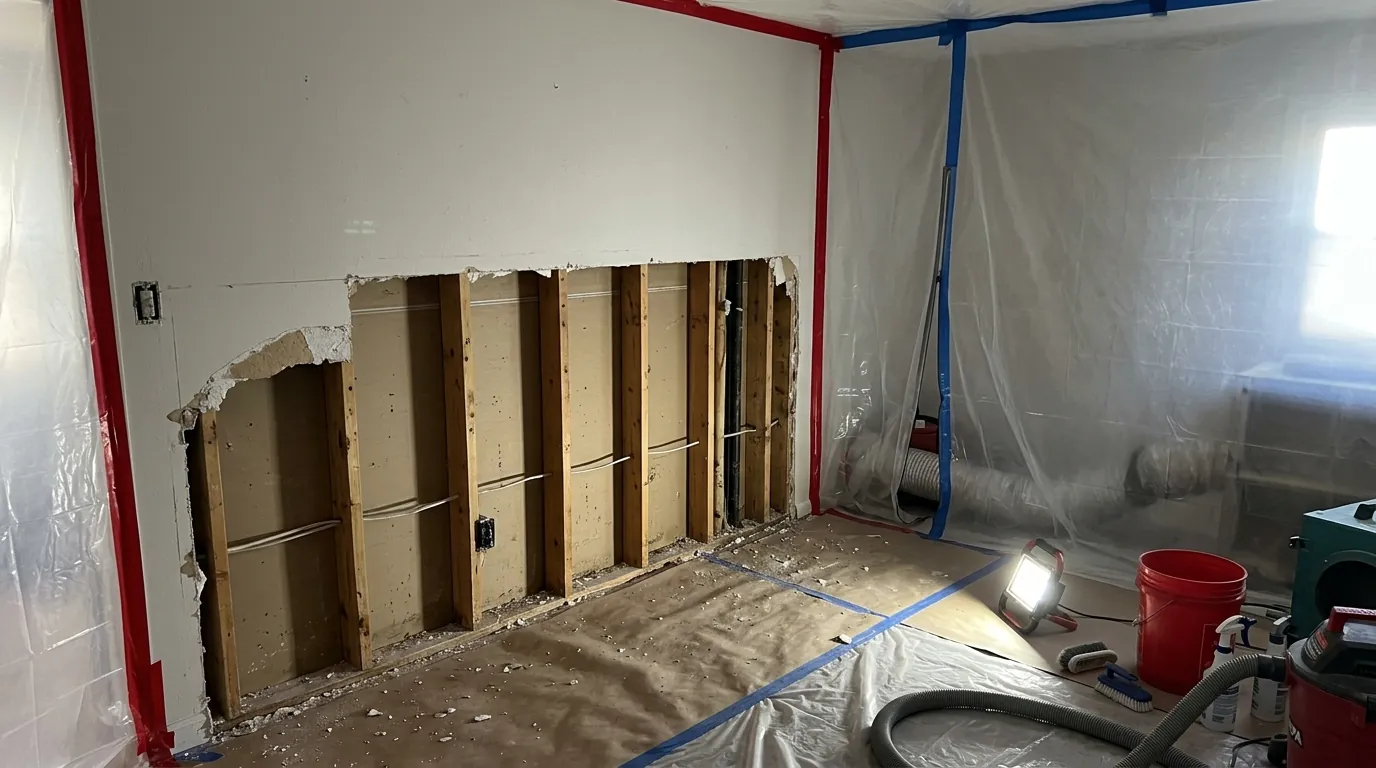
Mold removal
The core work: seal it off, take out what cannot be cleaned, clean what stays, and dry everything before it is closed up.
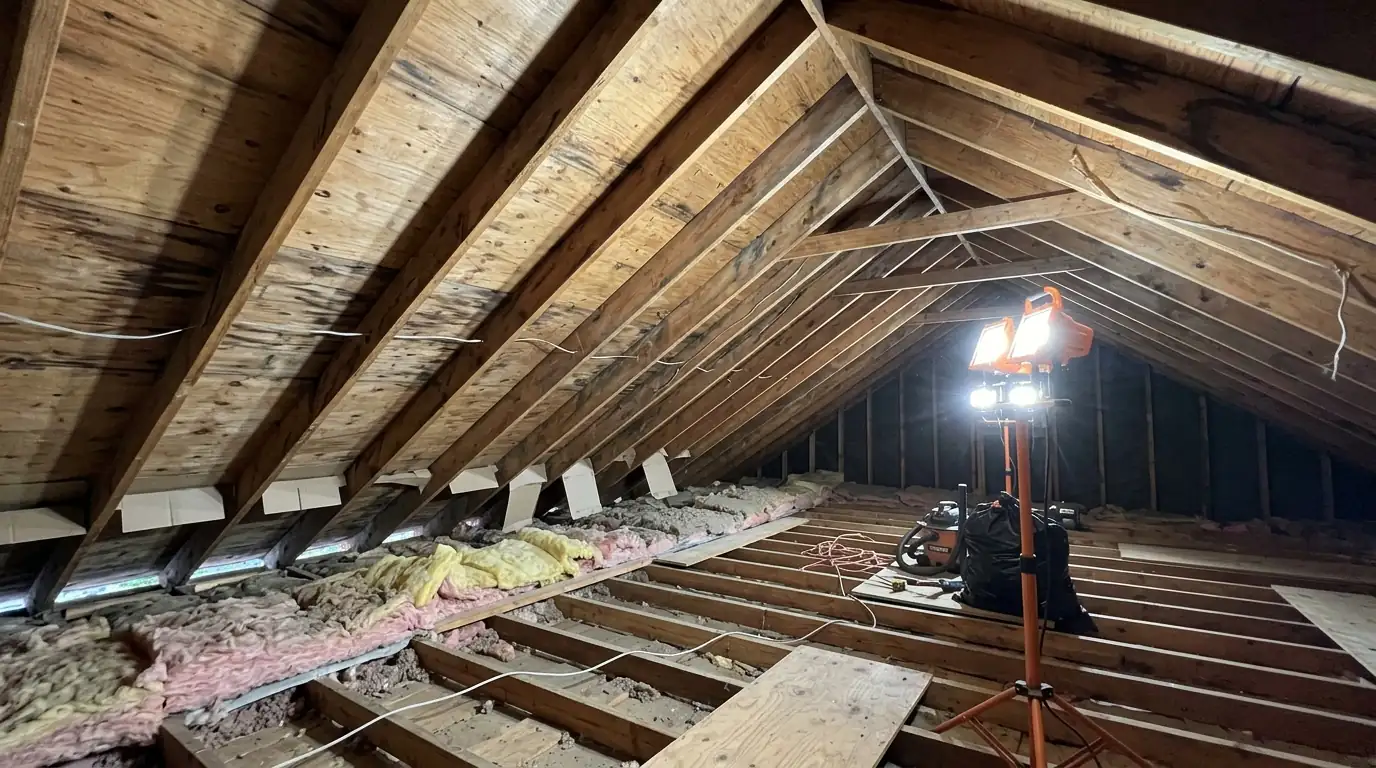
Basements, attics and rooms
Most calls start in one room. These pages cover how the job changes in a basement, an attic, a crawl space, a bath or the ductwork.
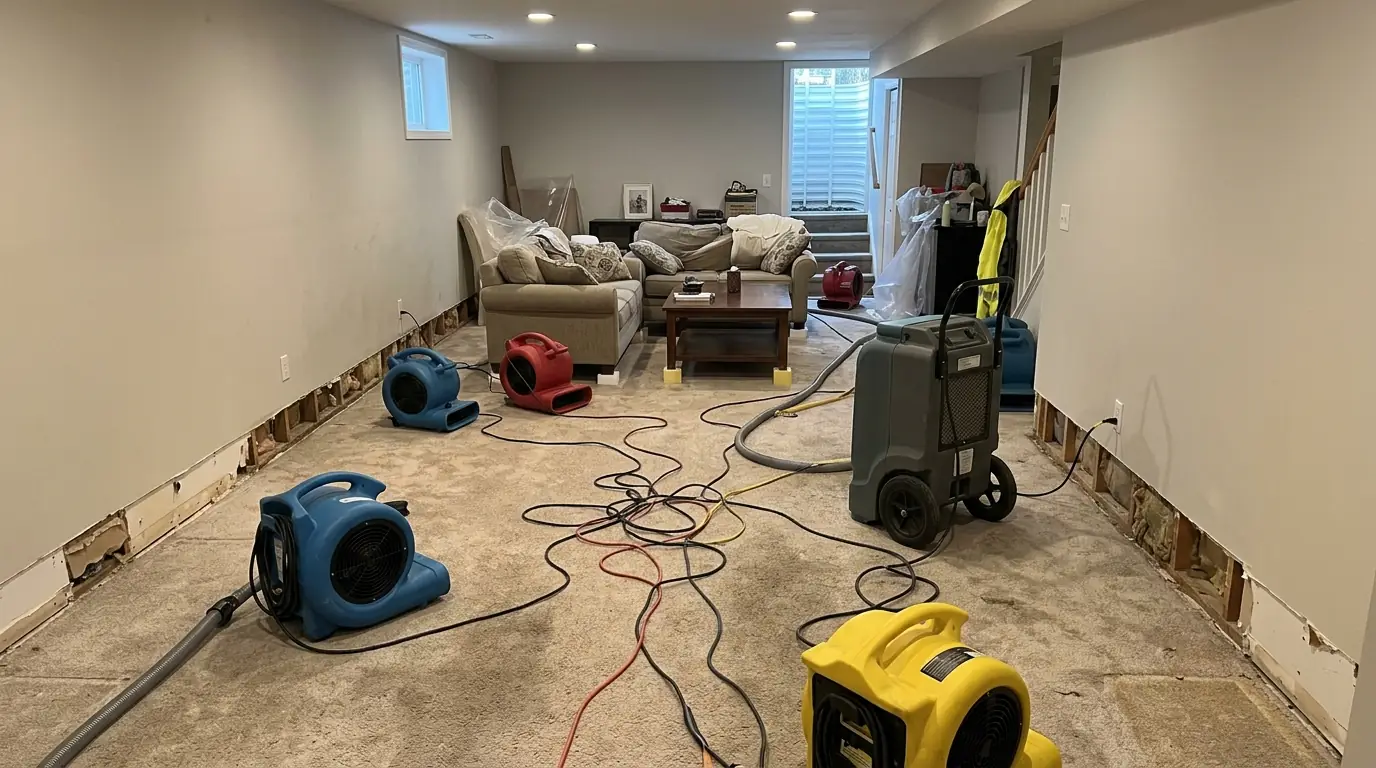
Water damage and drying
Mold is usually a water problem that waited too long. Drying fast, sanitizing and protecting belongings is how you avoid the rest of this list.
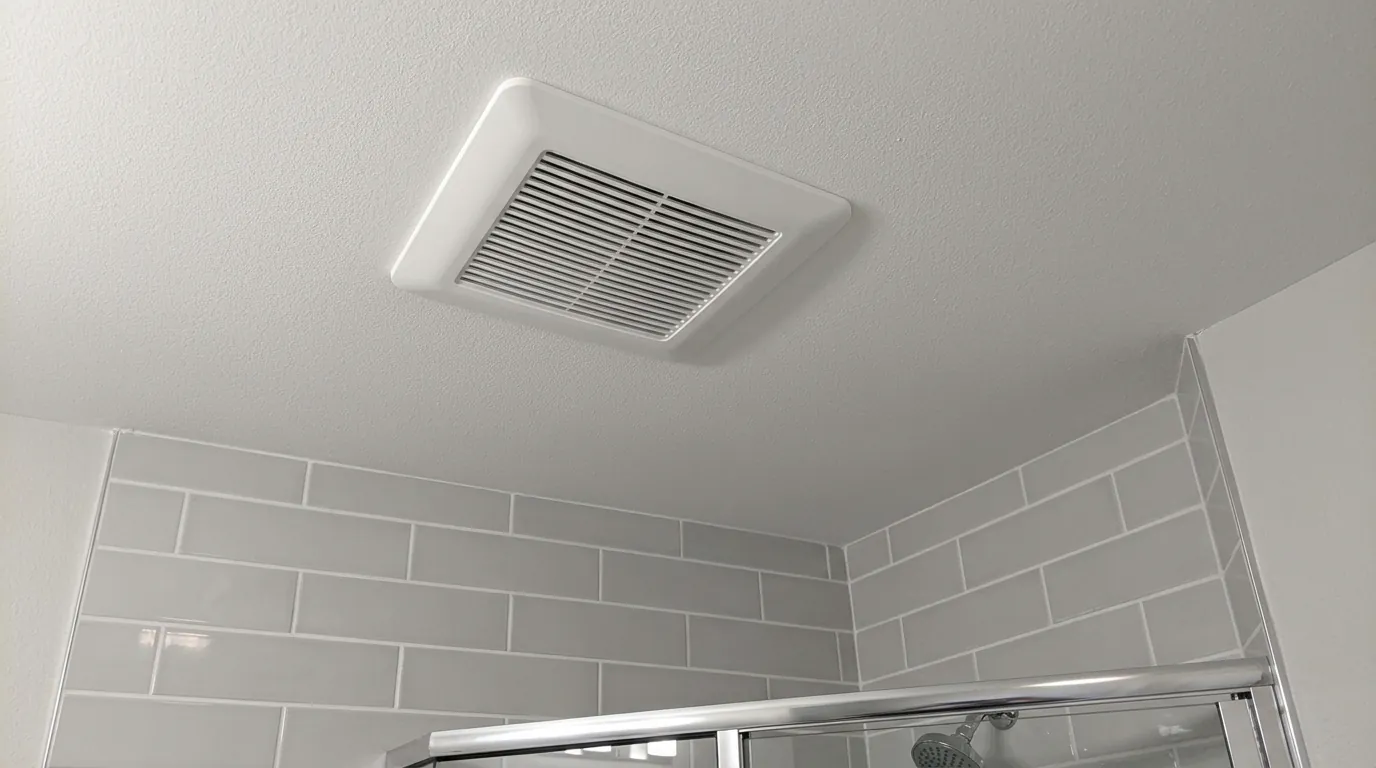
Moisture control
The fixes that keep mold from coming back: venting steam, controlling humidity, and keeping groundwater out of basements.
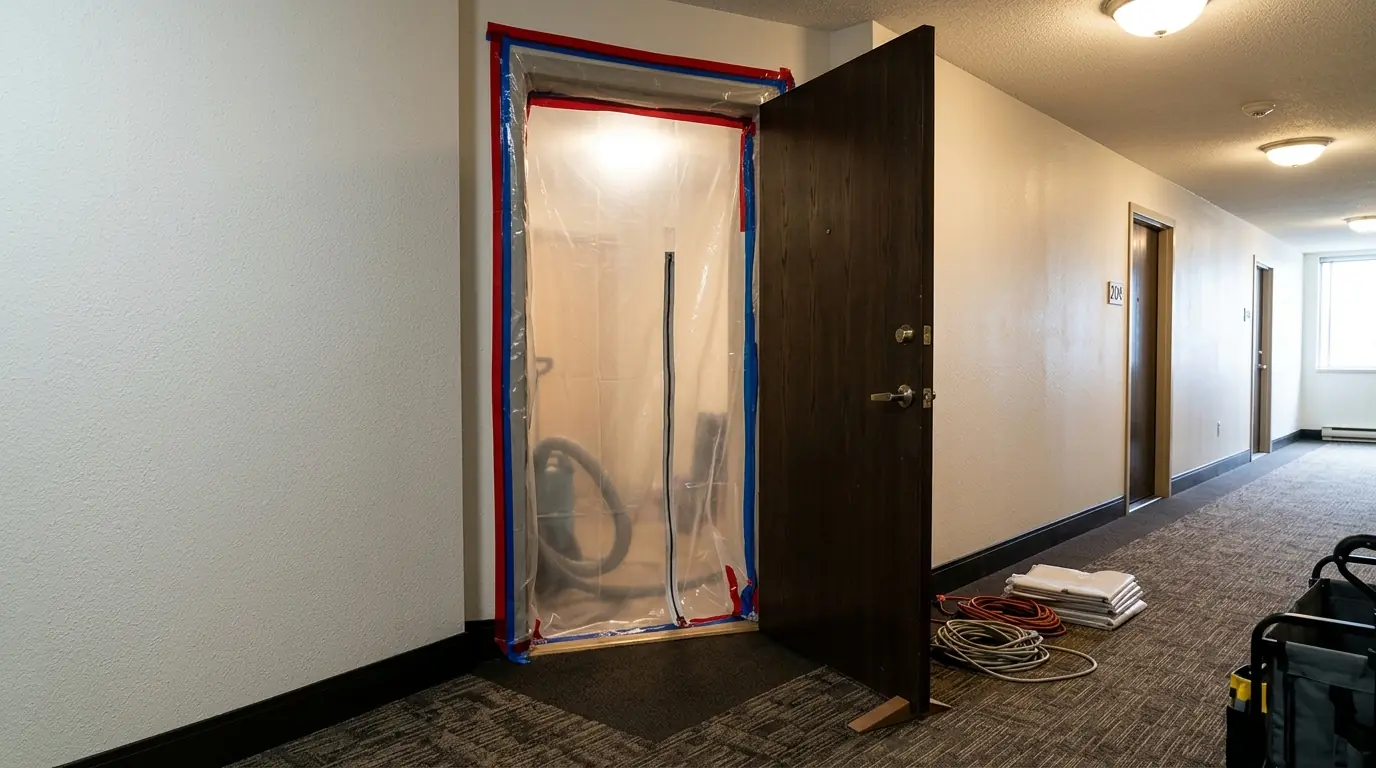
Rentals, condos and businesses
Same work, different paperwork and scheduling for landlords, boards, businesses and builders.
Warning signs
Signs you are dealing with more than a surface spot
A musty smell that comes back
A basement or closet that smells musty again a day after airing out has something damp behind the drywall or under the carpet.
Stains that grow after snowmelt
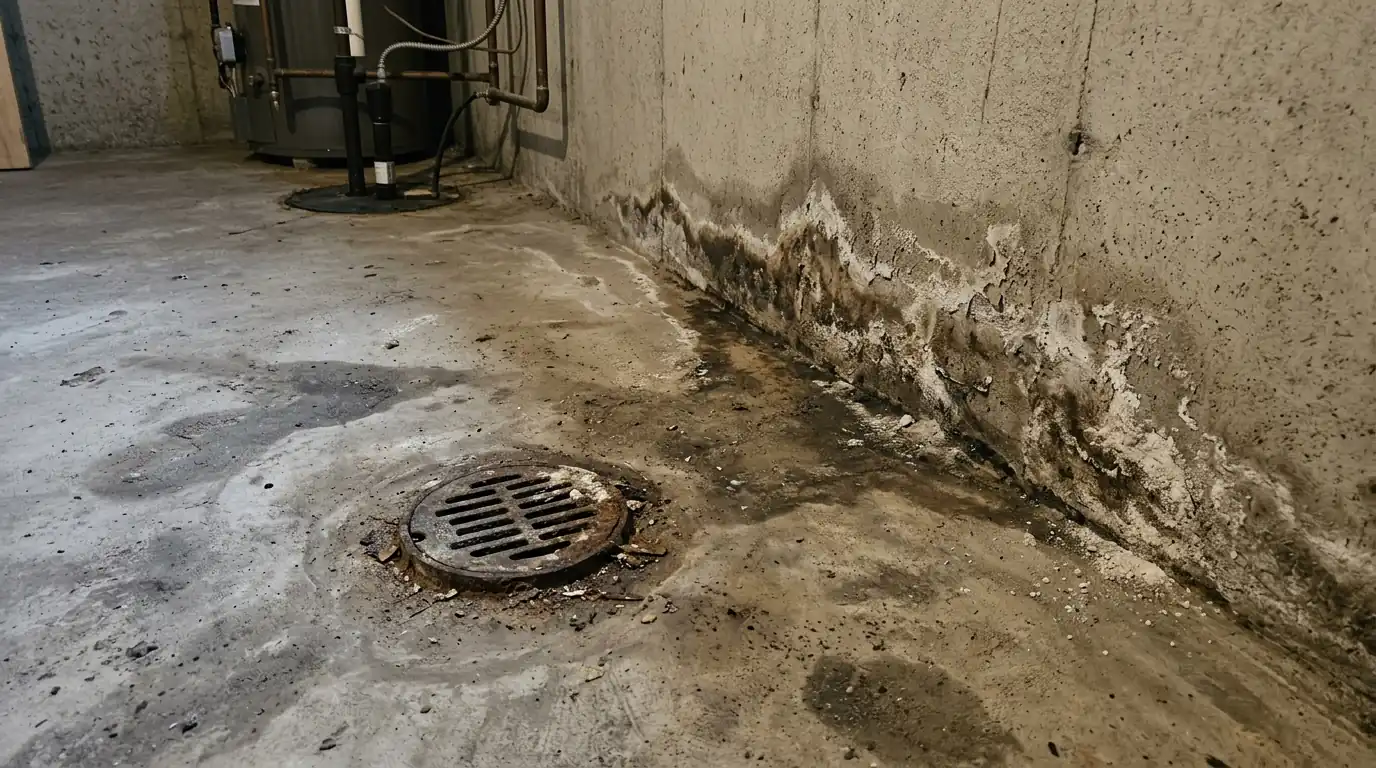
Tide lines low on basement walls in April or May mean water is getting in at the foundation or a window well.
Gray spots on a top-floor ceiling
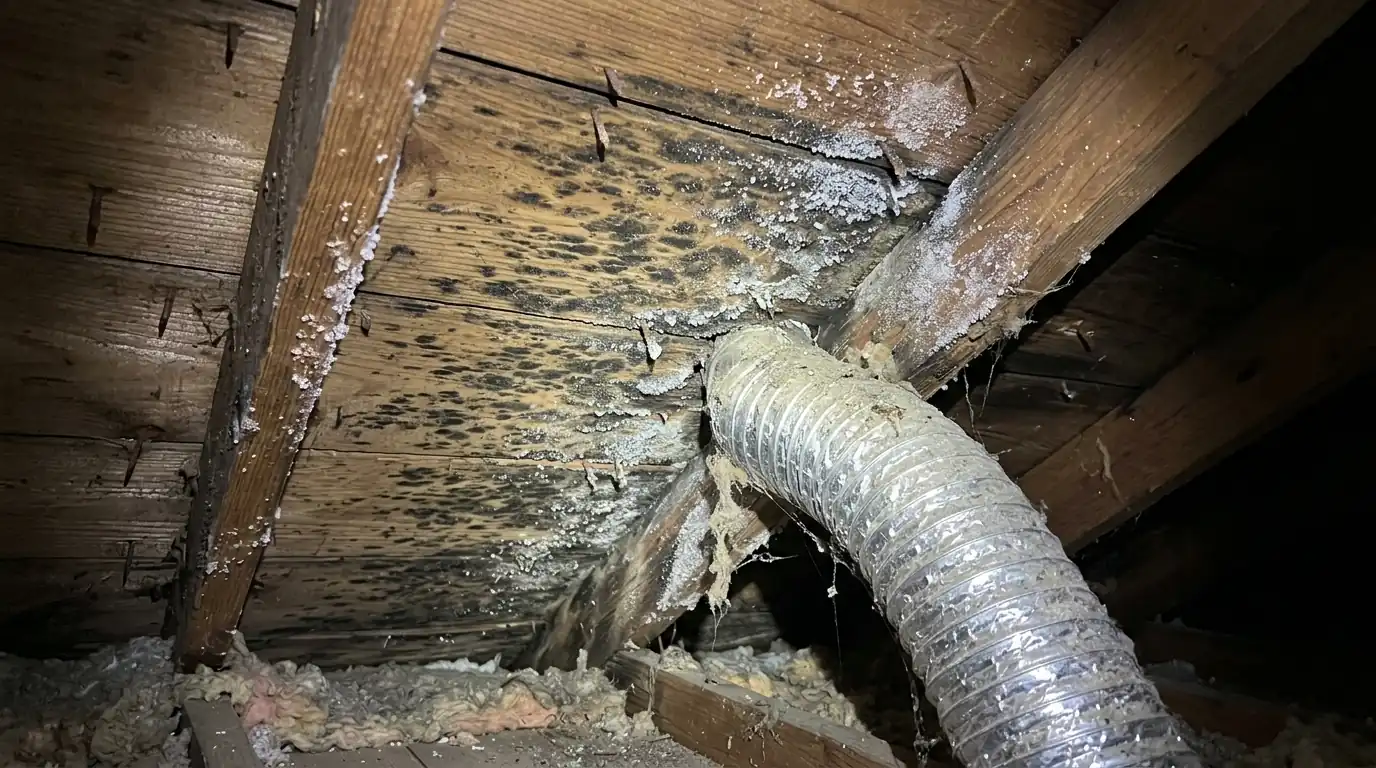
Winter freckling on a top-floor ceiling often traces to warm, wet air condensing on the roof deck above.
Black edges on winter windows
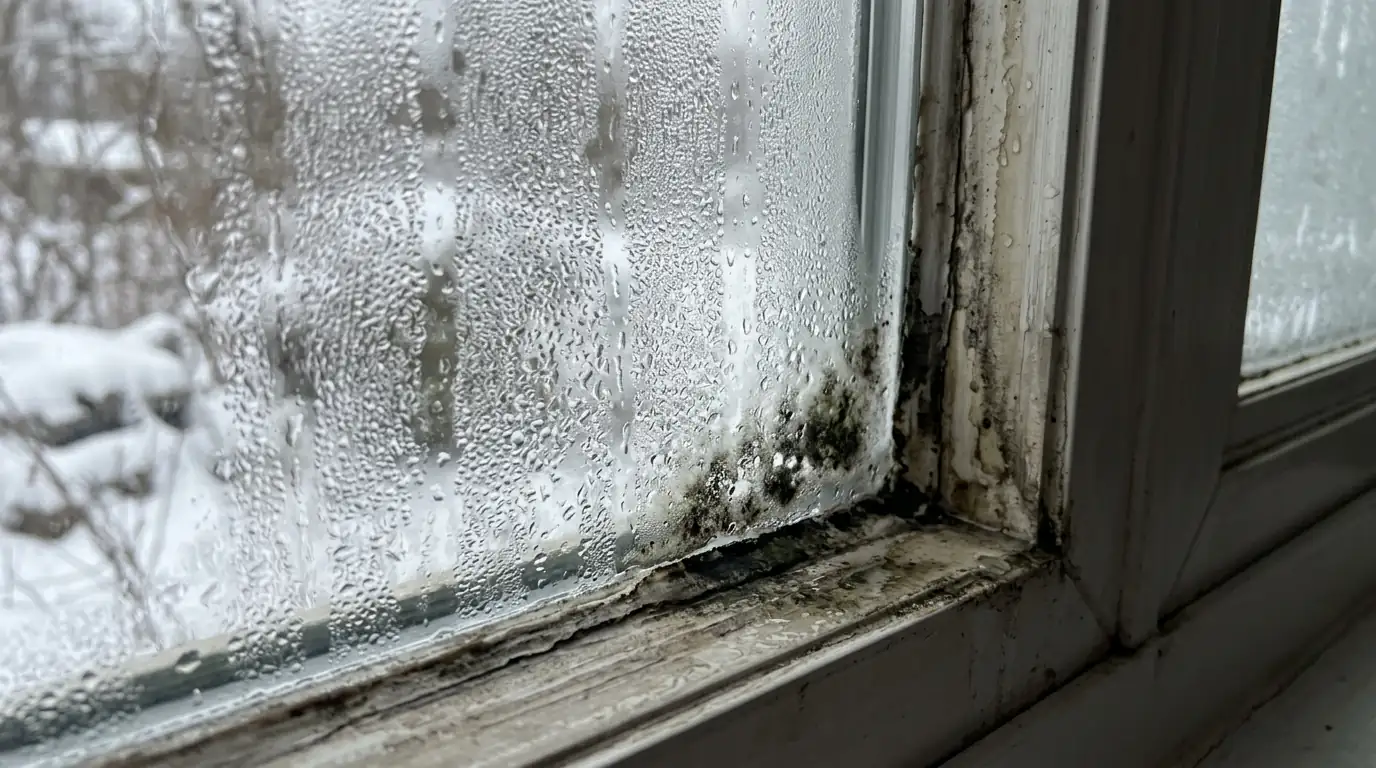
Frames that stay wet from December into February start growing mold in the corners and along the sill.
Soft baseboards or cupped flooring
Swelling near a tub, dishwasher or water heater means a slow leak is feeding what sits underneath.
Salt Lake City conditions
Why a dry-climate city still needs a mold company
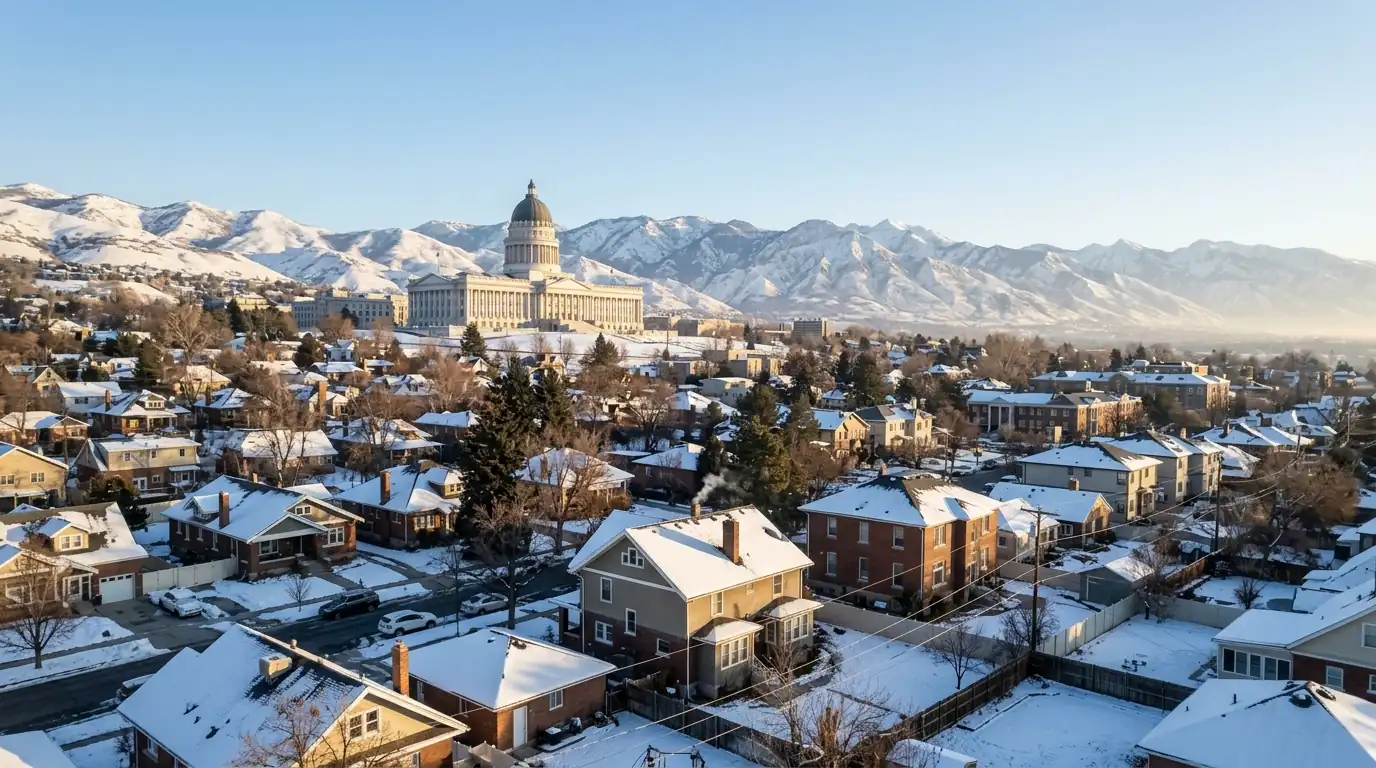
Salt Lake City is semi-arid, and summer air is usually dry. The trouble comes in winter and spring. NOAA normals put average humidity near 74 percent in December and January, which is exactly when warm indoor air meets cold roof decks and window glass. Spring brings the other half: in April 2023 Emigration Creek ran through Wasatch Hollow, and Salt Lake City, Millcreek and Salt Lake County all declared local flooding emergencies.
The housing adds its own risk. The median home in the city was built in 1965 and about a quarter predate 1940, so we open a lot of original bath fans venting into attics and foundation walls that were never sealed. Swamp coolers play a part too. A study of Utah County homes found the ones cooled by evaporative coolers ran noticeably more humid indoors all summer, and damp basements and ducts follow from that.
- 74%Average humidity at the airport in December and January, NOAA normals
- 1965Median year a Salt Lake City home was built
- 25%Share of city homes built before 1940
- 2023Salt Lake City, Millcreek and the county declared runoff flooding emergencies
How a job runs
What happens after you call
The order matters. Removing mold before the moisture is fixed just schedules the next visit.
- 1
You call, we ask the right questions
Where you see it, what got wet and when, and whether anyone in the house has asthma. That decides how quickly we need to be there.
- 2
Inspection and moisture readings
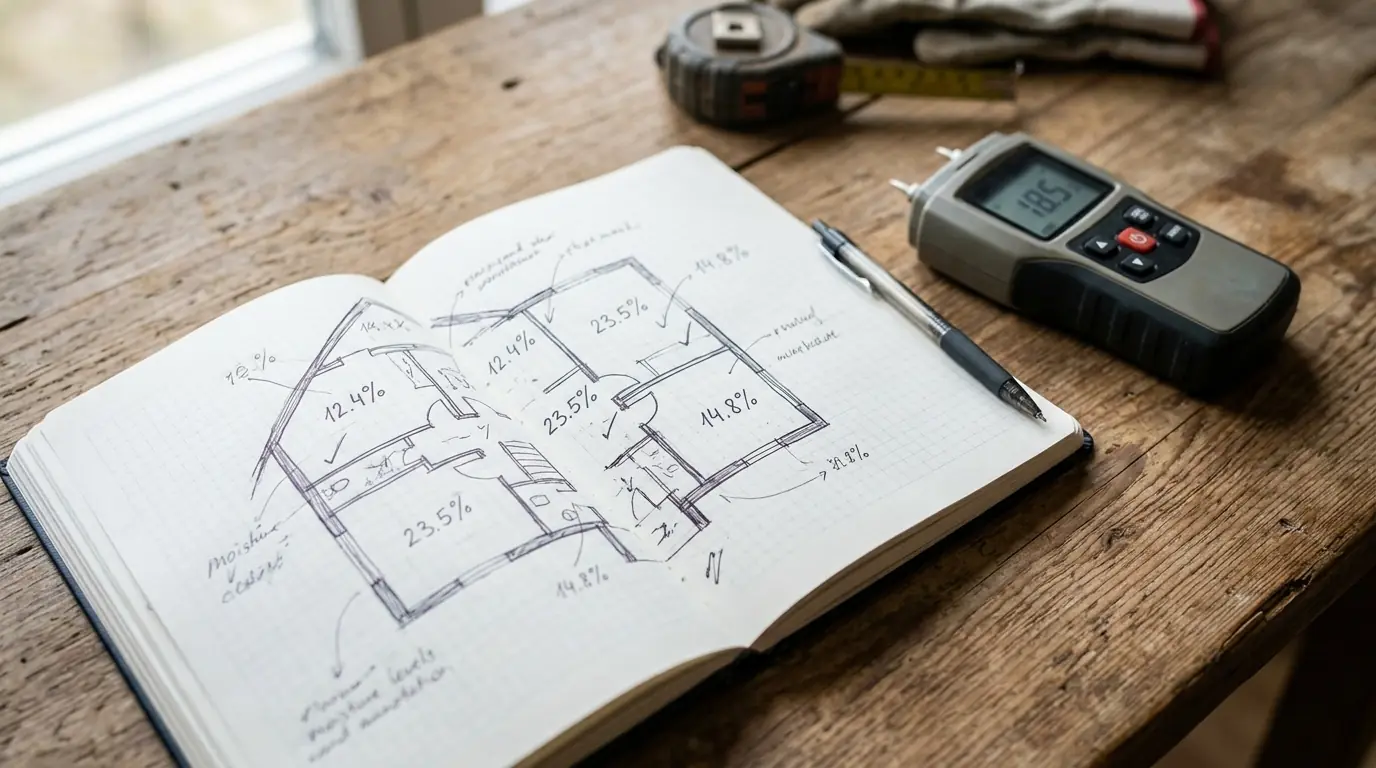
We map wet materials with a moisture meter and thermal imaging, open small inspection holes where the readings point, and find the source.
- 3
A written scope before work starts
You see what comes out, what gets cleaned and what testing makes sense.
- 4
Containment and negative air
Plastic sheeting, a zipper door and a HEPA air scrubber keep spores inside the work area and away from the rest of the house.
- 5
Removal and HEPA cleaning
Moldy drywall, insulation and carpet are bagged inside containment. Framing and concrete are HEPA vacuumed and wiped.
- 6
Drying and fixing the source
Nothing gets closed up wet. Framing is dried back to normal readings, and the leak, vent or grading problem is dealt with before walls go back.
- 7
Clearance before the plastic comes down
A visual check, moisture readings and, when the job calls for it, clearance air samples confirm the area is ready to rebuild.
We install and service dehumidifiers from Aprilaire, Santa Fe and Ultra-Aire, plus bath fans from Panasonic and Broan-NuTone. See whole-house dehumidifiers.
How we work
Three habits that keep a mold job honest
Water first, mold second
We do not scope removal until we know what fed the growth. A patch over a live leak is money spent twice.
Containment sized to the job
A closet does not need the whole basement sealed. A finished basement with growth behind the drywall does. The readings decide.
Photos and readings you can keep
Before, during and after photos with moisture numbers, the kind of record a buyer, a landlord or an adjuster will ask to see.
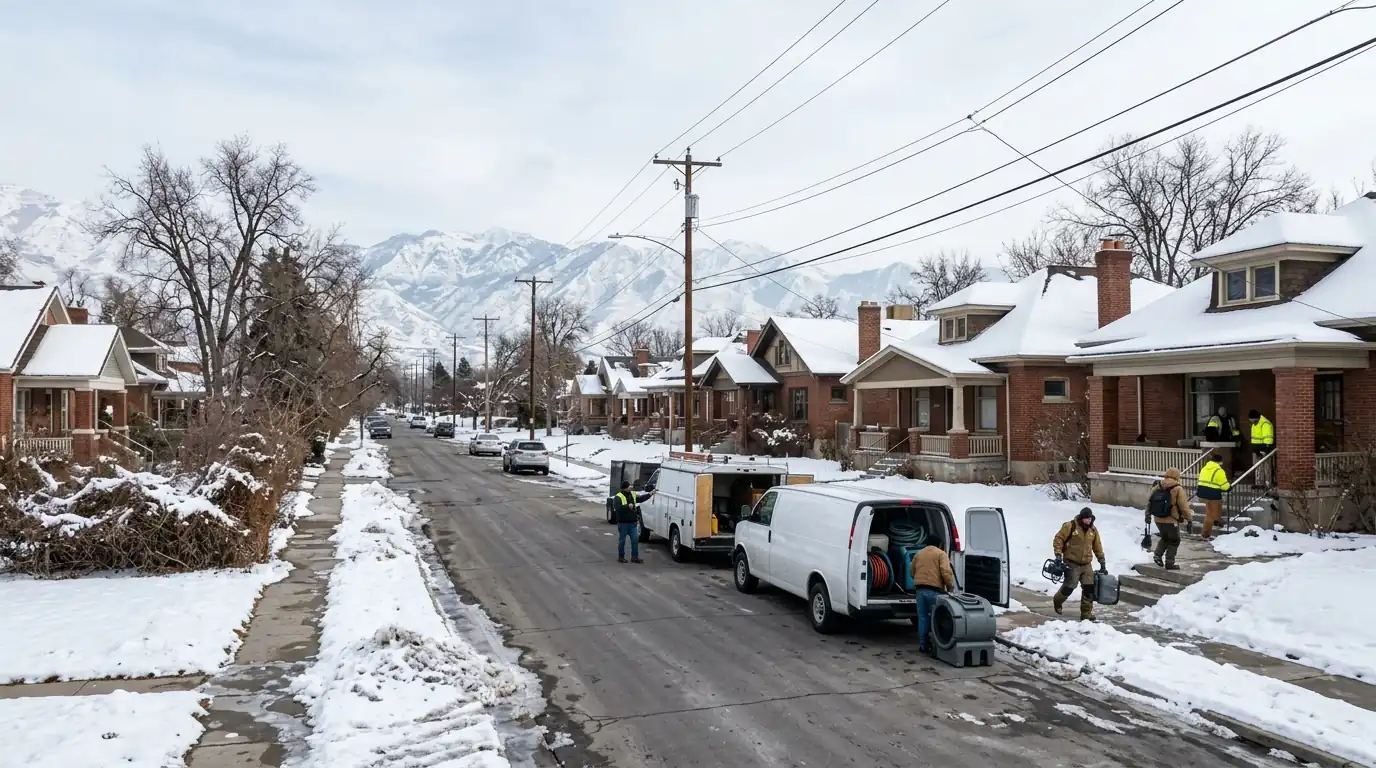
Winter is mold season hereCold roof decks and window glass meet humid indoor air from December through February, which is when attic and window mold gets its start.
Where we work
Salt Lake City first, then up and down the Wasatch Front
ABRA Mold Removal keeps its service office on Exchange Place downtown and its head office in North Salt Lake, a short drive from most of the city.
City neighborhoods with their own page: The Avenues, Sugar House, Rose Park, East Bench, Glendale, Poplar Grove, East Central, Capitol Hill, Liberty Wells, Westpointe and Yalecrest.
Past that we work across Salt Lake, Davis, Weber, Utah, Summit and Tooele counties; the service area page lists them all.
Mold advice
Read this before you tear out any drywall
Questions
Mold questions we hear most in Salt Lake City
Published national figures put most remediation at $10 to $25 per square foot, with typical jobs between $1,200 and $3,750 (This Old House, 2026). Attics, crawl spaces and anything inside a wall run higher because access and containment take longer. More detail is in our mold removal cost guide.
Not always. When growth is visible and the source is obvious, sampling rarely changes the plan. Testing earns its cost when mold is hidden, when a sale depends on documentation, or after a cleanup. See how our mold testing works.
Often, yes. Public health guidance citing the EPA suggests calling a contractor once growth covers more than about 10 square feet. Scrub hard surfaces with detergent and water, wear gloves and a well-fitted mask,. If the patch returns, the moisture is still there.
Outdoor air is dry most of the year, but mold grows on wet materials, not in dry air. Winter humidity near 74 percent, spring runoff and ordinary indoor leaks keep plenty of Salt Lake homes damp in the wrong places.
A bathroom or closet usually wraps up quickly. Finished basements and attics take longer, and drying after a leak can add days before anything is closed up.
No. Utah has no statewide mold remediation or inspector license, so ask any company how it contains the work, handles the moisture source and confirms the job is done.
Answered around the clock
Smell it, see it or just had a leak? Call now.
Tell us what you found and where. We will walk you through what to do tonight and when we can be there.