Updated October 2026
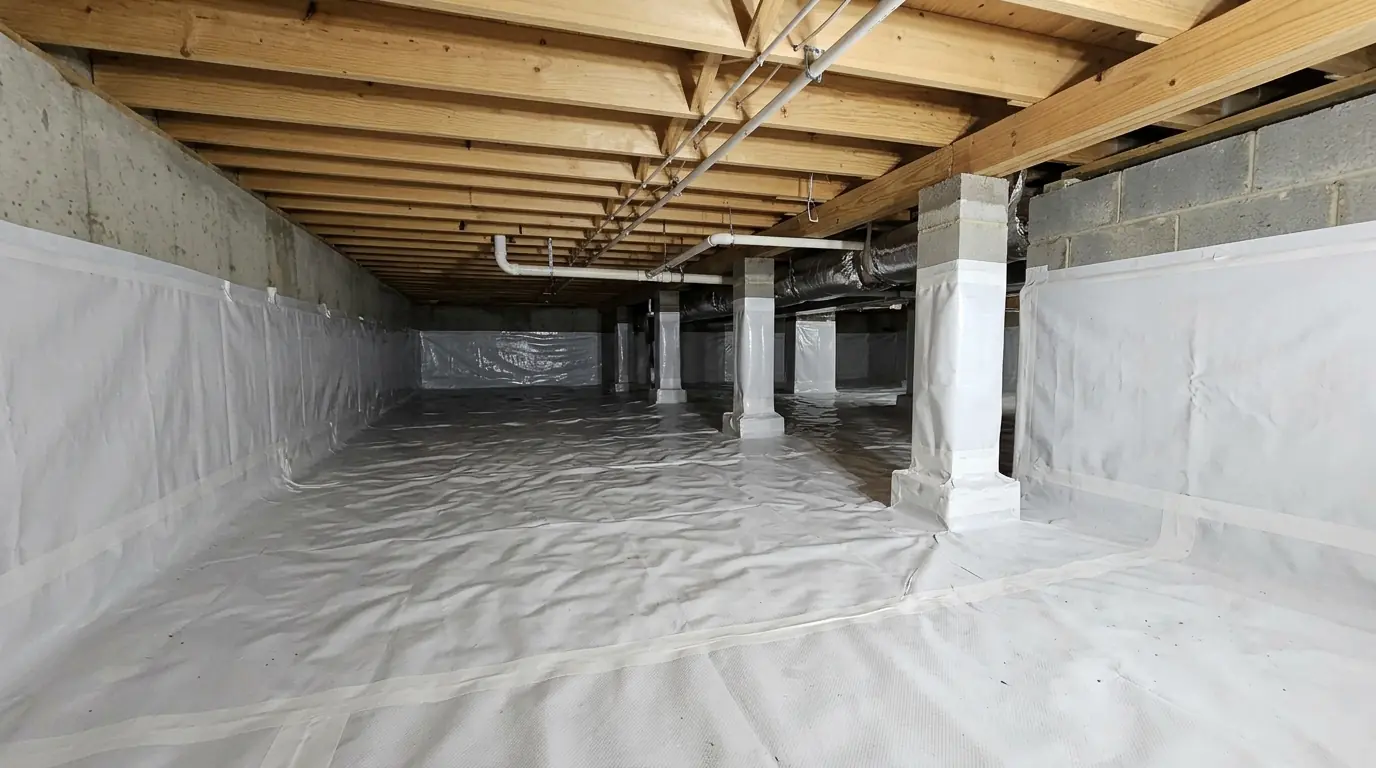
Crawl space encapsulation in Salt Lake City means covering the soil and foundation walls with a sealed, heavy liner, closing vents and rim joists, and often adding a dehumidifier so the space stays dry. HomeGuide puts full encapsulation at $3 to $10 per square foot, and a basic vapor barrier at $2 to $4.
Why seal a crawl space
Soil gives off moisture every day, and a vented crawl space lets outdoor air in to meet cool joists. The result is damp wood, musty floors and mold that returns after cleaning.
Encapsulation cuts the crawl space off from both. It is the long-term fix after crawl space mold removal, not a substitute for it.
What crawl space encapsulation costs
Encapsulation is priced by the square footage of the crawl space and how much prep it needs.
- Square footageFloor and wall area to cover.
- Prep workDebris, old plastic and mold cleanup first.
- Liner typeThicker reinforced liners cost more.
- SealingVents, rim joists and penetrations.
- DehumidifierAdded when the space stays humid.
Published price ranges
- Crawl space vapor barrier: $2 to $4 per square foot installed (homeguide.com, 2026)
- Crawl space encapsulation: $3 to $10 per square foot (homeguide.com, 2026)
National planning figures from the sources named, not our prices. Your number comes from the written scope.
Vapor barrier or full encapsulation?
| Option | What it includes | Best for |
|---|---|---|
| Ground vapor barrier | Plastic sheeting over the soil, lapped and weighted | Dry-ish crawl spaces with mild soil moisture |
| Full encapsulation | Heavy liner on soil and walls, seams taped, vents and rim joists sealed | Damp crawl spaces or recurring mold |
| Encapsulation plus dehumidifier | Everything above plus a crawl space dehumidifier | Crawl spaces that stay humid even when sealed |
Vapor barrier installation
A vapor barrier is the simpler job: a sheet of plastic laid over the soil, lapped at the seams and held down, so ground moisture stays below it. It works in crawl spaces that are only mildly damp. The details matter. Thin or torn plastic, gaps at the walls and seams that are not lapped let moisture straight through, and we replace a lot of old barriers for exactly that reason. We use a heavier material and run it a short way up the walls so it stays put.
Sealing vents and rim joists
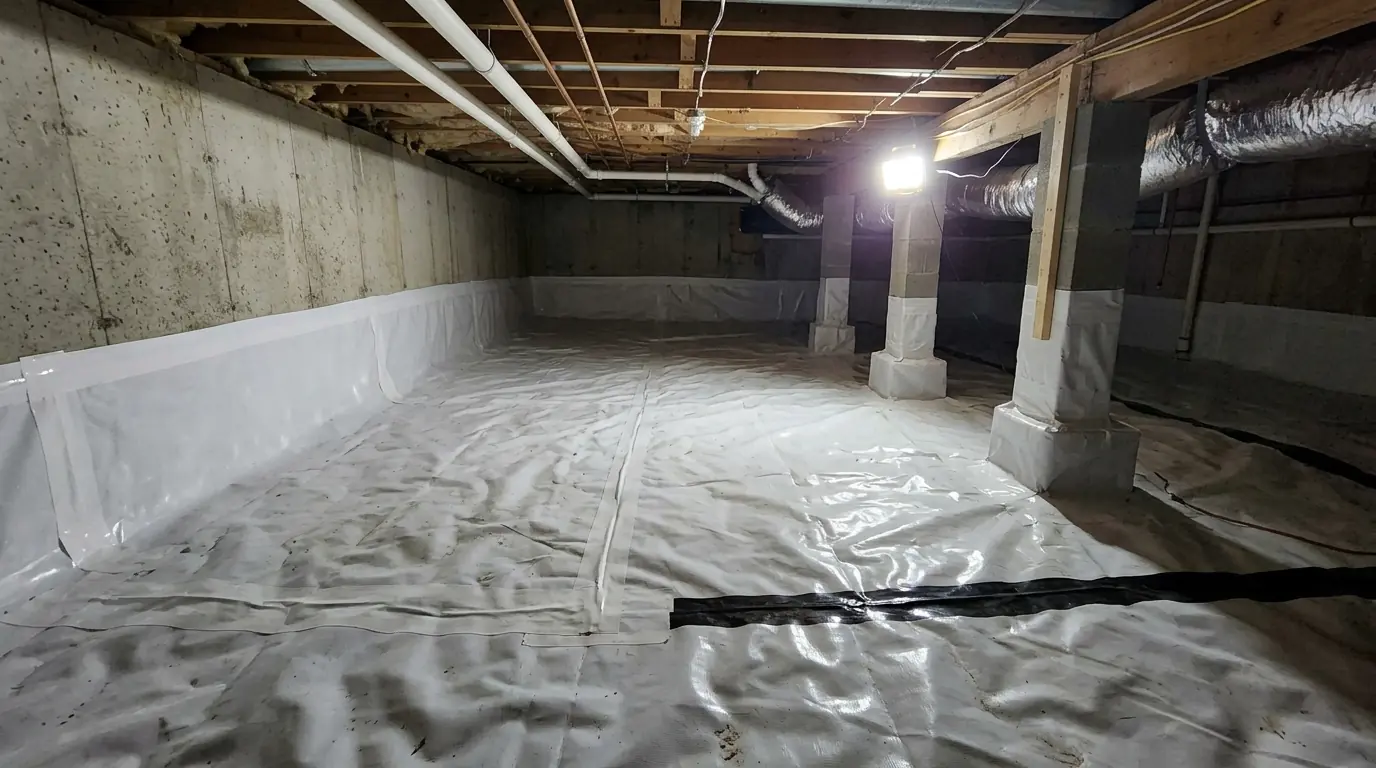
Foundation vents were meant to dry crawl spaces, but in summer they let warm air in to condense on cool joists, and in winter they chill the floors above. In an encapsulation the vents are sealed with rigid foam, and so are the rim joists, where the floor framing sits on the foundation and outside air leaks in. With the space sealed, humidity is controlled from inside, either by a small amount of the house's own conditioned air or by a crawl space dehumidifier.
What an encapsulation includes
- Removing old plastic, debris and wet insulation
- Cleaning any mold on joists and beams first
- A heavy reinforced liner over the soil
- Liner run up the foundation walls and fastened
- Seams, piers and penetrations taped and sealed
- Foundation vents and rim joists sealed
- A hygrometer you can read from the access hatch
Spring runoff and crawl spaces
During the 2023 runoff, Salt Lake County named Red Butte, Emigration, City Creek, Big Cottonwood, Little Cottonwood and Millcreek as the creeks most at risk of flooding, and forecasters were watching the Weber River in Weber County. Homes near creeks and low ground get more groundwater in spring, and crawl spaces there take it first. A sealed liner will not stop flooding, but it keeps the everyday soil moisture of a wet spring out of the framing.
How the job runs, step by step
- 1
Inspect and read
Soil, joists, air and any standing water.
- 2
Clean up first
Debris out, mold cleaned.
- 3
Fix water entry
Grading or gutter issues flagged.
- 4
Lay the liner
Soil covered, seams lapped and taped.
- 5
Run up the walls
Liner fastened and sealed at the top.
- 6
Seal vents and rims
Outside air cut off.
- 7
Control humidity
Dehumidifier and a hygrometer where needed.
Questions about crawl space encapsulation
In damp crawl spaces or ones with recurring mold, yes. Dry crawl spaces may only need a vapor barrier.
Not always. It depends on how humid the space stays once sealed.
No. Standing water needs grading, gutter or drainage fixes first.
No. Mold on the framing is cleaned first, then the space is sealed.
A hygrometer readable from the hatch shows the humidity at a glance.
Answered around the clock
Crawl space always damp? Call about sealing it.
Tell us about the space and any mold you have seen. We will explain the options.