Updated October 2026
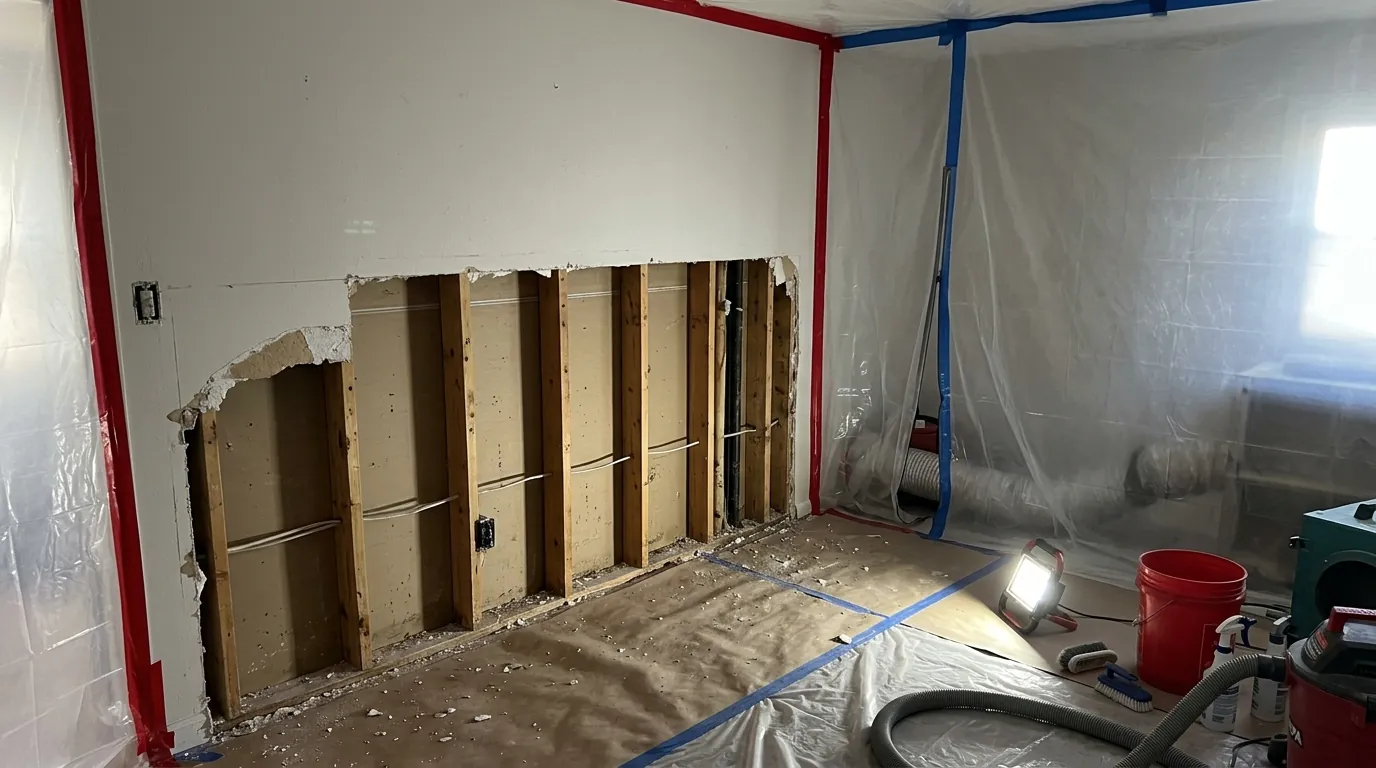
Wall and ceiling mold removal in Salt Lake City starts with moisture readings to find how far growth spread inside the cavity, then removing that drywall under containment and cleaning the studs or joists behind it. Published figures for wall mold run from $1,000 to $12,000, driven by how much has to come out.
Why the stain is only the start
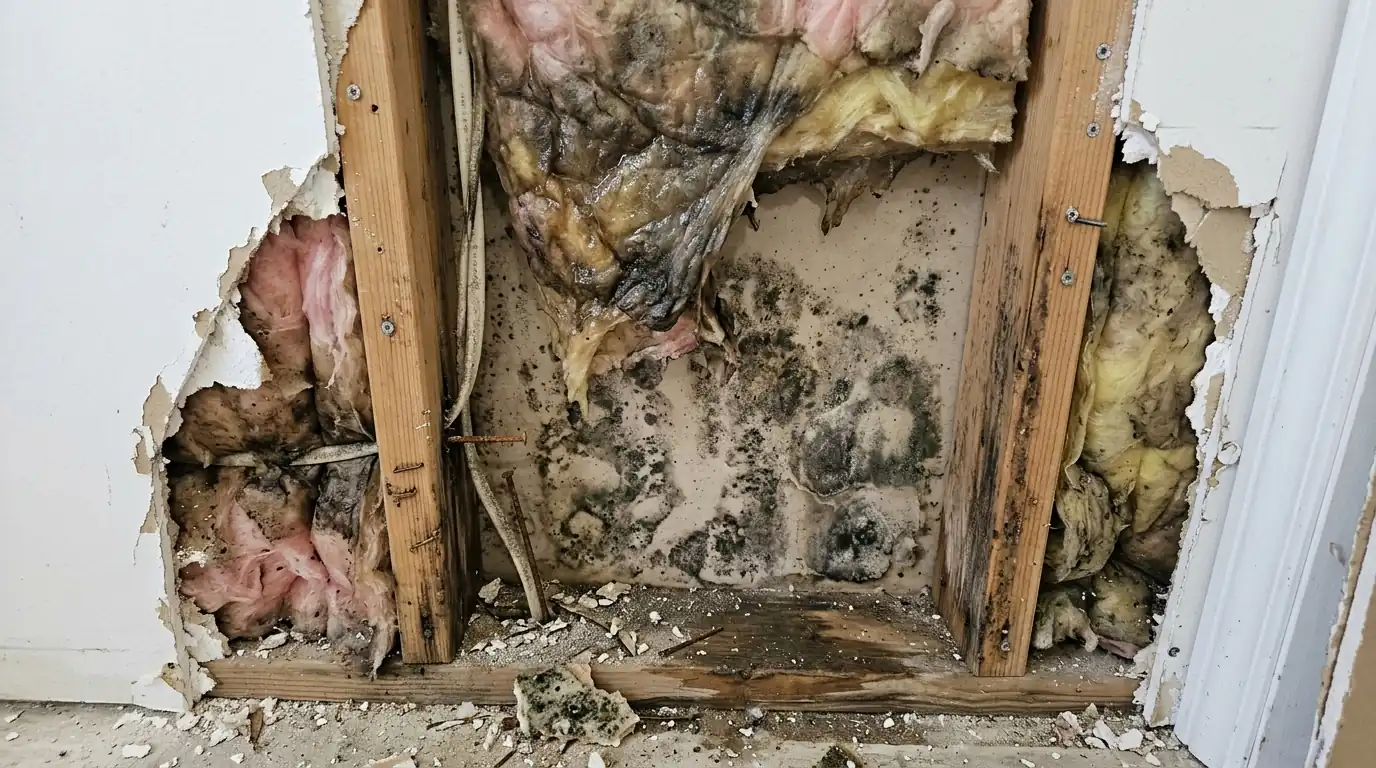
Drywall paper grows mold on the back side first, where it touches the cavity and stays damp. By the time a stain shows on the front, the growth behind it is usually wider.
We read the wall around the stain and open inspection holes where needed, so the removal matches what is really inside.
What wall and ceiling mold removal costs
Wall jobs are priced by the drywall and insulation that comes out, plus containment.
- Area openedSquare feet of drywall removed.
- Height and accessCeilings and stairwells take longer.
- InsulationRemoving and bagging wet insulation.
- The sourcePlumbing, roof or condensation fixes.
- FinishesTile, built-ins or cabinets in the way.
Published price ranges
- Mold on walls: $1,000 to $12,000 (realcostiq.com, 2026)
- Mold remediation per square foot: $10 to $25 per square foot (thisoldhouse.com, 2026)
National planning figures from the sources named, not our prices. Your number comes from the written scope.
How much of the wall needs to come out?
| What we find | Usual approach | Why |
|---|---|---|
| Surface spots on paint, dry cavity | Clean the surface and fix the source | Nothing is growing inside |
| Growth on the back of the drywall | Cut out past the growth | The paper cannot be cleaned |
| Growth on studs or joists | Remove drywall, clean and dry the framing | Sound wood is cleaned, not replaced |
Mold inside wall cavities
Wall cavities hide plumbing, leaks from windows above and condensation on cold exterior walls. We use a moisture meter and a borescope to see how far growth reaches before cutting anything, so the opening is no bigger than it needs to be. Drywall is cut past the affected area inside containment, insulation that grew mold comes out, and the studs and plates are HEPA vacuumed and cleaned. The cavity is dried to normal readings, and the plumbing, window or condensation problem is fixed before the wall is closed again.
Ceiling mold after roof leaks and ice dams
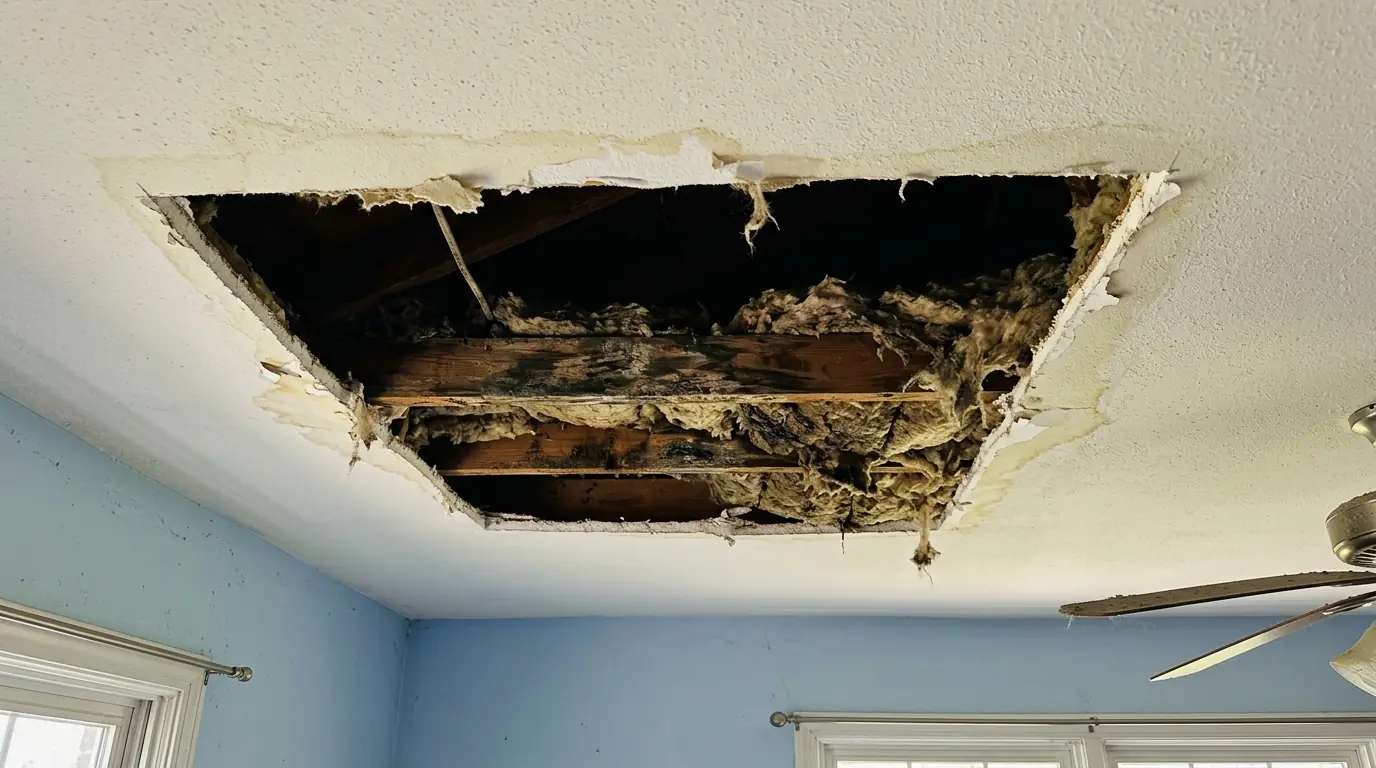
Ceiling mold on a top floor usually traces to the attic: an ice dam that pushed water under the shingles, a roof leak at a vent, or a bath fan venting warm air into the insulation. We check the attic above before opening the ceiling, remove wet or moldy drywall and insulation, and clean the joists. If the attic side has growth too, attic mold removal happens in the same visit, so the ceiling is not closed under a moldy attic.
Closet and exterior wall mold
Closets on exterior walls, especially on the north side, are the coldest and stillest spots in many houses. Warm indoor air meets the cold wall behind clothes and boxes, and mold starts along the back and the floor. We clean or remove affected drywall, check the insulation in the wall, and recommend small changes that keep it from coming back: space between shelves and the wall, a louvered door, and humidity kept in check during the winter months, when the wall is coldest.
Winter humidity and cold walls
Salt Lake City winters bring two things that show up on walls and ceilings. NOAA normals put average humidity near 74 percent in December and January, so condensation forms on the coldest interior surfaces. And the airport averages under 60 inches of snow, enough for ice dams on roofs with poor attic ventilation. Top-floor ceiling stains that appear in February and closet mold on north walls both follow from those conditions.
Signs the wall or ceiling needs opening
Stains that keep coming back
Painted over and back within months.
Ceiling spots under the attic
Often after cold snaps and thaws.
Bubbling or peeling paint
Water pushing the paint off from behind.
A musty closet on an exterior wall
Cold corners where moisture condenses.
Dark spots along baseboards
Water wicking up from the floor.
How the job runs, step by step
- 1
Read the wall
Meter and borescope before cutting.
- 2
Find the source
Plumbing, roof, window or condensation.
- 3
Contain the area
Plastic and negative air.
- 4
Open and remove
Drywall and insulation bagged.
- 5
Clean the framing
HEPA vacuum and wipe down.
- 6
Dry and fix
Cavity dried, source repaired.
- 7
Ready to close
Readings normal before rebuild.
Questions about wall and ceiling mold removal
Only after the source is fixed and the wall reads dry. Otherwise it comes back.
Warm air condensing in the attic or ice dams pushing water in.
No. We cut past the growth, guided by readings.
The tile usually has to come off. See bathroom mold removal.
Cut lines are left clean and straight for whoever rebuilds.
Answered around the clock
Stain coming back on a wall or ceiling? Call us.
Tell us where it is and when it appears. We will explain what we would check.