Updated October 2026
Kitchen and cabinet mold removal in Salt Lake City starts under the sink and behind the dishwasher and refrigerator, where slow leaks feed growth on particleboard cabinet floors and the drywall behind them. Moldy cabinet floors are usually cut out and replaced, and the wall behind is opened only as far as readings show.
Where kitchen mold actually starts
Kitchens have more water connections packed into less space than any room except a bathroom: the sink supply and drain, the dishwasher feed and discharge, the refrigerator line and sometimes a garbage disposal. Any of them can drip for months into a cabinet nobody empties.
We check each connection, read the cabinet boxes and the wall behind them, and look at the ceiling below when the kitchen is upstairs.
What drives the cost of kitchen mold removal
Kitchen jobs depend on how far the water traveled behind the cabinets.
- Cabinet damageA cabinet floor versus the whole box.
- Wall behindHow much drywall needs to come out.
- AppliancesPulling and resetting a fridge or dishwasher.
- FlooringWater that spread under plank or tile.
- Ceiling belowUpstairs kitchens can damage the room underneath.
Published price ranges
- Mold remediation per square foot: $10 to $25 per square foot (thisoldhouse.com, 2026)
National planning figures from the sources named, not our prices. Your number comes from the written scope.
Sink base and under-sink mold
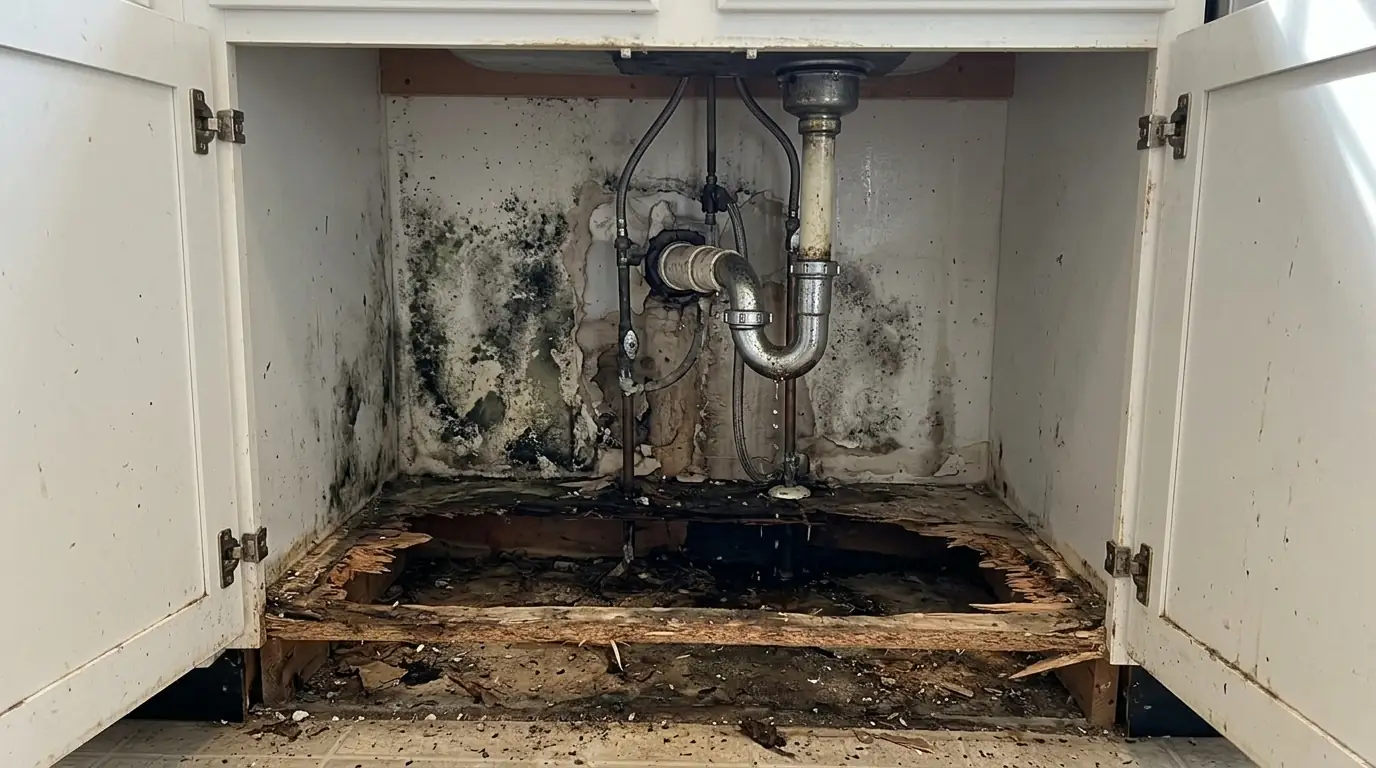
The sink base takes the most water. Drain slip joints loosen, supply valves weep, and a disposal can crack at the bottom. Particleboard cabinet floors swell and grow mold on the underside first. We empty the cabinet, cut out the damaged floor, and check the wall behind the cabinet back, where growth often hides. The rest of the cabinet box is cleaned, HEPA vacuumed and dried, and a new floor panel goes in after the leak is fixed and readings are normal.
Dishwasher and refrigerator line leaks
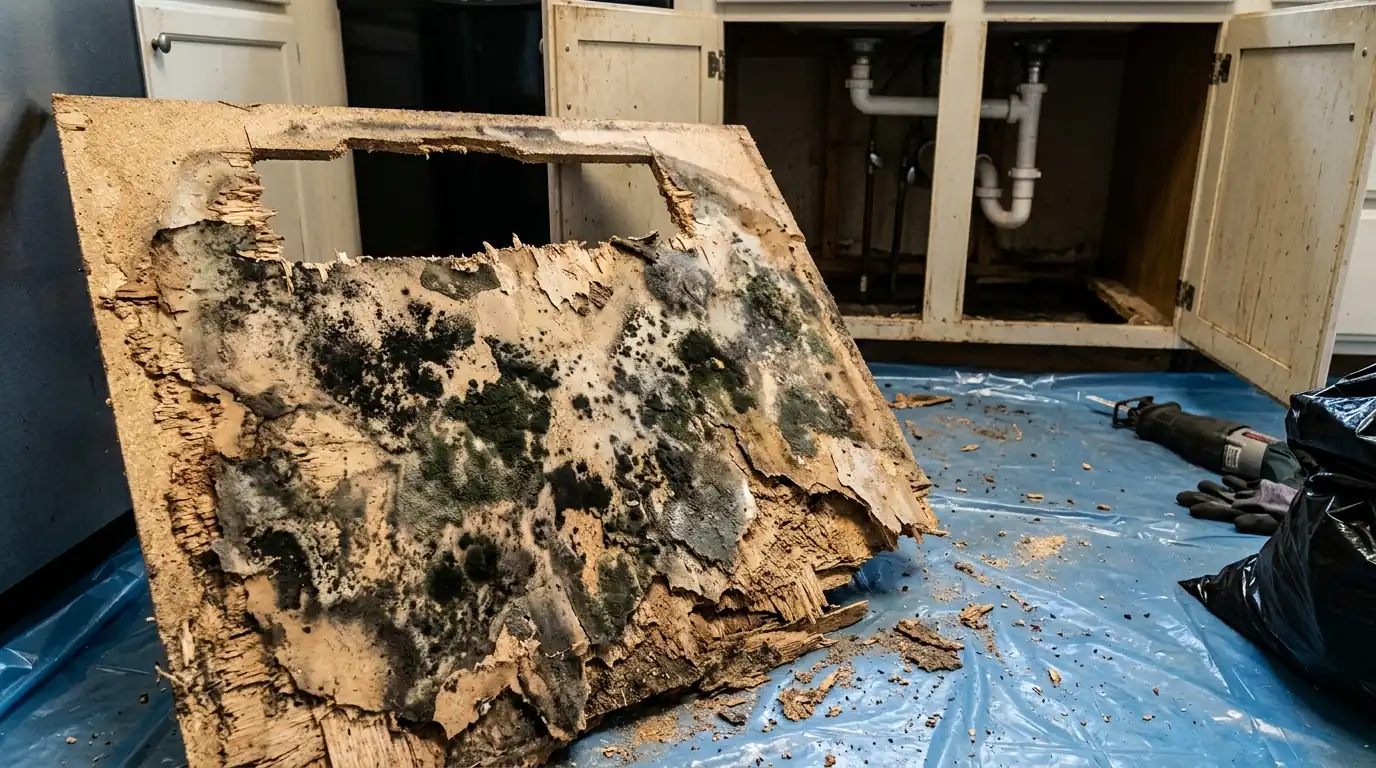
Dishwasher hoses and refrigerator water lines leak where you cannot see them: under the machine, into the subfloor and behind the cabinets. We pull the appliance, read the floor and the wall behind, and lift flooring where water spread underneath. Moldy drywall behind the fridge or the dishwasher is cut out, and the cavity is HEPA vacuumed and cleaned. The line or fitting that failed gets replaced before the appliance goes back, because a new cabinet over the same slow drip only restarts the clock.
What a kitchen mold job includes
- Checking every water connection in the kitchen
- Moisture readings in cabinets, walls and flooring
- Pulling appliances where readings point behind them
- Containment around the work area
- Removing moldy cabinet floors and drywall
- Cleaning and drying the cabinet boxes and wall cavity
- A final check before cabinets and appliances go back
A dry climate, and still plenty of kitchen mold
Salt Lake City averages only about 15 inches of precipitation a year, so the mold in a local kitchen almost never comes from the weather. It comes from plumbing. That changes how we look: instead of the roof or the foundation, the source is usually within arm's reach of the sink, the dishwasher or the refrigerator, and it has been dripping quietly for a long time before anyone smells it.
Signs of a hidden kitchen leak
A soft or swollen cabinet floor
Particleboard puffs up and crumbles when it stays wet.
Musty smell when you open the sink cabinet
Worse after the dishwasher runs.
Lifted flooring at the dishwasher
Water under the machine spreads under the floor.
Stains on the ceiling below the kitchen
Common with upstairs kitchens and fridge lines.
Dark spots on the wall behind the fridge
Visible only when you pull it out.
How the job runs, step by step
- 1
Find the leak
Every connection checked and read.
- 2
Empty and open
Clear the cabinets, pull appliances if needed.
- 3
Contain the area
Plastic around the work zone.
- 4
Remove the damage
Cabinet floors and drywall bagged.
- 5
Clean the cavity
HEPA vacuum and wipe the framing and boxes.
- 6
Dry it down
Readings back to normal.
- 7
Ready to reset
Cabinet floors and appliances go back.
Questions about kitchen and cabinet mold removal
Often the box can. The particleboard floor usually needs replacing.
The underside of the cabinet floor or the wall behind is usually where the growth is.
Rarely. We remove only what the readings and the damage call for.
We find it and show you. A plumber fixes supply and drain failures.
Once the leak is fixed and the cabinet is dry, which is usually a few days.
Answered around the clock
Musty sink cabinet? Call before it spreads.
Tell us what you are seeing under the sink or behind the appliances. We will explain what to check first.