Updated October 2026
New construction mold remediation in Salt Lake City means cleaning surface growth off framing lumber, sheathing and subfloor before the walls close, then confirming the wood has dried. Growth on new lumber is usually surface-deep, so sanding or blasting and drying often save the wood instead of replacing it.
Why new lumber grows mold
Framing packages sit out in rain and snow, and a roof may not go on for weeks. Wood that stays wet grows mold on its surface, and once drywall covers it the moisture has nowhere to go.
We work around your schedule: map moisture, clean the affected members, and recheck readings until the lumber is dry enough to close in. You get photos and readings for the file.
What drives the cost on a job site
Framing cleanup is priced from the area affected and how the growth has to come off.
- Area affectedA few stud bays or whole floors.
- Removal methodWiping is quicker than sanding or blasting.
- AccessUpper floors, roof decks and tight bays take longer.
- Drying timeEquipment days depend on weather and enclosure.
- DocumentationPhoto logs and readings for your build file.
Clean the lumber or replace it?
| Condition | Usual approach | Why |
|---|---|---|
| Light speckling, wood solid | Clean in place and dry | The growth is on the surface and the wood is sound |
| Heavy growth, wood solid | Sand or blast, then clean and dry | Removes growth that wiping would leave |
| Soft, swollen or delaminated | Replace the member or panel | Strength is the issue, not the mold |
Mold on framing lumber before drywall
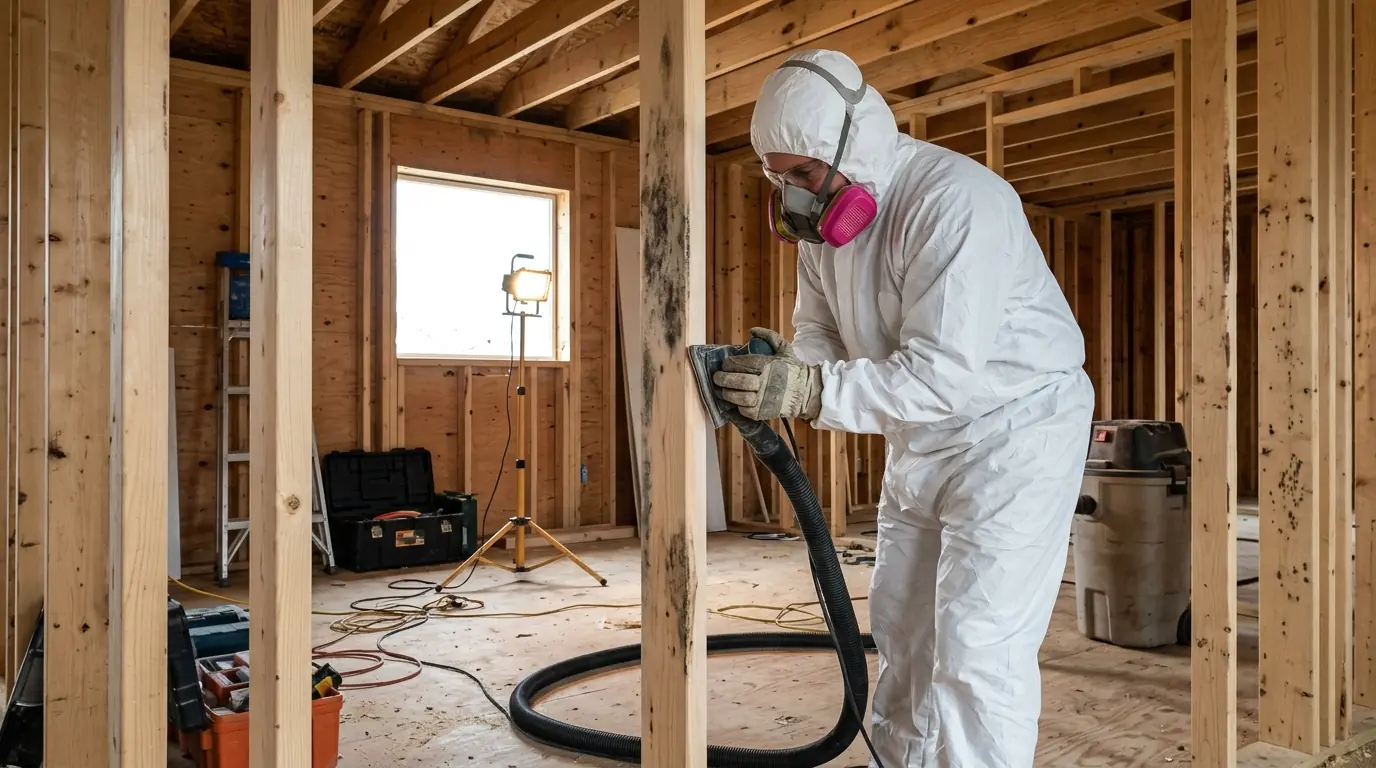
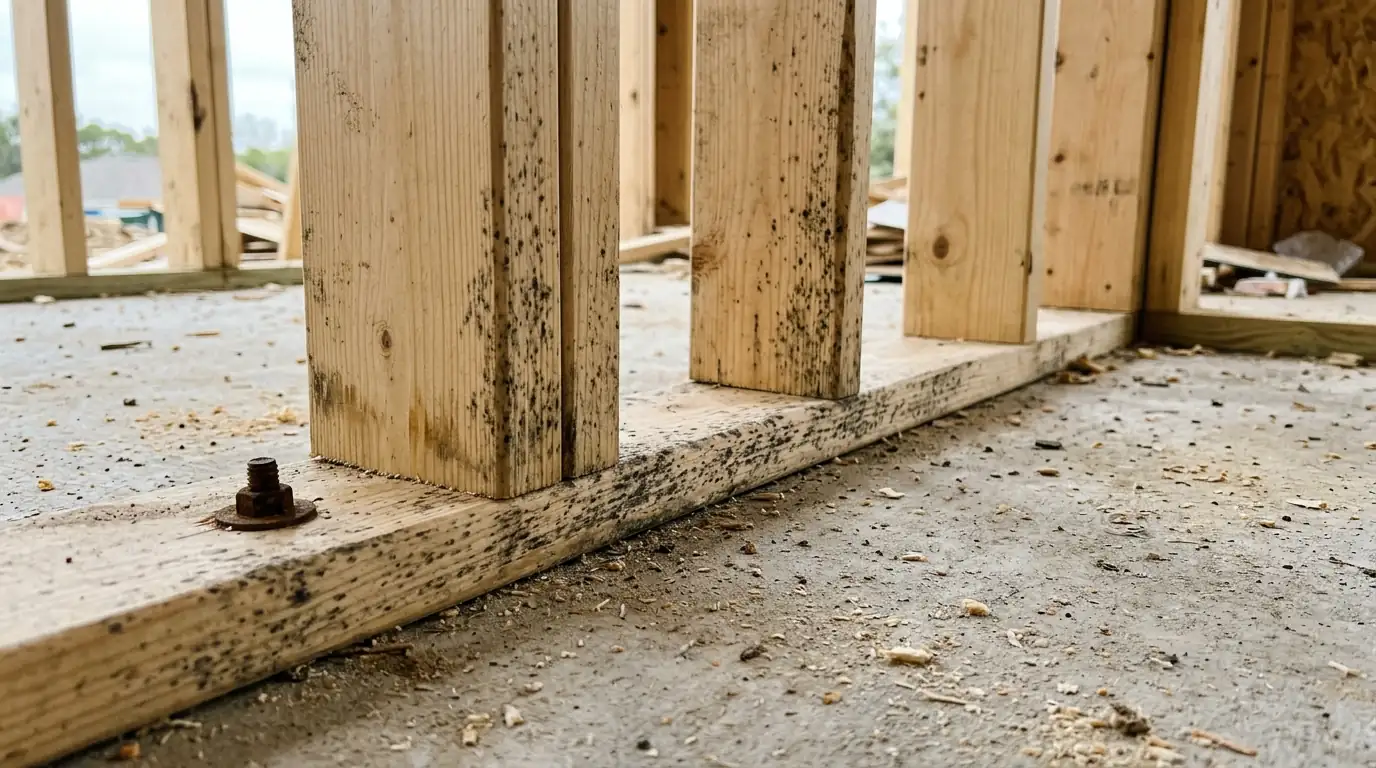
Studs and plates usually show growth as dark speckling or fuzzy patches along the grain, often at the bottom of walls where water pooled on the slab or subfloor. On new lumber it is nearly always on the surface, which is good news for the schedule. We HEPA vacuum, sand or blast the affected faces, wipe them down and dry the wood with fans and dehumidifiers until readings drop. Members that are soft, warped or badly stained get flagged for your framer to replace.
Mold on sheathing and subfloor during a build
Roof sheathing and subfloor panels take the most weather before a house is dried in. Growth shows on the underside of roof decks and on subfloor edges where water sat in the corners. Panels with surface growth can usually be cleaned in place, while panels that have swollen or delaminated are a structural call for your builder. We clean before insulation goes in so nothing gets trapped, and we recheck the corners, valleys and low spots where water collects before anyone signs off.
Building in a city that keeps growing
Downtown Salt Lake City has been building fast: about 27 percent of its housing went up between 2010 and 2019 and another 12 percent since 2020. South Salt Lake shows the same pattern, with about a third of its housing built since 2000. Projects that size leave framing open to weather for weeks, and spring storms have time to soak the lower floors before the building is dried in.
How the job runs, step by step
- 1
Walk the site with you
Which floors, which walls, and your drywall date.
- 2
Map moisture
Readings on studs, plates, sheathing and subfloor.
- 3
Mark affected members
So every trade sees the same thing.
- 4
Clean the growth
HEPA vacuum, sand or blast, then wipe down.
- 5
Dry it down
Fans and dehumidifiers until readings drop.
- 6
Recheck readings
Same points, same meter, logged.
- 7
Clear it for close-in
Photos and readings go in your file.
How much time it adds to your schedule
Most of the time goes to drying, not cleaning. Cleaning a few walls is quick, but getting soaked lumber back to normal readings depends on the weather, airflow and whether the building is closed in.
We schedule cleaning so drying equipment can run overnight, then recheck readings before we clear the area for insulation.
Questions about new construction mold remediation
Usually. Growth on new lumber is mostly on the surface. Replacement is for wood that is soft, swollen or badly damaged.
Bleach on raw wood mostly adds water and leaves stains. Physical removal and drying do more good.
Yes. We schedule around framing, mechanical and drywall crews and can work floor by floor.
Back to normal readings for the wood and conditions on your site, checked with the same meter each time.
That is mold removal under containment, since people live there.
Answered around the clock
Drywall date coming up? Call before you close in.
Tell us the site, the floors affected and your schedule. We will explain how we would clean and dry it.