Updated October 2026
Black mold removal in Salt Lake City follows the same containment and removal process as any mold job: seal the area, remove the drywall or ceiling it grew on, clean the framing and fix the leak. Stachybotrys, the mold people usually mean, grows on paper-faced drywall that stayed wet for weeks.
What black mold tells you about the house
Plenty of molds look black, and color alone does not identify one. The mold most people mean grows on wet cellulose like drywall paper and ceiling tile, and it needs that material to stay wet for a long time. A patch of it points to a leak that has been running for weeks or months.
The removal is the same careful containment job as any other growth. The bigger task is finding and fixing the water.
What black mold removal costs
Black mold is priced like other remediation, by the area of material that has to come out.
- Area affectedSquare feet of drywall or ceiling.
- Hidden growthHow far it spread inside the cavity.
- ContainmentSize of the sealed work area.
- The leakRepairs while the wall is open.
- TestingClearance samples when you want them.
Published price ranges
- Mold remediation per square foot: $10 to $25 per square foot (thisoldhouse.com, 2026)
- Mold remediation, typical total: $1,200 to $3,750, about $2,300 average (thisoldhouse.com, 2026)
National planning figures from the sources named, not our prices. Your number comes from the written scope.
Why this is not a spray-and-wipe job
| Situation | Reasonable to do yourself | Call us |
|---|---|---|
| A few dark spots on tile grout | Scrub with detergent and dry | If they return in the same place |
| Dark patches on drywall | Leave them alone and close the door | Growth on drywall is usually worse behind |
| Anything larger than about 10 square feet | Stop the leak if you can | Containment is needed |
| Someone in the home has asthma | Keep them out of the room | Removal should happen under containment |
Black mold on drywall paper
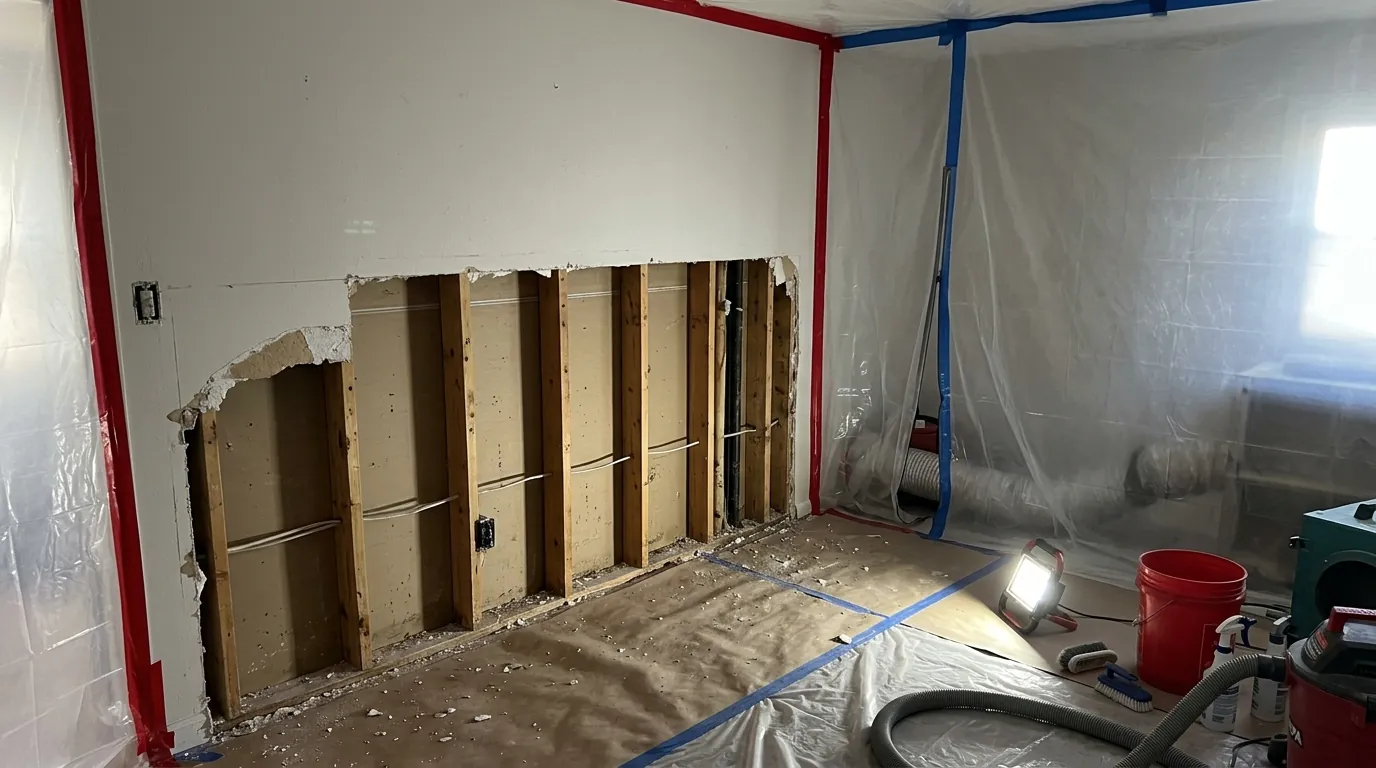
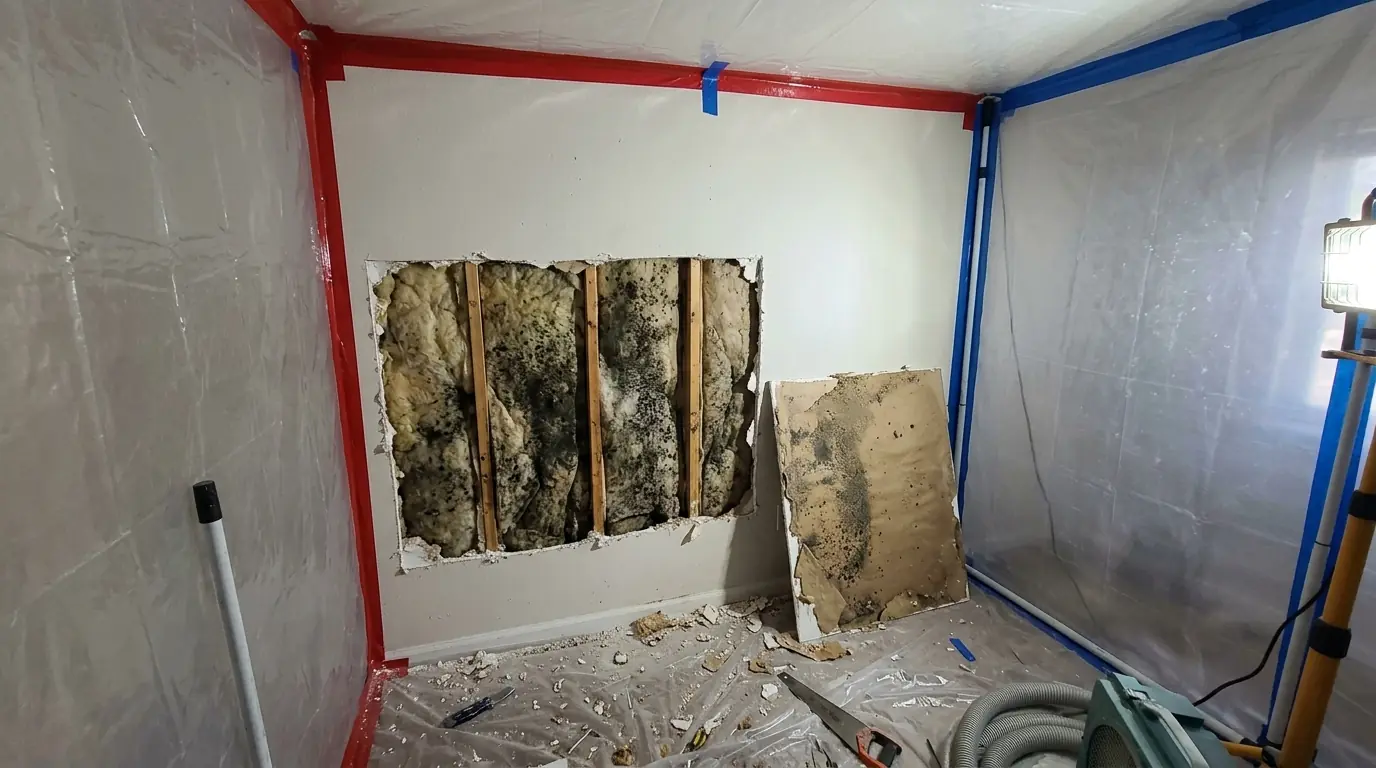
Drywall is gypsum wrapped in paper, and the paper is what the mold eats. Once growth covers the face, it has usually gone through to the back side and into the cavity. Cleaning the surface does not reach it. We cut the drywall out past the affected area inside containment, bag it, HEPA vacuum the studs and the back of the adjoining panels, and clean the framing. Readings confirm the cavity is dry before anything is closed back up, and the cut edges are left clean for the rebuild.
Black mold after a long-term leak
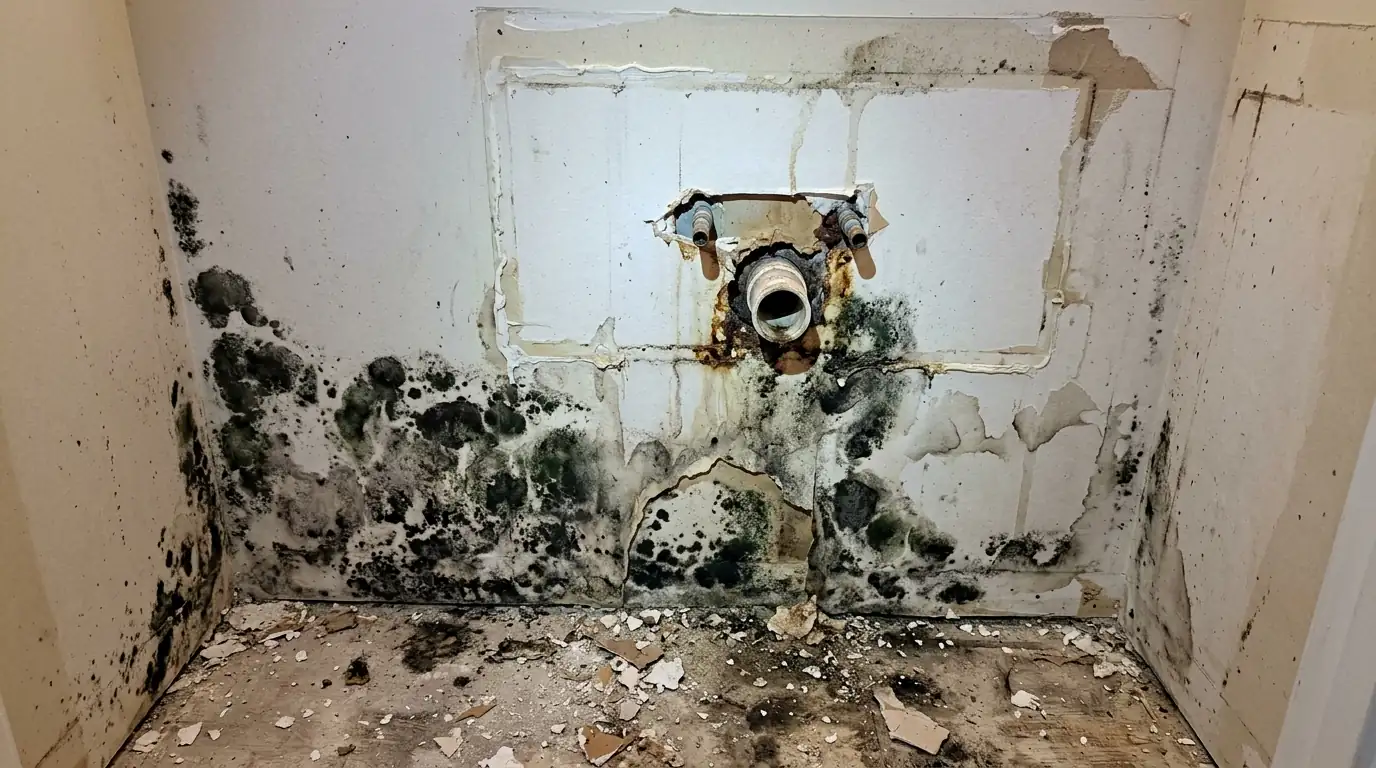
Because this mold needs material that stays wet for weeks, finding it almost always means finding an old leak: a supply line that has dripped since the last remodel, a shower pan that seeps into the wall, a roof flashing that leaks every storm. We trace it with readings before removal, so the repair can happen while the wall is open. Fixing the water is what keeps the growth from coming back in the same spot next year, behind brand new drywall.
Why a dry city still grows it
Salt Lake City has a semi-arid climate with dry, low-humidity summers, and people are often surprised to find black mold here at all. The answer is that this mold does not need humid air. It needs a material that stays wet, and a hidden plumbing drip or a shower pan leak keeps drywall wet no matter how dry the weather outside is. In a dry city, black mold is nearly always a leak story.
Signs you may have hidden black mold
Dark patches that grow
Spots that spread over weeks, often in a rough circle.
Soft, stained drywall
The paper face bubbles or feels damp to the touch.
A strong musty smell
Heavier than an ordinary damp basement smell.
A leak you have ignored
A drip under a sink or a slow roof leak that was never fixed.
Warped baseboards
Swelling where water has wicked up the wall.
How the job runs, step by step
- 1
Find the leak
Readings before any removal.
- 2
Contain the area
Plastic, zipper door, sealed vents.
- 3
Start negative air
HEPA scrubber running throughout.
- 4
Remove the drywall
Cut past the growth and bagged.
- 5
Clean the cavity
HEPA vacuum and wipe the framing.
- 6
Fix and dry
Leak repaired, cavity dried.
- 7
Clear it
Final check before the wall closes.
Questions about black mold removal
All mold growth indoors should be removed. Color does not change how carefully we contain it.
No. The removal is the same either way. Testing helps when documentation is needed.
No. The growth is in the paper and behind it; the drywall has to come out.
Usually not, if the area is closed off. People with asthma may prefer to stay away.
It grows on wet materials, not humid air. A hidden leak is enough.
Answered around the clock
Dark spots spreading on a wall? Call us.
Keep the door closed and tell us what you see. We will explain the next steps.