Updated October 2026
HVAC and duct mold removal in Salt Lake City starts at the air handler, where cooling coils, drain pans and damp insulation feed growth, then moves into the ductwork only where inspection shows it spread. Swamp cooler drops are checked too, since they add moisture to the ducts every summer day they run.
Where mold starts in an HVAC system
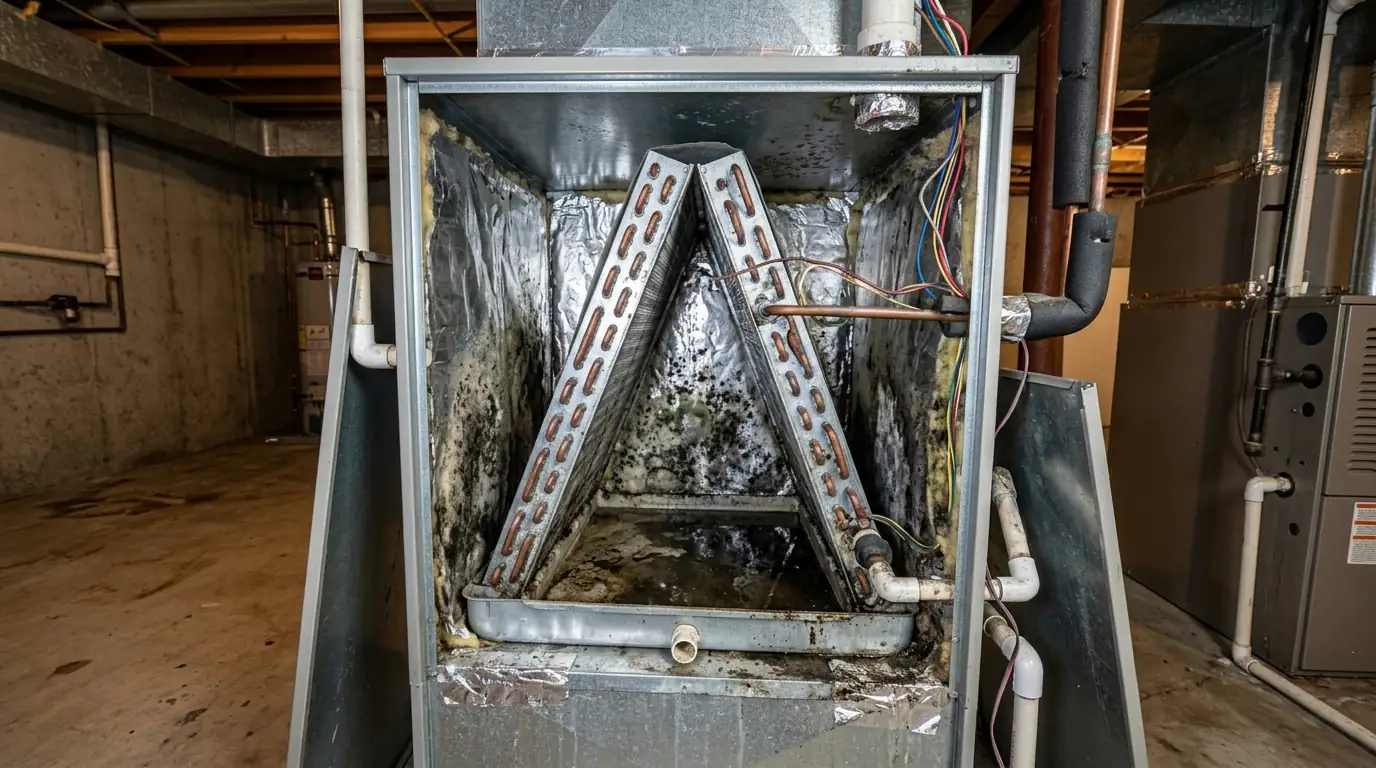
Cooling coils pull moisture out of the air and drip it into a drain pan. When the pan cracks or the drain clogs, water sits right in the path of the airflow. Lined ducts and dusty returns near a damp basement can grow mold too.
We start at the air handler, where most problems begin, and follow the evidence into the ducts rather than assuming the whole system needs cleaning.
What drives the cost of HVAC mold work
HVAC jobs depend on how far into the system the growth reaches.
- Air handler cleaningPan, cabinet and internal insulation.
- Duct length affectedA few feet or whole trunk lines.
- Duct typeMetal can be cleaned; lined or flex is usually replaced.
- AccessDucts in finished ceilings or crawl spaces.
- Swamp coolerDrop and duct cleaning at the cooler.
What you can check yourself
| Check | Do it yourself | When to call us |
|---|---|---|
| Filter | Replace it on schedule | If it is damp or visibly moldy |
| Condensate drain | Look for water around the unit | If water pools or the pan is cracked |
| Vent grilles | Wipe dust and surface spots | If spots come back or the smell stays |
| Swamp cooler | Change pads and drain the pan in fall | If the duct drop is wet or musty |
Air handler and coil mold
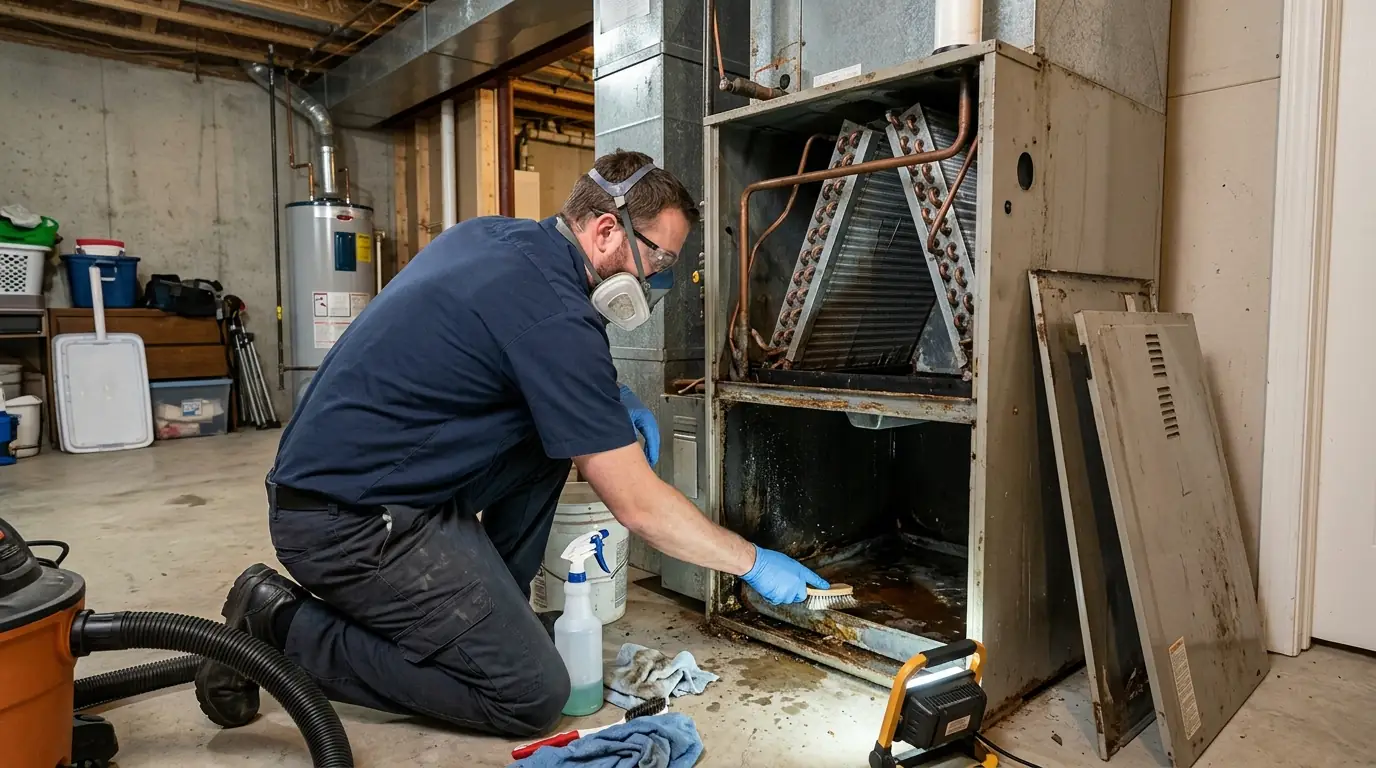
The air handler cabinet, the coil area and the drain pan are the wettest parts of a forced-air system. We shut the system down, open the cabinet, clean the pan and the surfaces around the coil, and remove moldy internal insulation that cannot be cleaned. The condensate drain is cleared and the pan checked for cracks. Coil cleaning itself and any equipment repair are coordinated with your HVAC contractor, and we tell them exactly what we found so the right part gets fixed.
Mold inside ductwork
Ducts grow mold where they get damp: near the air handler, in runs through a humid basement or crawl space, and where condensation forms on uninsulated ducts in summer. We inspect with a camera before quoting duct work, because many systems only need the first few feet cleaned. Affected sections of bare metal duct are cleaned with HEPA vacuums and brushes under negative pressure. Lined or flexible duct with growth inside is usually replaced rather than cleaned, since it cannot be cleaned reliably.
Swamp cooler mold and odor
An evaporative cooler works by blowing air through wet pads, and the water in its pan and the duct drop below it stay damp all summer. Stale water, old pads and a damp duct drop send a musty smell into every room each time it runs. We clean the drop and the duct at the cooler, check for leaks into the ceiling below, and recommend the fall shutdown steps that keep it from starting again next season: drain the pan, dry the pads and close the damper.
Swamp coolers and summer humidity in Utah
Swamp coolers once cooled four of every five Utah homes and are still common in older houses. A study of homes in Utah County found indoor humidity ran significantly higher in summer in homes cooled by evaporative coolers than in homes with central air. That extra moisture ends up in the ducts nearest the cooler and in the coolest spaces of the house, which is why a musty smell that appears only when the cooler runs usually points straight at the cooler drop.
Signs the air system is involved
Musty smell when the system starts
Strongest in the first minutes of a cycle.
Dark spots on vent covers
Growth on grilles or the duct just behind them.
Water around the furnace or air handler
A clogged drain line or cracked pan.
Smell in every room at once
The system is spreading it, not one wall.
A damp swamp cooler drop
Standing water or wet insulation at the cooler duct.
How the job runs, step by step
- 1
Shut the system down
So nothing spreads during work.
- 2
Inspect the air handler
Pan, drain, cabinet and coil area.
- 3
Camera the ducts
See how far growth reaches.
- 4
Clean the unit
Pan and cabinet cleaned, bad liner removed.
- 5
Clean affected ducts
HEPA vacuum under negative pressure.
- 6
Fix the moisture
Drain, pan or cooler issue.
- 7
Restart and check
Airflow and smell confirmed.
Questions about hvac and duct mold removal
Rarely. We camera them first and clean only what is affected.
Yes. The fan carries it to every room each cycle.
Equipment repairs go to your HVAC contractor. We handle the mold.
It is better to leave it off until the air handler is checked.
It can, when the pan, pads or duct drop stay wet and dirty.
Answered around the clock
Musty air from the vents? Call before you run it again.
Tell us about the system and the smell. We will explain what we would check first.