Updated October 2026
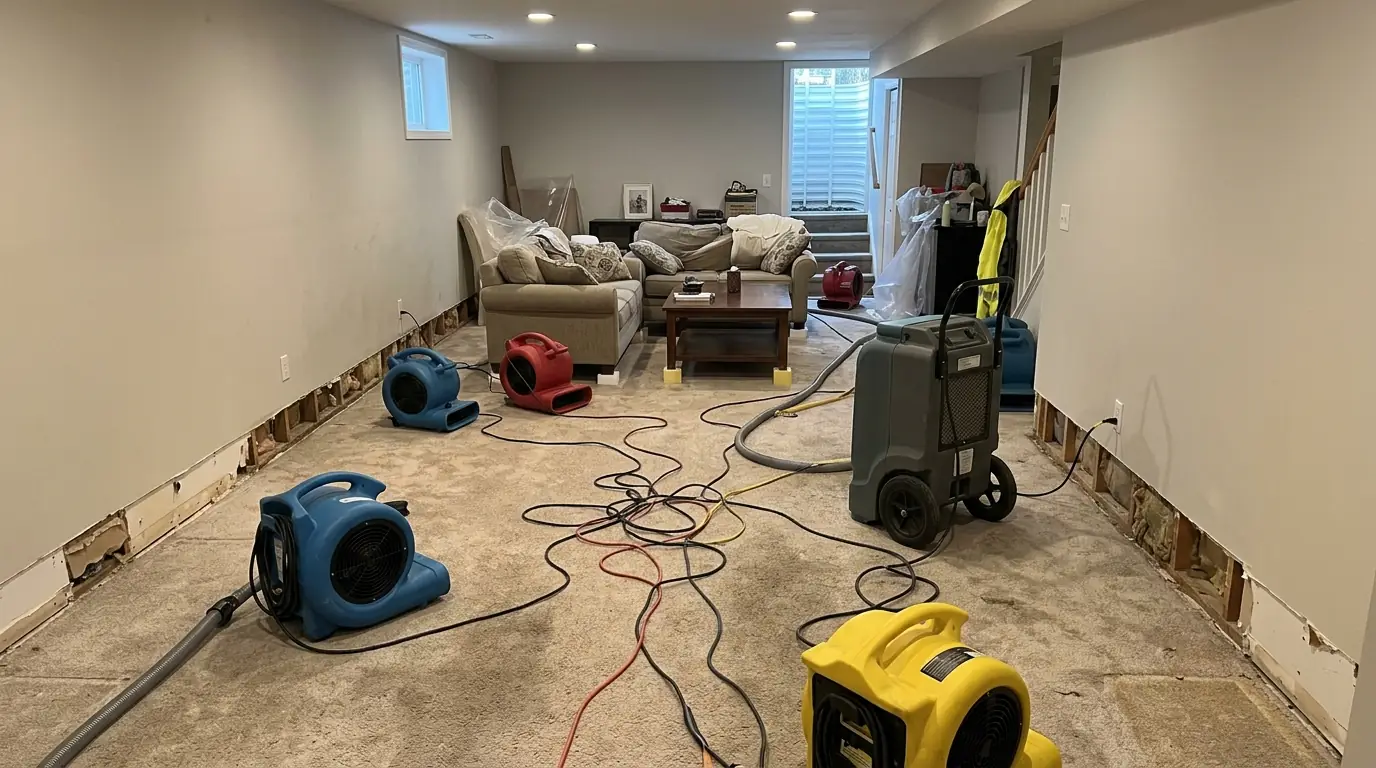
Water damage drying in Salt Lake City means extracting standing water, mapping how far it spread with moisture meters, removing only materials that trap it, and running dehumidifiers and air movers until readings are normal. EPA guidance says drying within 24 to 48 hours usually prevents mold growth.
Signs water has spread further than you think
Baseboards swelling or pulling away
Water has wicked into the wall behind.
Flooring cupping or lifting
Water is under the floor, not only on it.
Ceiling sagging or stained
Water is pooling above the drywall.
Damp smell in the next room
Water traveled under the wall plate.
Cold spots on walls
Wet drywall stays cooler than dry drywall.
Why drying is a structural job, not a mop job
Water runs under walls, into cavities and under flooring within minutes. The visible puddle is usually the smallest part of it.
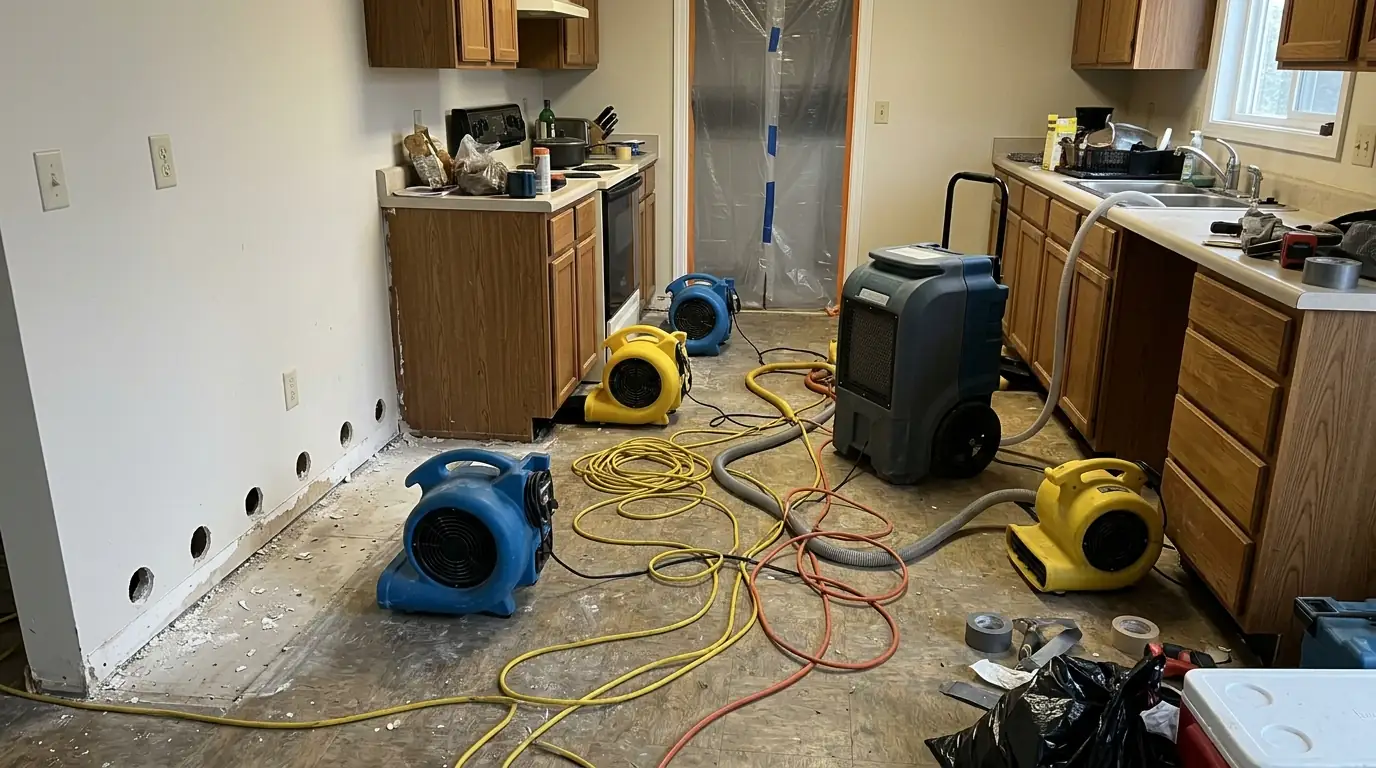
We map the wet area with meters, open only what traps water, like baseboards, toe kicks or a strip of drywall, and set equipment so the framing dries along with the surfaces.
How the job runs, step by step
- 1
Stop the water
Valve, supply or appliance shut off.
- 2
Extract
Standing water removed.
- 3
Map the wet area
Meters on walls, floors and ceilings.
- 4
Open what traps water
Baseboards, toe kicks, strips of drywall.
- 5
Set equipment
Dehumidifiers and air movers.
- 6
Check daily
Readings logged each visit.
- 7
Confirm dry
Before anything is rebuilt.
Burst pipes and supply lines
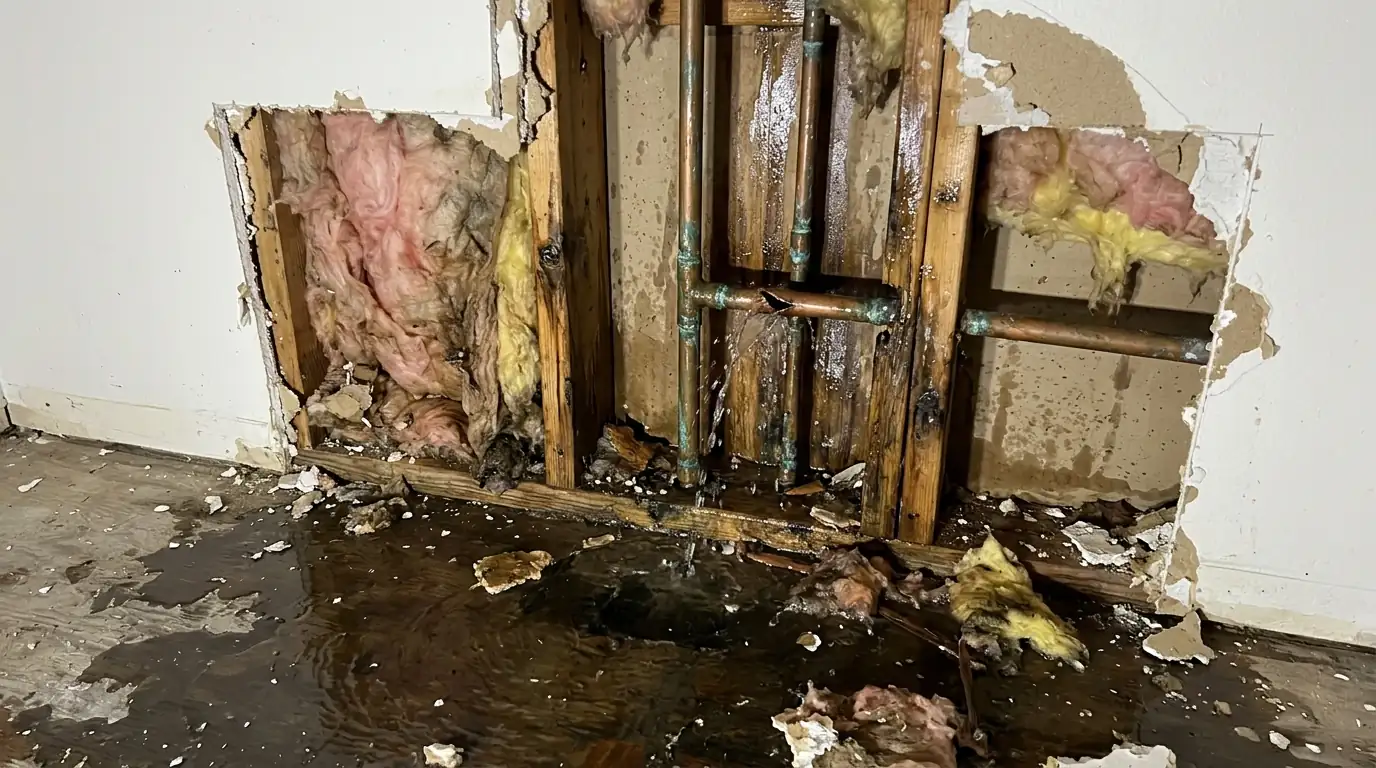
A burst pipe or failed supply line puts out a lot of clean water fast. Once the water is shut off, we extract what is standing, check readings through the walls and floors it touched, and decide what can be dried in place. Clean water caught early often lets drywall, framing and even carpet be dried rather than replaced. The window is short, though. Clean water that sits turns into a bigger problem, which is why we set drying equipment on the first visit rather than waiting.
Water heater and appliance leaks
Water heaters, washing machines, dishwashers and refrigerator lines tend to leak slowly or all at once, often in a basement or laundry room with finished walls nearby. We extract the water, pull baseboards and toe kicks where readings stay high, and dry the walls and subfloor around the appliance. If the leak has been going on for a while, we check behind and under the appliance for growth before anything is put back, since slow leaks give mold time to start.
Ceiling leaks from a floor above
When a toilet overflows, a tub drain leaks or a pipe fails upstairs, the water ends up in the ceiling below. Drywall ceilings hold water until they sag or stain. We check whether the ceiling has pooled water, open it where readings show saturation, remove wet insulation and dry the joist cavity. Ceilings that sagged or softened usually come down in that section. Ceilings that stayed firm can often be dried in place with the right airflow above them, through a few small holes that are easy to patch.
A dry city with wet houses
Salt Lake City sees only about 15 inches of precipitation a year, so most of the water damage we dry here comes from inside the house: burst pipes in a cold snap, water heaters, washing machines and upstairs bathrooms. EPA guidance says materials dried within 24 to 48 hours usually do not grow mold, and indoor leaks are often caught early, which gives a real chance of drying rather than tearing out.
How long drying takes
Most clean-water jobs take several days of drying, depending on how much water there was and how long it sat before we arrived.
We check readings each visit and leave equipment in place until materials match dry areas of the house.
Measured, not guessedReadings on the same points each visit decide when the equipment comes out.
What water damage drying costs
Drying is priced by the area affected, the water category and the equipment days.
- Area affectedSquare feet the water reached.
- Water categoryClean, gray or contaminated.
- Materials removedBaseboards, toe kicks or drywall.
- Equipment daysUntil readings are normal.
- CeilingsWater above drywall adds work.
Published price ranges
- Water damage restoration, typical: $1,384 to $6,387, about $3,867 average (HomeAdvisor data) (pushleads.com, 2026)
- Water damage restoration by category: clean water $3 to $4, gray water $4 to $6.50, black water $7 to $7.50 per square foot (pushleads.com, 2026)
National planning figures from the sources named, not our prices. Your number comes from the written scope.
Questions about water damage drying
Small spills, yes. Wet walls, subfloor and ceilings need commercial drying and readings.
Not always. Clean water caught early can often be dried in place.
Readings on the same points each visit, compared with dry areas of the house.
Sudden leaks are often covered. We document the damage and readings for your claim.
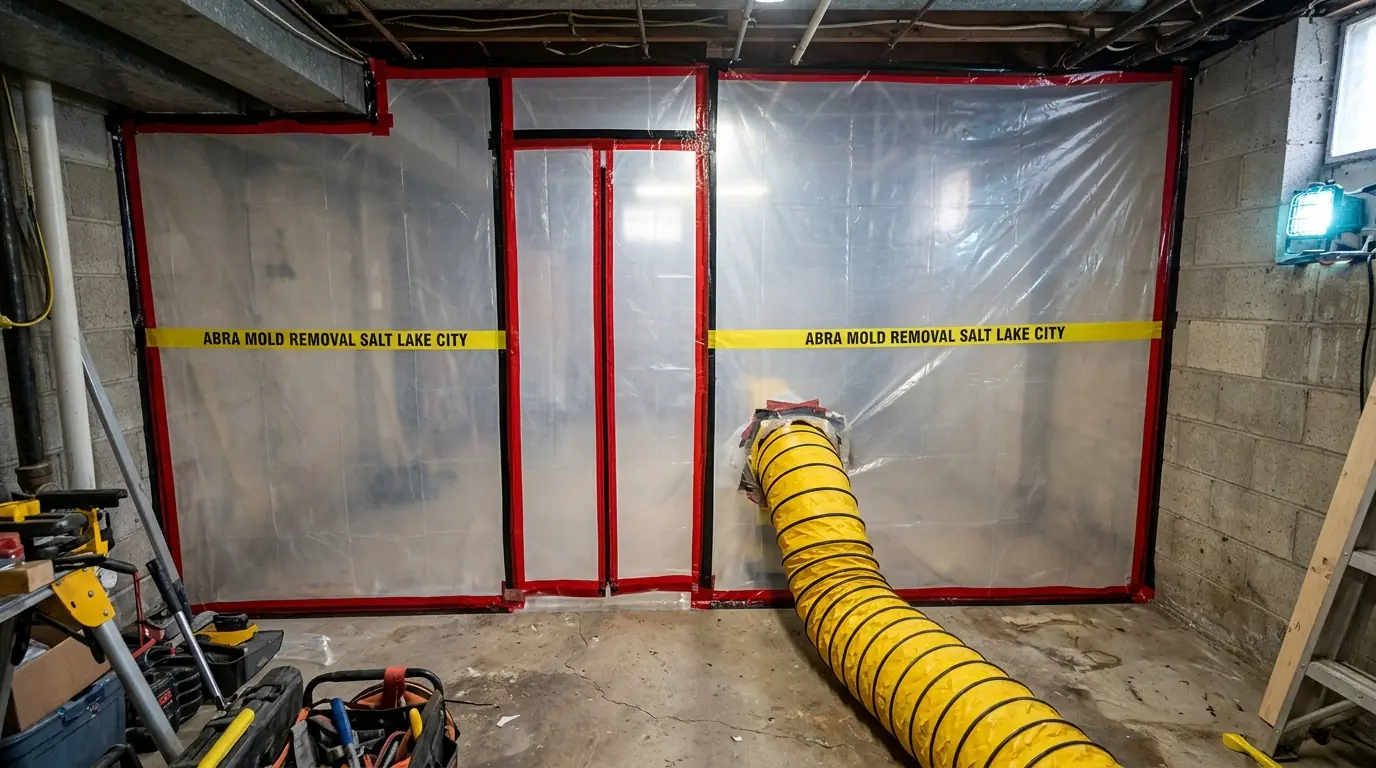
Then it becomes mold removal with containment.
Answered around the clock
Water leak right now? Call us.
Shut off the water if you can and tell us where it is. We answer 24/7 and will tell you what to do while we are on the way.