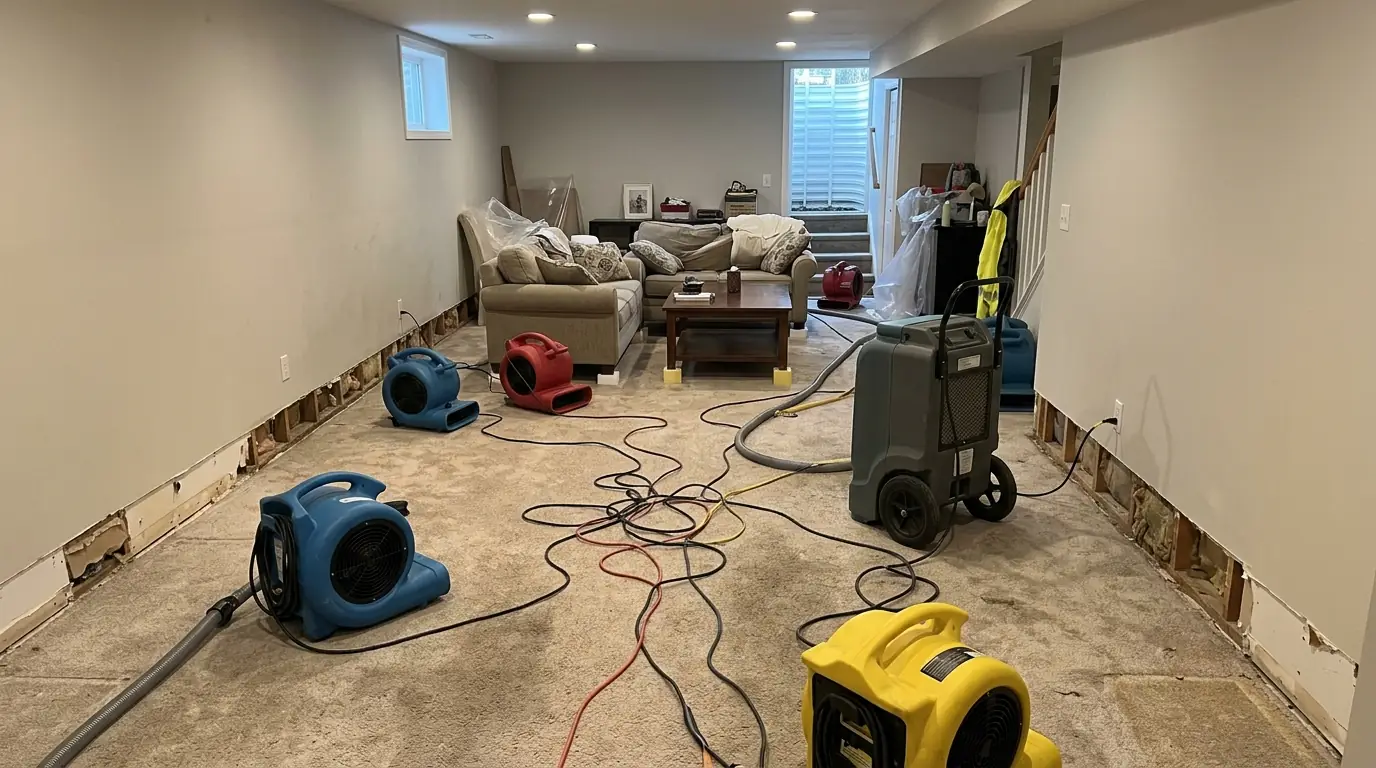
Updated October 2026
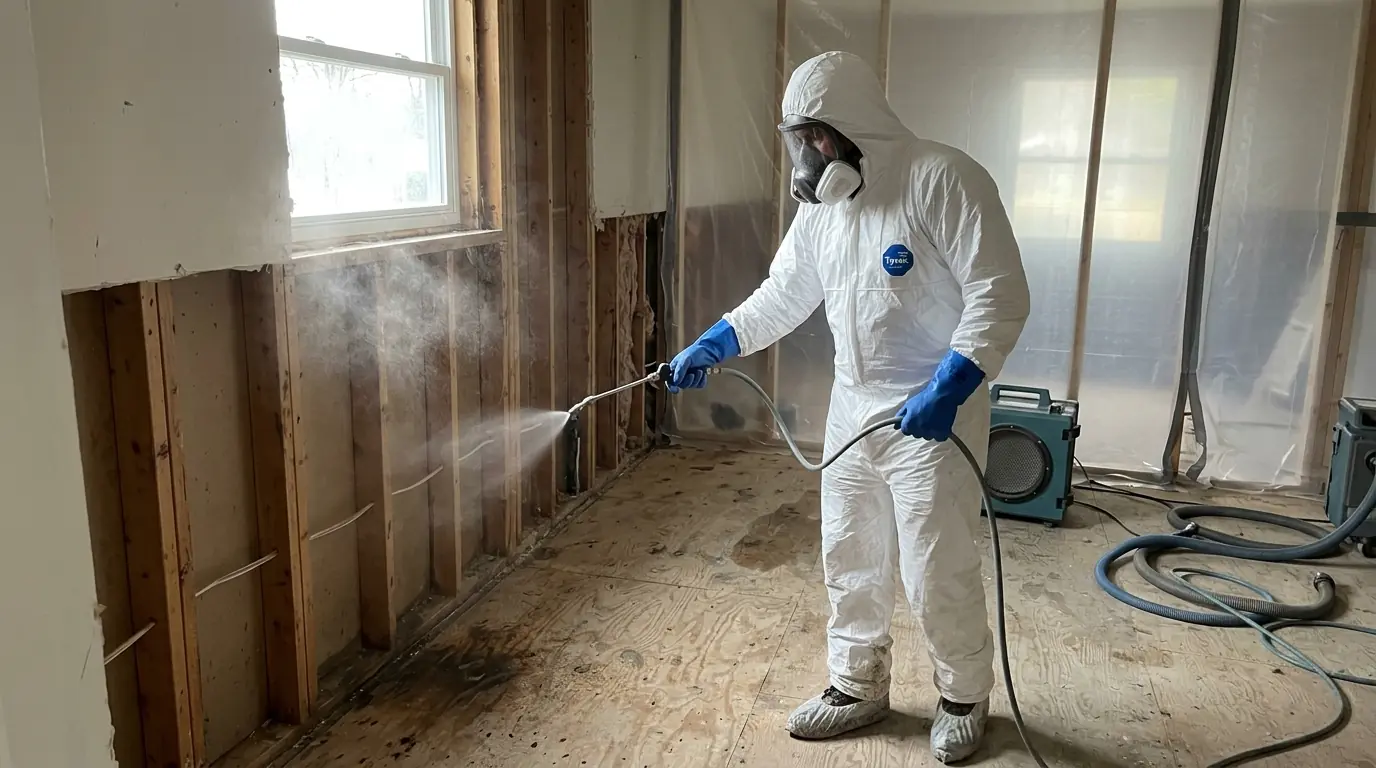
Antimicrobial treatment in Salt Lake City is applied to framing, subfloor and hard surfaces after water damage or mold removal, once loose debris and growth have been cleaned off. It helps on surfaces touched by gray or sewage water and on cleaned framing, but it does not replace drying within the 24 to 48 hours EPA guidance describes.
What antimicrobials do, and what they do not
An antimicrobial reduces bacteria and mold on a surface that has already been cleaned. It is useful where the water was not clean, such as a drain backup or a toilet overflow, and on framing after mold has been removed.
It does not dry anything, and it does not fix mold that is still growing inside drywall or insulation. Spraying moldy material and closing it up is the shortcut that leads to repeat jobs.
What drives the cost of treatment
Treatment is usually part of a larger water or mold job and priced by area.
- Area treatedSquare feet of framing, subfloor and surfaces.
- Water categoryGray and sewage water need more cleaning first.
- Prep cleaningRemoval and HEPA cleaning before treatment.
- AccessCrawl spaces and wall cavities take longer.
- DryingEquipment days that run alongside it.
Published price ranges
- Water damage restoration by category: clean water $3 to $4, gray water $4 to $6.50, black water $7 to $7.50 per square foot (pushleads.com, 2026)
National planning figures from the sources named, not our prices. Your number comes from the written scope.
When treatment makes sense
| Situation | Antimicrobial? | Why |
|---|---|---|
| Clean-water leak caught early | Usually not needed | Fast drying is what prevents growth |
| Gray water from a washer or dishwasher | Yes, after cleaning | The water carried bacteria onto surfaces |
| Sewage or drain backup | Yes, after removal and cleaning | Contaminated water needs sanitizing |
| Framing after mold removal | Often, after HEPA cleaning | A final step before the wall is closed |
Store-bought sprays versus a treatment plan
| Approach | What it does | The catch |
|---|---|---|
| Bleach on drywall or wood | Lightens the stain | Adds water and leaves growth behind the surface |
| Store-bought mold spray | Treats a small hard surface | Does not reach inside walls or insulation |
| Antimicrobial after cleaning and drying | Reduces regrowth on sound materials | Only works on materials that are cleaned and dry |
Treatment after gray and sewage water
Water from a washing machine, dishwasher or overflowing toilet carries bacteria onto every surface it reaches, and sewage carries far more. After the water is extracted and the soaked porous materials are removed, the hard surfaces left behind, such as the slab, framing, cabinet boxes and tile, are cleaned and then treated with an antimicrobial. Drying equipment runs at the same time. The treatment sanitizes; the drying is what keeps mold from starting on what remains, and both have to finish before anything is closed up.
Treating framing after mold removal
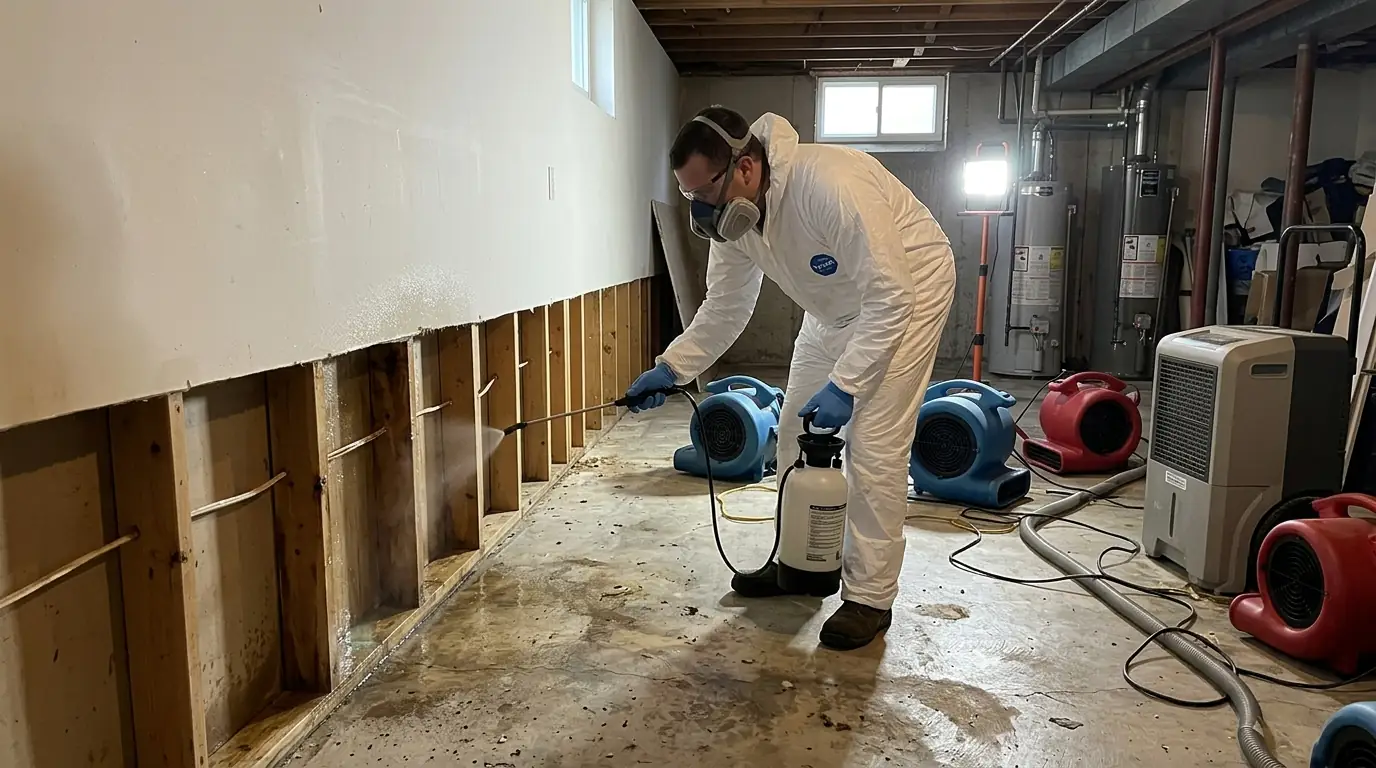
Once moldy drywall and insulation are out and the studs are HEPA vacuumed and wiped, an antimicrobial can be applied as a last step before the cavity is checked and closed. It reduces what is left on the wood surface. It is not a substitute for physical removal: spraying framing that still has visible growth just leaves dead growth in the wall. We treat only after cleaning, and only once readings show the wood is drying back toward normal levels.
A dry city, and indoor water
Salt Lake City sees only about 15 inches of precipitation a year, so the water we treat after is usually from inside: a washing machine hose, a dishwasher, a toilet, a drain line. Much of that is gray water rather than clean supply water, which is where an antimicrobial earns its place. The other half of the job is speed, because EPA guidance says materials dried within 24 to 48 hours usually do not grow mold.
How the job runs, step by step
- 1
Identify the water
Clean, gray or sewage.
- 2
Remove soaked materials
Porous items that cannot be cleaned.
- 3
Clean surfaces
HEPA vacuum and wipe down.
- 4
Apply the antimicrobial
Only on cleaned, sound materials.
- 5
Dry
Equipment until readings are normal.
- 6
Recheck
Readings and a visual check.
- 7
Close up
Only when the area is dry.
Questions about antimicrobial treatment after water damage
No. It treats cleaned surfaces. If moisture returns, mold can too.
Products are applied to the work area and left to dry before the area is reopened.
Often not. Fast drying is the main protection.
No. Moldy drywall has to come out. Spraying it leaves the growth in place.
It is part of the scope when the water category calls for it.
Answered around the clock
Just had a leak or backup? Call us.
Tell us where the water came from. We will explain what it needs and what it does not.