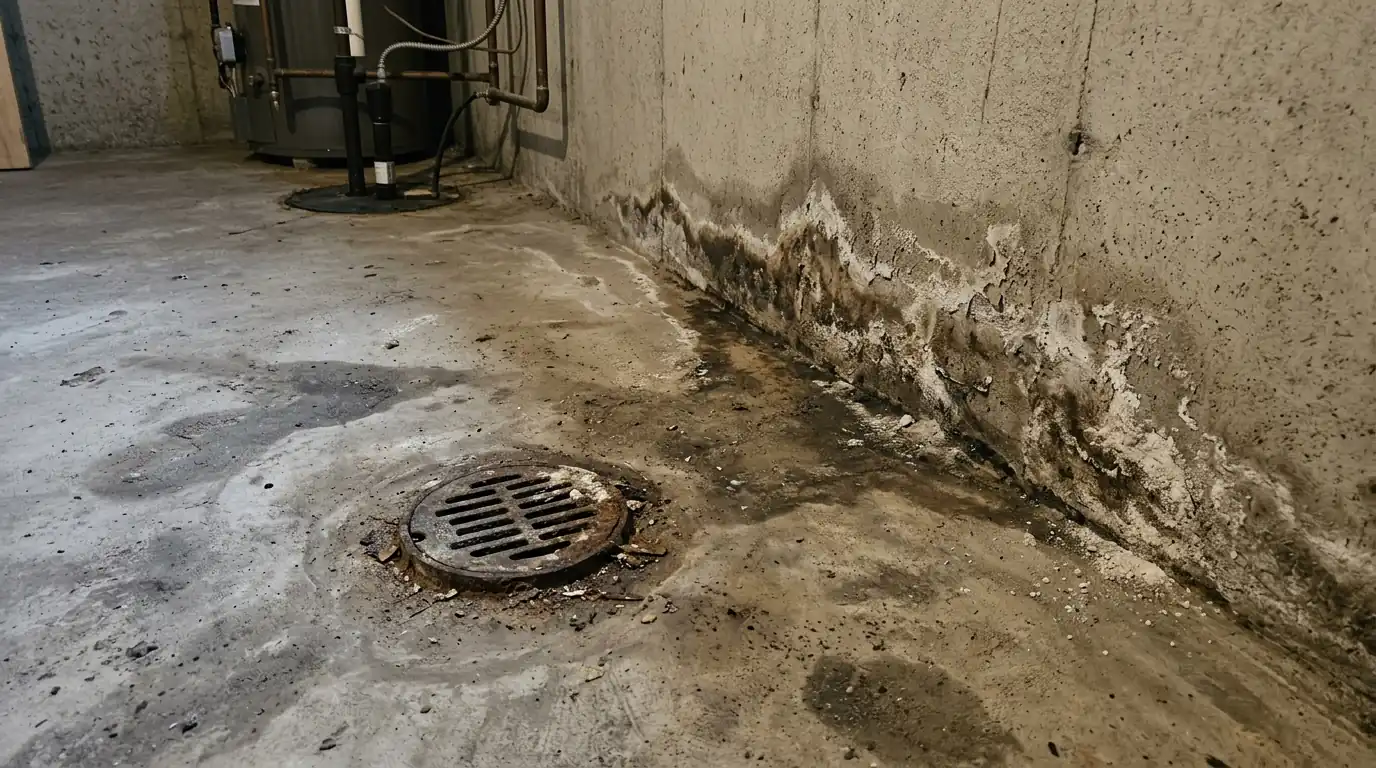
A vapor barrier is a plastic ground cover that keeps soil moisture from rising into the crawl space. Encapsulation goes further: a heavy liner on the soil and walls, sealed seams, closed vents and rim joists, and often a dehumidifier. HomeGuide puts vapor barriers at $2 to $4 per square foot and encapsulation at $3 to $10.
What a vapor barrier does
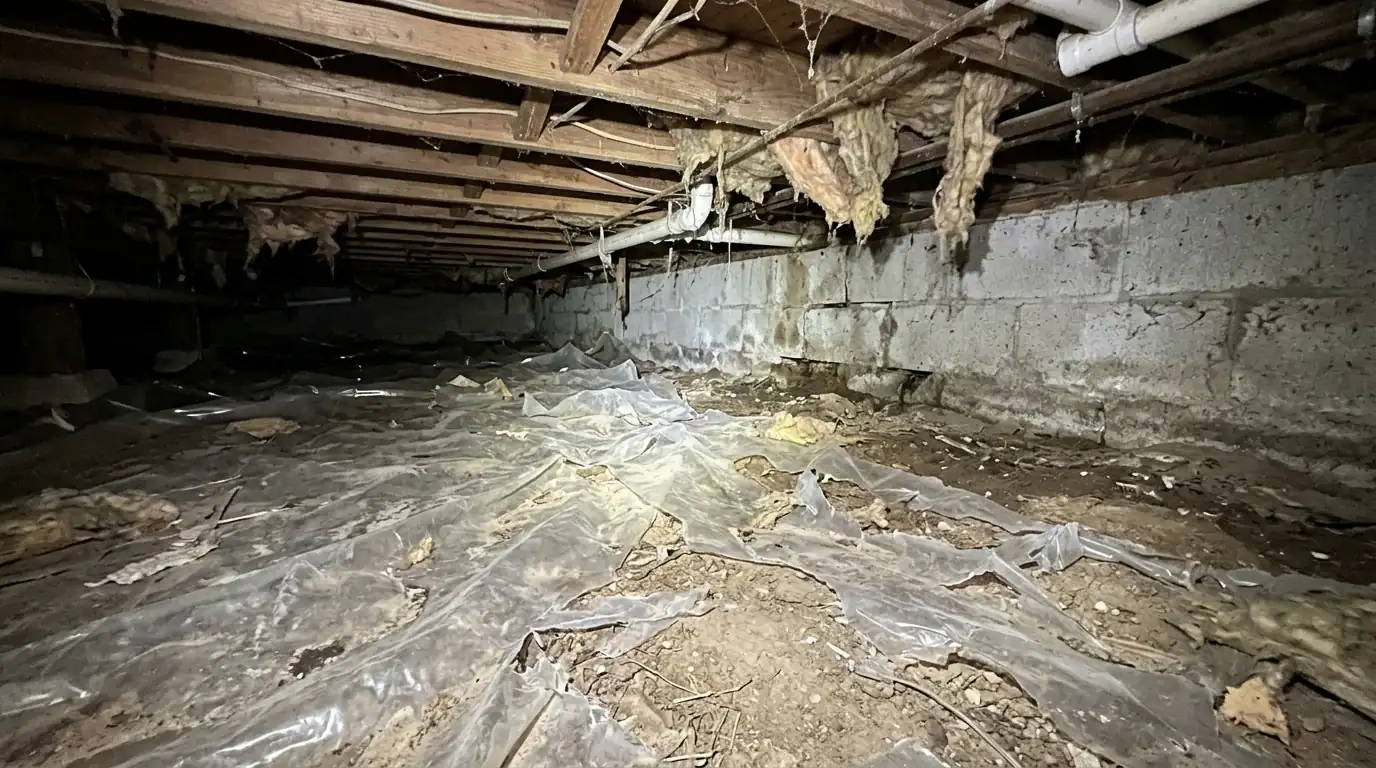
Bare soil gives off moisture every day. A vapor barrier is a sheet of polyethylene laid over the dirt, lapped at the seams and held in place, so that moisture stays below the plastic instead of rising into the joists and subfloor.
It is the simpler, cheaper job, and in a crawl space that is only mildly damp it can be enough. The details decide whether it works: thin plastic tears, unlapped seams leak, and a sheet that stops short of the walls leaves the edges uncovered.
What encapsulation adds
Encapsulation treats the crawl space as part of the house rather than part of the outdoors. The liner is heavier and reinforced, runs up the foundation walls and is fastened there, and every seam, pier and pipe penetration is taped. Foundation vents are closed and the rim joists are sealed so outside air stops coming in.
With the space sealed, its humidity is controlled from inside, often with a small crawl space dehumidifier. That is what makes encapsulation work in crawl spaces where a plain barrier does not.
| Compared | Vapor barrier | Encapsulation |
|---|---|---|
| Covers | Soil only | Soil and walls |
| Seams | Lapped | Lapped and taped |
| Vents and rim joists | Left open | Sealed |
| Humidity control | None | Often a dehumidifier |
| Published cost | $2 to $4 per sq ft | $3 to $10 per sq ft |
How to tell which one you need
Look at the crawl space with a flashlight and a hygrometer. A mostly dry space with slightly damp soil and no mold usually does fine with a good barrier. A space with mold on the joists, sagging wet insulation, musty floors upstairs or high humidity even in summer is an encapsulation candidate.
Standing water is a separate problem. Neither option stops water that flows in; that needs grading, gutters, downspouts or drainage fixed first.
Utah crawl spaces and snowmelt
Salt Lake City averages under 60 inches of snow a year at the airport, with far more in the mountains above the Wasatch Front. When it melts, groundwater rises and collects against foundations, and a crawl space is often the lowest open space it reaches.
A crawl space that looks dry in October can be damp by May, so the right time to judge it is spring, not fall. If it stays damp for weeks every spring, encapsulation earns its extra cost.
Clean first, then seal
Neither option should go in over mold. Growth on joists and beams is cleaned first, wet insulation and old plastic are removed, and the space is dried. Sealing over active growth traps it, and the smell and the problem come straight back up into the house. See crawl space mold removal.
Looking after it afterward
A sealed crawl space still needs an occasional look. Once or twice a year, open the hatch and check the liner for tears, the seams for gaps and the corners for any standing water after spring melt.
If a dehumidifier was added, keep its drain line clear and glance at the hygrometer. A reading that creeps up over a season usually means a torn liner, a leaking pipe or a vent that was reopened, and each of those is simple to fix once you know.
Where we can help
Quick questions
A simple ground cover is a reasonable DIY job in an easy crawl space. Encapsulation is more involved.
Not always. It depends on how humid the space stays once it is sealed.
Sources
Answered around the clock
Damp crawl space? Call to find out which fix fits.
Tell us what you see from the hatch. We will explain which option makes sense.