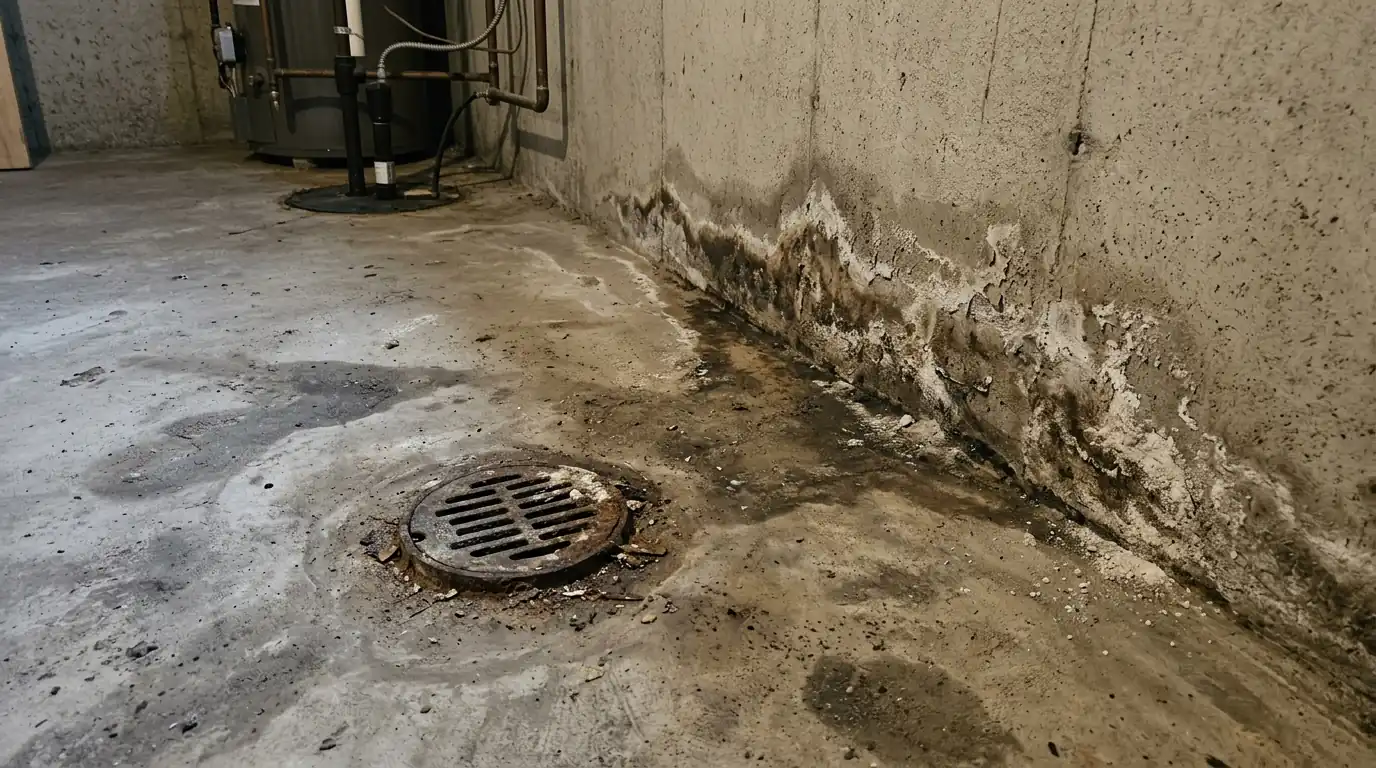
Public health guidance citing the EPA suggests a professional once mold covers more than about 10 square feet. Below that, growth on hard surfaces can usually be scrubbed with detergent and water, dried and watched. Mold on drywall, insulation or carpet, anything after sewage or a flood, and growth that keeps returning are not DIY jobs.
The 10 square foot rule
Ten square feet is roughly a patch three feet by three feet. Below that size, on a surface you can scrub, most homeowners can handle it. Above it, the cleanup itself starts moving enough spores around that containment and negative air make sense.
The rule is about visible growth. A small stain on the front of a wall can sit over a much larger area on the back, so size is only half the question; the other half is what the mold is growing on.
What you can clean yourself
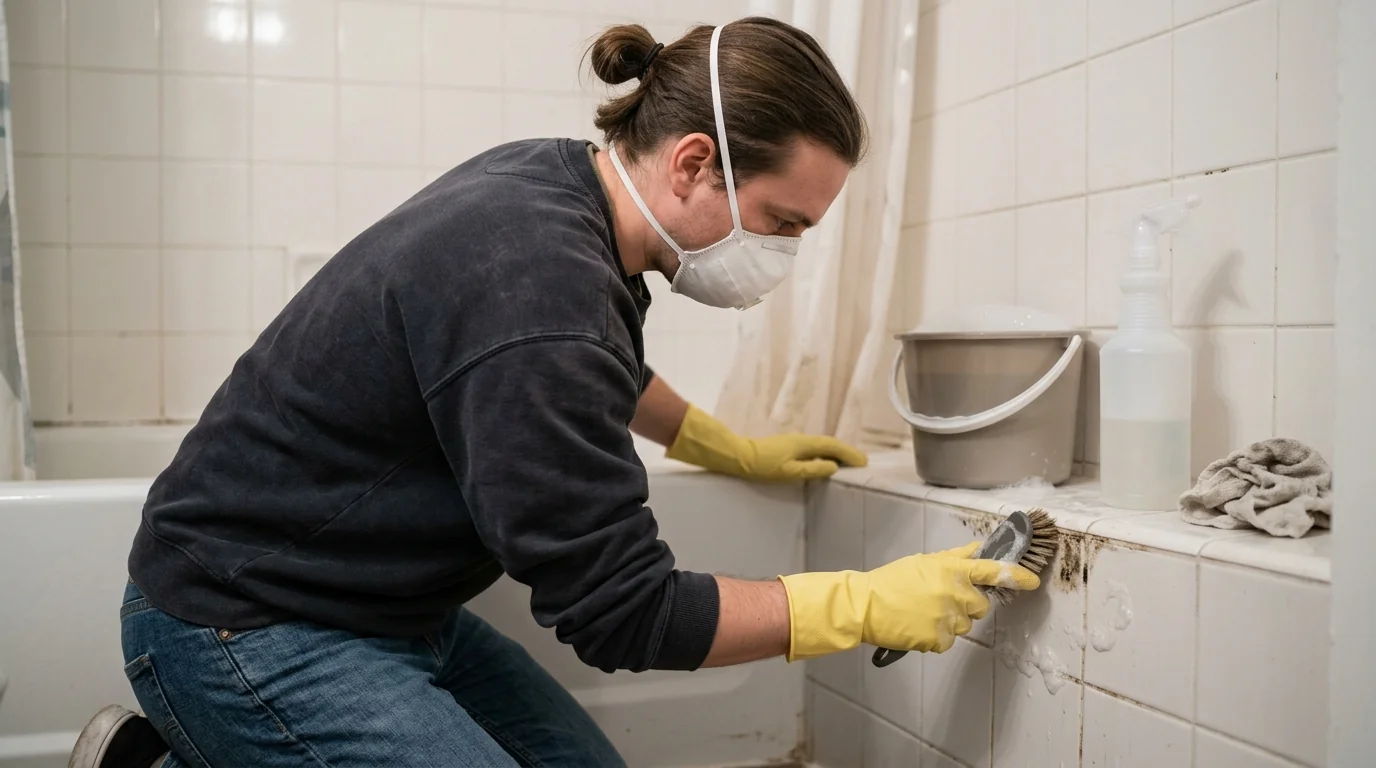
Hard, non-porous surfaces clean up well: tile, grout, glass, metal, sealed countertops, vinyl and aluminum window frames, and painted surfaces where the growth has not gone through the paint.
Scrub with detergent and water, rinse, and dry the surface completely. A fan and an open window help in summer. Then watch it. If the patch comes back in the same place, the moisture feeding it is still there.
- Wear gloves and eye protection
- Wear a well-fitted N95 mask
- Keep the door closed and a window open while you work
- Bag the rags and throw them out afterward
What you cannot clean
Porous materials hold mold inside, where scrubbing does not reach. Drywall paper, ceiling tile, insulation, carpet and pad, cardboard and most upholstered furniture that has grown visible mold usually need to be removed and replaced rather than cleaned.
Cutting out moldy drywall yourself is where DIY most often goes wrong. Demolition without containment spreads spores through the house, and the back of the panel is usually worse than the front. That is a mold removal job.
About bleach
Bleach is not the answer it is often sold as. On porous materials it mostly adds water and leaves the growth behind the surface. On hard surfaces, detergent and water do the job, and drying matters more than the cleaner you choose. Never mix bleach with ammonia or other cleaners.
Signs a small job is bigger than it looks
Stop and call if you run into any of these:
- The drywall is soft, stained through or crumbles when pressed
- The musty smell is stronger than the visible patch explains
- It came back within weeks of cleaning
- It appeared after a flood, a sewer backup or a long leak
- Someone in the house has asthma or is feeling unwell around it
Fix the water or it comes back
Every mold patch, small or large, has a moisture source: a drip, condensation, a missing fan or a damp wall. Cleaning without finding it only resets the clock. If you cannot find the source, a moisture inspection is a cheaper next step than cleaning the same spot every month.
Keep it from spreading while you work
Even a small cleanup moves some spores around. Close the door to the room, turn off the furnace or air conditioning so the system does not pull air from that space, and open a window if the weather allows.
Mist the patch lightly with soapy water before scrubbing so it does not go airborne, work from clean areas toward the growth, and wipe down nearby surfaces afterward. Wash your clothes when you are done.
Where we can help
Quick questions
Only once the surface is clean, dry and the moisture source is fixed. Paint over live growth just hides it.
They can help on hard surfaces, but cleaning and drying do the real work. Sprays do not fix porous materials.
Sources
Answered around the clock
Not sure if it is a DIY job? Call and ask.
Describe the size, the surface and where it is. We will tell you honestly whether you need us.