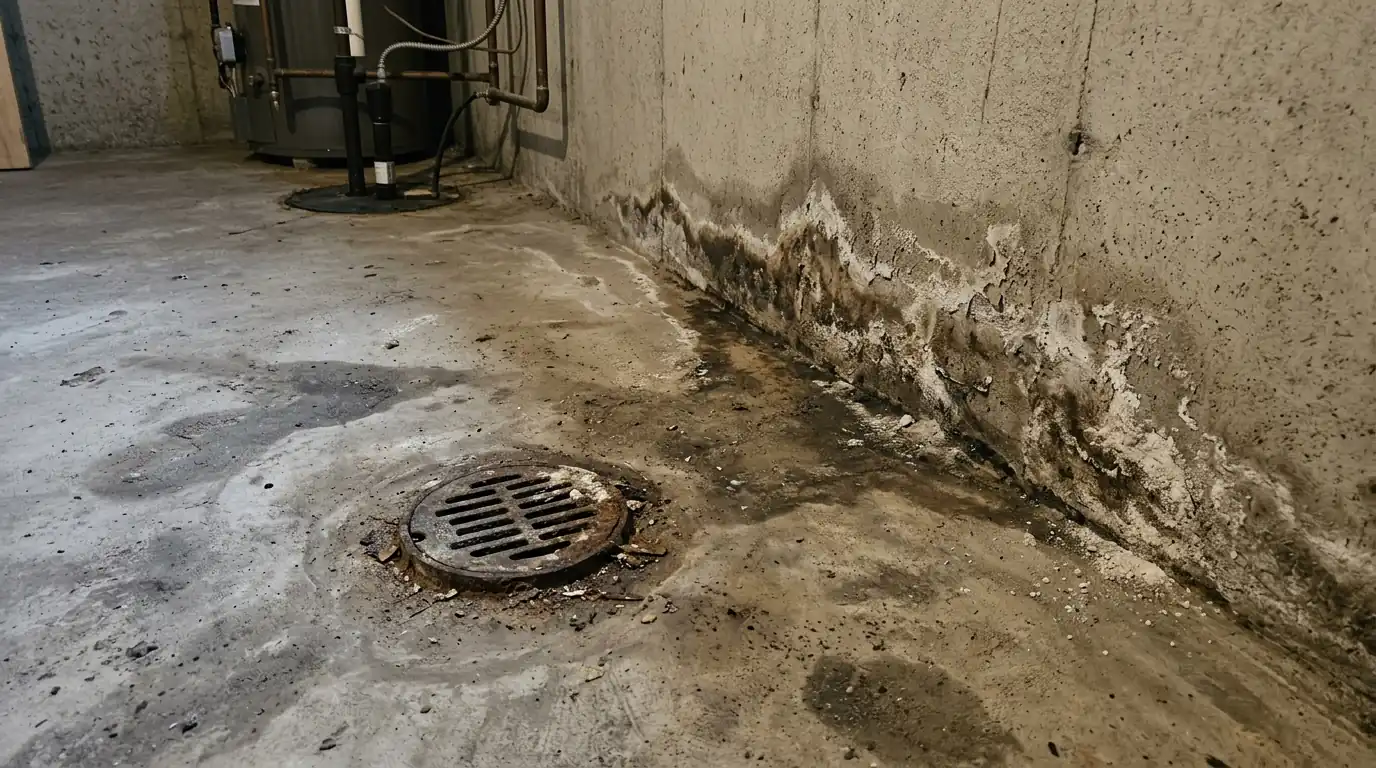
In the first 48 hours after a basement floods, stop the water, get standing water out, pull soaked carpet pad and move belongings, then dry with dehumidifiers rather than fans alone. EPA guidance says materials dried within 24 to 48 hours usually do not grow mold, so the order of those steps matters more than any product.
Hour one: stay safe and stop the water
Water and electricity come first. If water is near outlets, cords or the furnace, do not wade in; shut off power at the breaker only if you can reach the panel from a dry spot. If the water came from a floor drain, toilet or sewer line, treat it as contaminated and keep everyone out.
Then stop the source if you can. Close the main water valve for a burst pipe, clear the drain in a flooding window well, or check whether the sump pump has power and a free float. Take photos before anything is moved, since an adjuster will ask for them.
Hours 1 to 12: get the water out
Standing water has to go before anything can dry. A wet vacuum handles a small area; anything more than a thin layer across a room needs a pump or truck-mounted extraction. Every hour water stands, more of it wicks up drywall and soaks into the subfloor.
Move furniture, boxes and rugs off the wet floor. Cardboard boxes act like sponges and fall apart when lifted, so empty them onto a dry table first. Put foil or plastic under furniture legs that have to stay so they do not stain the carpet.
Hours 12 to 24: decide what comes out
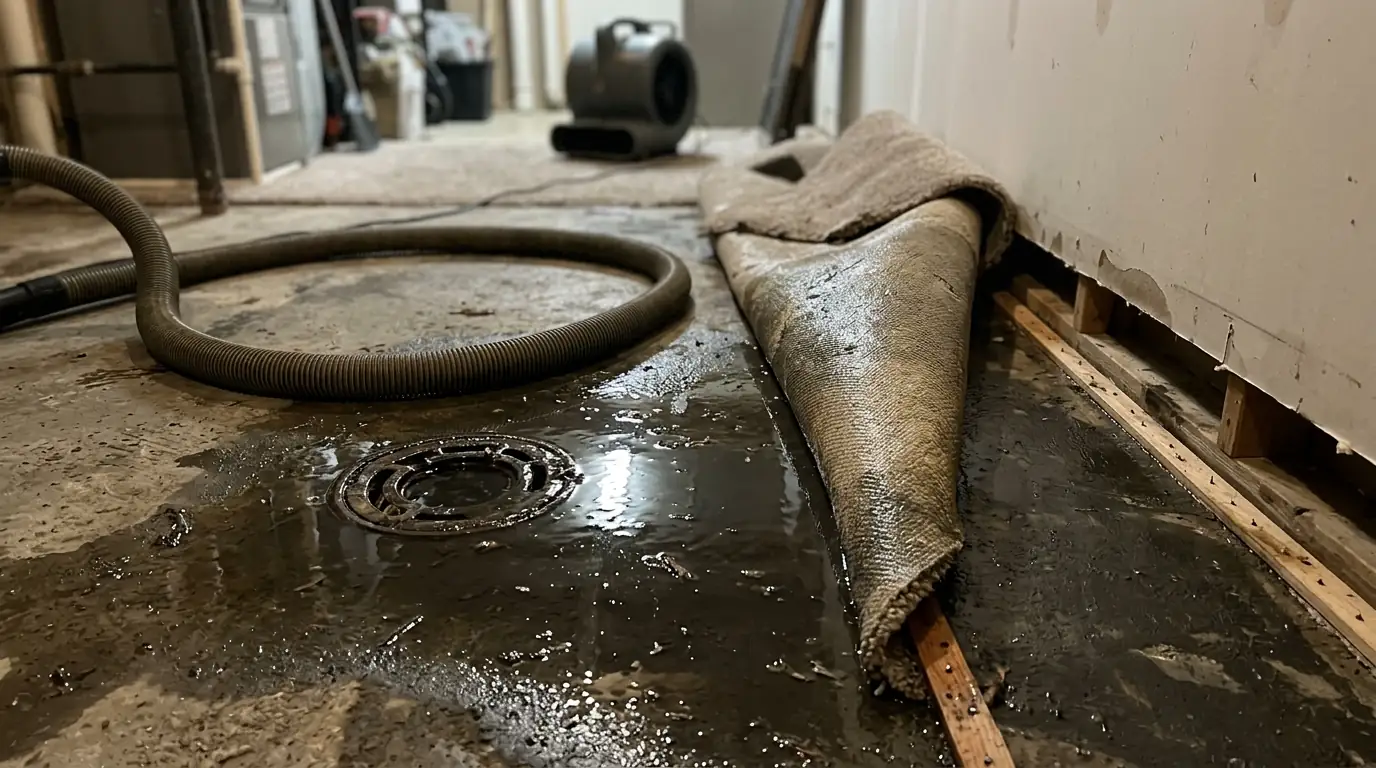
Carpet pad is almost always replaced once it is soaked; it is cheap and holds water for days. Carpet itself can sometimes be dried after a clean-water flood caught quickly. Pull baseboards along wet walls so air reaches the bottom of the drywall.
Drywall that wicked water a few inches up can often be dried in place if it is caught early. Drywall that is soft, stained well up the wall or touched by contaminated water comes out, usually cut in a straight line a foot or so above the wet mark.
- Pad out, carpet lifted and folded back to dry
- Baseboards off along every wet wall
- Belongings moved to a dry room
- Photos of everything that got wet
Hours 24 to 48: dry, do not just air out
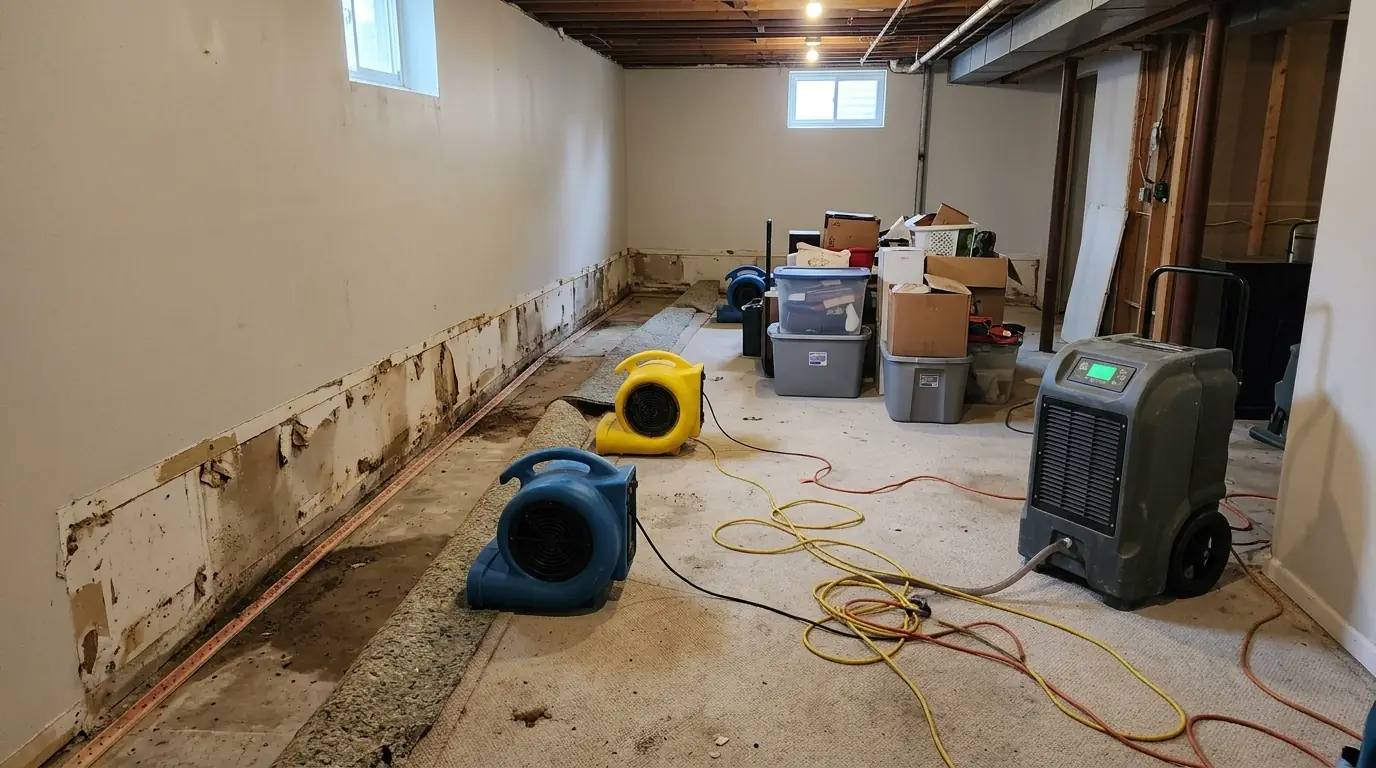
Fans move air but do not remove water from it. A basement dries when dehumidifiers pull the moisture out and air movers push dry air across wet surfaces. In a Salt Lake winter, opening windows lets in cold air but little drying; in summer it can let in humid air. Keep the space closed and let the equipment work.
The only way to know a wall is dry is a moisture meter compared with a dry wall elsewhere in the house. A surface that feels dry can still read wet inside.
Why Salt Lake basements flood in spring
Salt Lake City's precipitation peaks in spring, right as the mountain snowpack melts. In April 2023 Emigration Creek left its banks through Wasatch Hollow and about 100 nearby homes were under a voluntary evacuation. Groundwater rises for blocks around a creek at that level, and basements take it first.
Most spring basement water does not come through the front door. It comes through foundation cracks, the joint where the wall meets the slab, and window wells.
When to call for help
Call when there is more water than a wet vacuum can handle, when finished walls or carpet got wet, when the water came from a drain or sewer, or when the space still smells musty after two days. Those are the situations where drying equipment and readings make the difference between a flood and a remediation.
What not to do
A few common instincts make a flooded basement worse:
- Running a household vacuum on wet carpet
- Using fans alone and calling it dry when the surface feels dry
- Closing up walls or laying new flooring before readings are normal
- Keeping soaked cardboard, pad or upholstered pieces in the basement
- Walking through water from a drain or sewer backup
Where we can help
Quick questions
Usually yes, if the water was clean and the power is safe. Contaminated water changes that.
Several days in most cases, depending on how much water there was and how long it sat.
Sources
Answered around the clock
Water in the basement right now? Call us.
Tell us how much water and where it came from. We answer 24/7.