
Most mold removal lands between about $1,200 and $3,750 for a typical job, based on This Old House's 2026 figures of $10 to $25 per square foot. Bathrooms run less; attics, crawl spaces and full basements run more. The real driver is how much material has to come out and why it got wet.
Published price ranges, by job
These are national planning figures from the sources named, not our prices. They are useful for knowing whether a quote is in a normal range. Your own number depends on what the inspection finds.
| Job | Published range | Source |
|---|---|---|
| Typical remediation | $1,200 to $3,750, about $2,300 average | This Old House, 2026 |
| Per square foot | $10 to $25 | This Old House, 2026 |
| Per square foot, higher band | $15 to $30 | HomeGuide, 2026 |
| Bathroom | $500 to $1,000 | SERVPRO, 2026 |
| Basement | $500 to $3,000 | This Old House, 2026 |
| Attic | $1,000 to $4,000 | This Old House, 2026 |
| Crawl space | $500 to $2,000 | This Old House, 2026 |
| Whole home | $10,000 to $30,000 | This Old House, 2026 |
| Mold inspection | $300 to $650 | HomeGuide, 2026 |
| Clearance re-inspection | $200 to $400 | RestoreAdvisor, 2026 |
The spread between sources is normal. Different surveys count different job sizes, and a fully finished basement with drywall, carpet and a bedroom costs far more than an unfinished one with a stained foundation wall.
What pushes a mold job up
Square footage is the starting point, but five things move a scope more than size alone.
Access comes first. A crawl space with 18 inches of clearance or an attic with a low pitch takes much longer per square foot than an open basement wall. Hidden growth comes second: a stain the size of a dinner plate can sit on the front of a wall with growth across the whole cavity behind it. Containment is third, because sealing one closet costs far less than sealing a finished basement level with its own air scrubber.
The moisture source is fourth. If framing is still wet, drying has to happen before or alongside removal, and that adds equipment days. Testing is last and optional: clearance air samples add lab cost, and they are worth it on large jobs, for sensitive households and before a sale.
What should cost little or nothing
Not every spot needs a company. Public health guidance citing the EPA suggests a contractor once growth covers more than about 10 square feet. Below that, a patch on a hard surface can usually be cleaned with detergent and water, dried and watched.
Mildew on shower grout, surface spots on a window frame in January and a little growth on a painted wall with a known, fixed cause are cleaning jobs. If they keep coming back, the moisture is still there, and that is when an inspection is worth paying for.
Why the cheapest quote can cost the most
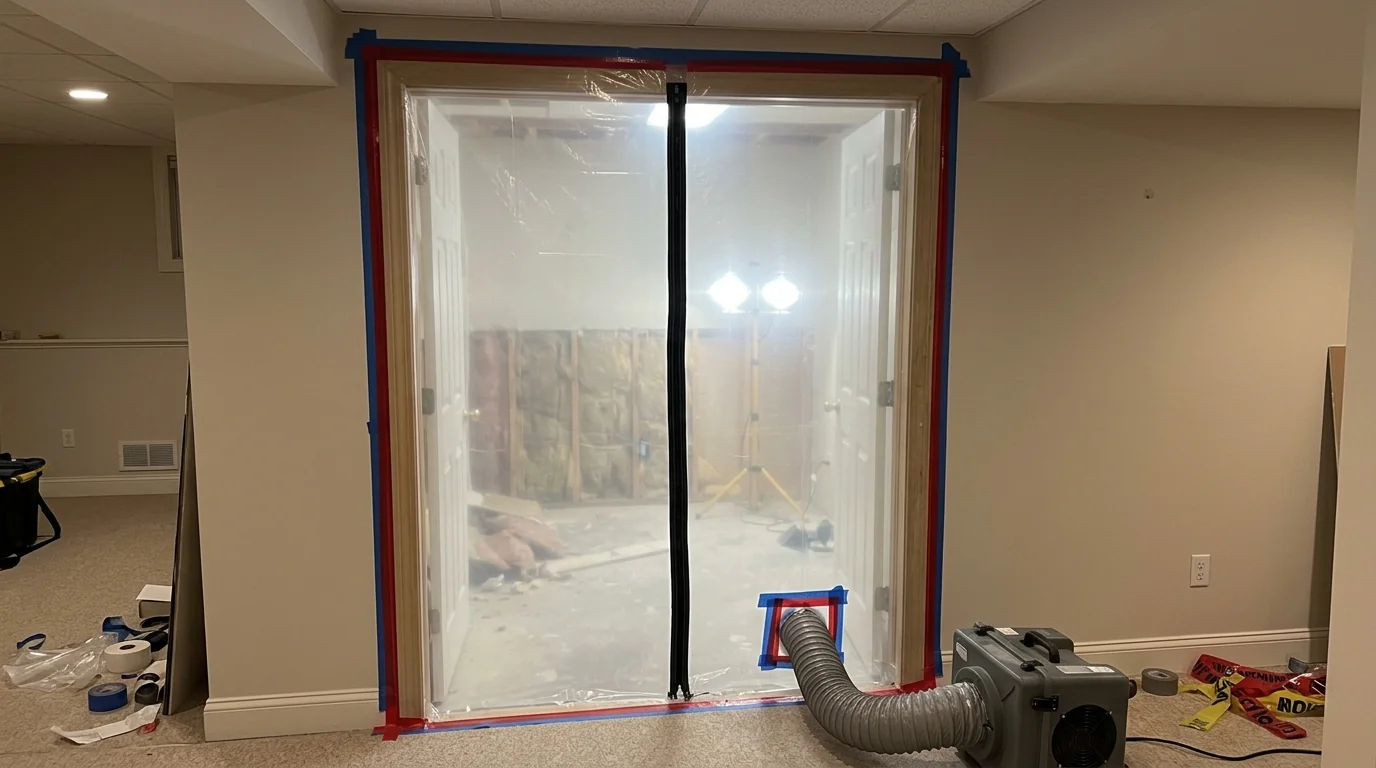
The two shortcuts that make a low quote possible are skipping containment and skipping the moisture source. Without containment, demolition spreads spores into rooms that were clean. Without fixing the source, the growth returns on new drywall, usually within a season, and you pay twice.
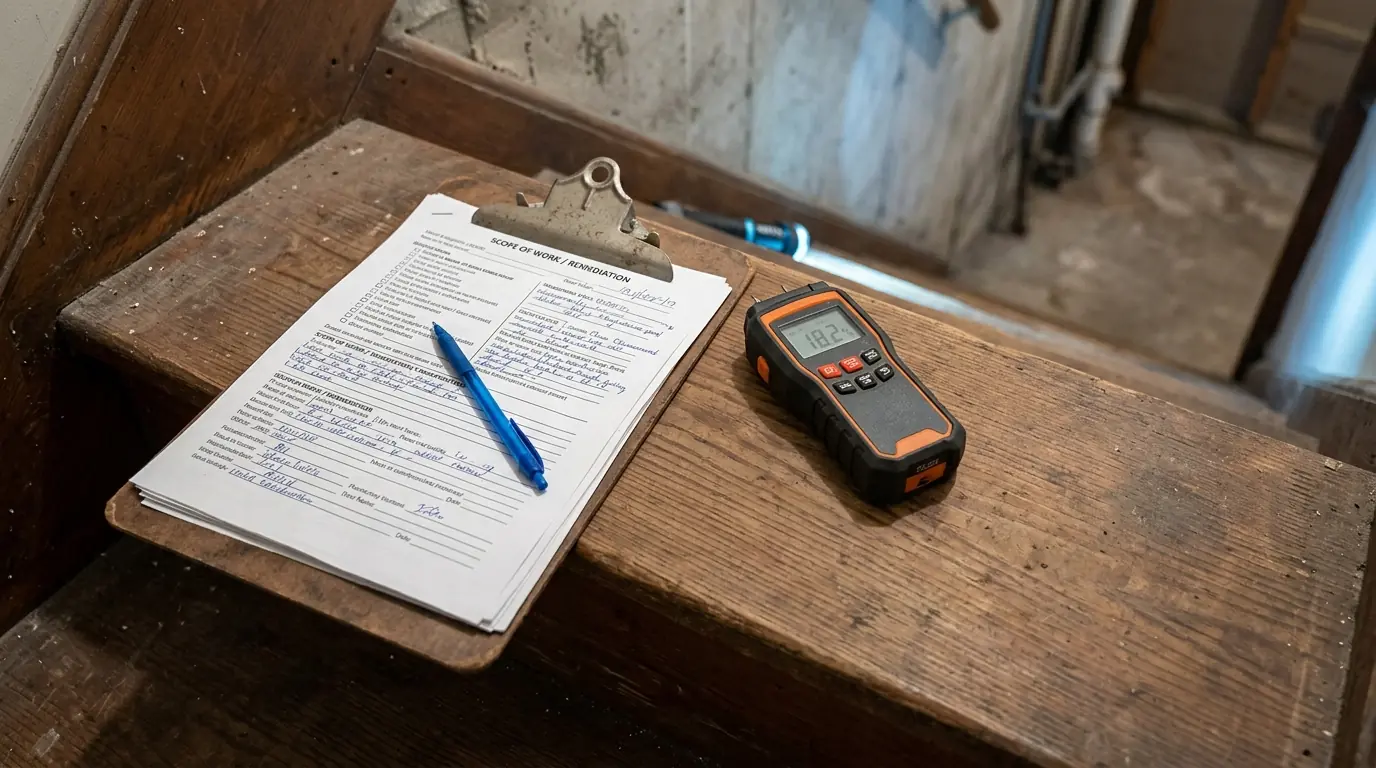
A fair scope says what comes out, how the area is sealed, how the framing is cleaned, how drying is confirmed and what caused the problem. If a quote cannot answer those five things, the price is not really comparable to one that can.
Salt Lake City factors that change the price
The median home in Salt Lake City was built in 1965 and about a quarter predate 1940. Older houses mean plaster walls, stone or block foundations and bathrooms with tile over early board, all of which take longer to open and close than new drywall.
Across the wider county, finished basements are the big variable. A finished basement adds drywall, insulation and carpet to the scope, and those are the materials that cannot be cleaned once mold grows in them.
Questions to ask any mold company
Utah has no statewide mold remediation license, so the company's answers are your best guide. Ask these before you sign anything:
- What did the moisture readings show, and where is the water coming from?
- What exactly comes out, and how far past the visible growth?
- How will the work area be sealed from the rest of the house?
- How will framing be cleaned and how will you confirm it is dry?
- Is a clearance check included, and what counts as a pass?
- What does the price not include, such as rebuild or repairs?
Where we can help
Quick questions
It depends on the cause and your policy. Sudden leaks are treated differently from long-term seepage, so documentation matters.
Usually not. Lab samples are priced per sample and are optional on many jobs.
Sources
Answered around the clock
Want a real number for your job? Call us.
Tell us where the mold is and what got wet. We will explain what the scope would cover.