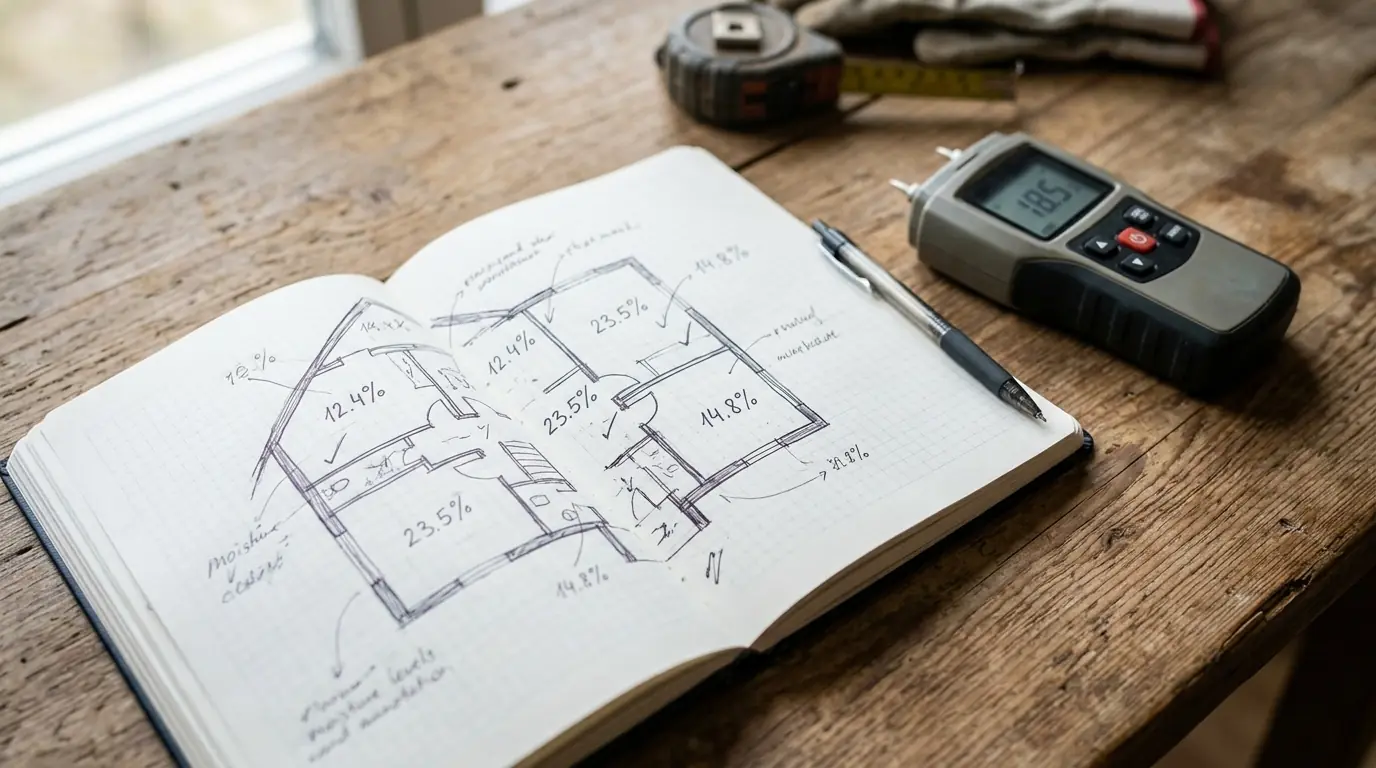
A mold air test report compares spores counted indoors with spores counted outdoors during the same visit. What matters is the comparison: indoor counts well above outdoor counts, or indoor types that are rare outside, point to a source inside. There is no single number that means a house is safe or unsafe.
What the lab actually counted
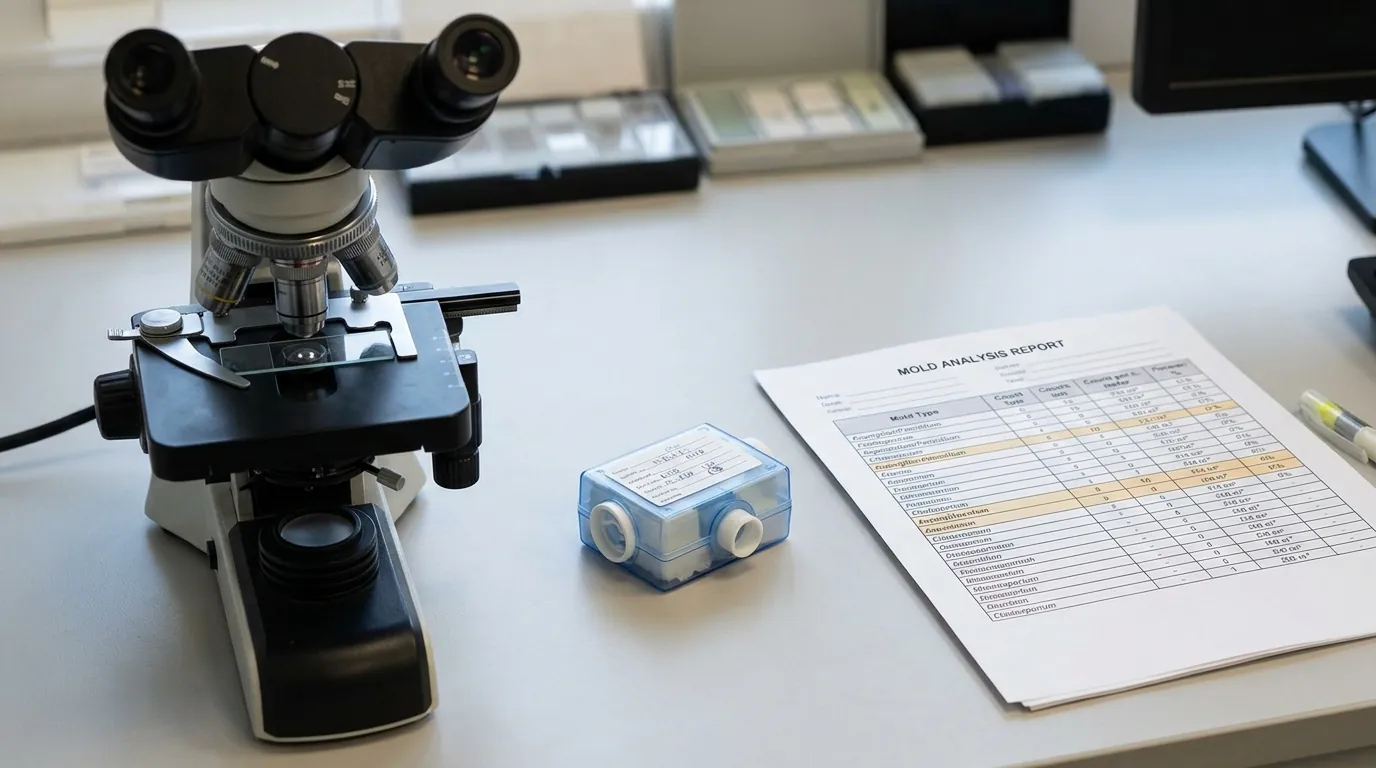
Most air tests use a spore trap: a pump pulls a measured volume of air through a small cassette, and spores stick to a sticky slide inside. The lab counts them under a microscope and groups them by type.
The report usually lists each sample by location, the volume of air collected, and a count for each spore type, often as spores per cubic meter of air. Surface swab or tape samples are reported differently, as present or absent and sometimes as light, moderate or heavy growth.
Why the outdoor sample matters most
Spores are everywhere outdoors, and they come inside every time a door opens. A report with no outdoor sample cannot tell you whether indoor spores came from a source inside the house or just from outside air.
Read each indoor sample against the outdoor one taken during the same visit. Indoor totals in the same range as outdoors, with the same mix of types, generally look like normal background. Indoor totals several times higher, or types that barely appear outside, suggest something is growing inside.
Common names you will see
You do not need to memorize mold biology, but a few names come up constantly:
| Name on the report | What it usually tells you |
|---|---|
| Cladosporium | Very common outdoors; indoors it often just reflects outside air |
| Penicillium/Aspergillus | Common in both places; high indoor counts often point to a damp indoor source |
| Stachybotrys | Rare in outdoor air; finding it indoors suggests long-wet drywall or paper |
| Chaetomium | Also tied to long-wet cellulose such as drywall |
| Basidiospores and Ascospores | Mostly outdoor types, often high after rain |
Types tied to long-wet materials matter more in small numbers than common types in large numbers, because they are rarely present unless something has stayed wet for a long time.
What a clean result means, and what it does not
A clean air result means the air at that moment, in that spot, looked like outdoor air. It does not prove there is no growth behind a wall that the air is not reaching. That is why a test is most useful alongside moisture readings, which find damp materials whether or not they are shedding spores into the room.
After a remediation, a clearance test is taken inside the containment once cleaning is done. A pass there is meaningful because the area was just disturbed and cleaned.
What a failed result means
A failed or high indoor result points to a source but does not say where it is. The next step is finding it: moisture readings, a look at the HVAC and the lowest level, and inspection openings where readings point. See mold inspection. Testing again before the source is found usually just repeats the same answer.
Questions to ask whoever tested
Utah has no statewide license for mold inspectors, so ask directly:
- Where exactly was each indoor sample taken, and why there?
- Was an outdoor sample taken during the same visit?
- Which lab analyzed the samples?
- What do you think the results mean for this house?
- What would you check next if the result is high?
Where we can help
Quick questions
There is no single number. Indoor results are judged against the outdoor sample taken the same visit.
No. It shows what is in the air, not health effects. A doctor answers health questions.
Sources
Answered around the clock
Have a report you cannot make sense of? Call us.
Tell us what the report says and why the test was done. We will explain what we would check next.