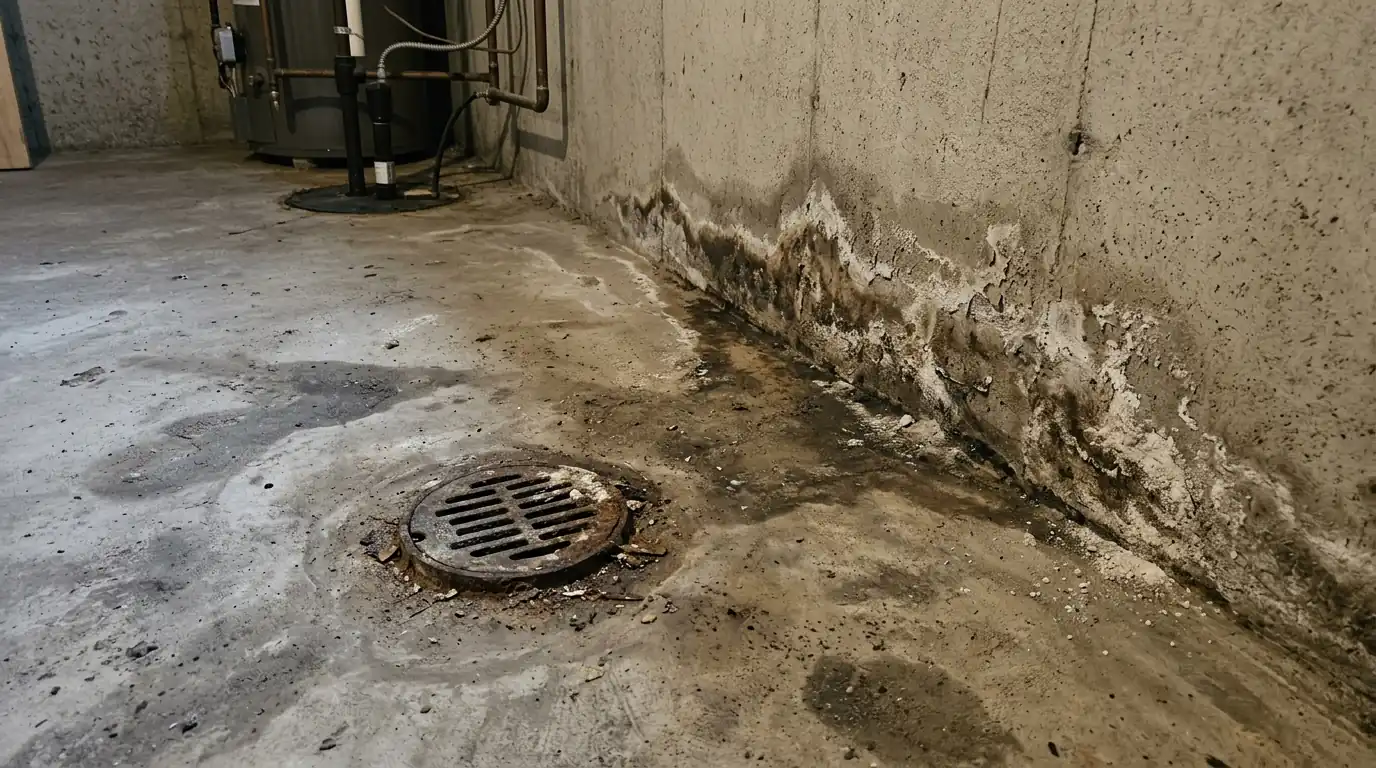
A swamp cooler adds water to the air, so the cooler and the duct below it stay damp all summer. Each spring, check the pads, water pan, float and duct drop, and watch basement humidity once it runs. A study of Utah County homes found swamp-cooled houses ran noticeably more humid indoors in summer.
Why swamp coolers and mold go together
An evaporative cooler works by pulling outside air through wet pads. That is efficient in a dry climate, and it is why swamp coolers were once in about four of every five Utah homes. Today they are the main cooling in only about 7 percent of homes across Utah and neighboring states, according to EIA figures, but many older houses still run one.
The water that makes it work is also what makes it a mold risk. Stale water in the pan, old pads and a duct drop that never fully dries all feed growth, and the fan blows whatever grows there through the house.
The spring startup check
Before the first warm day, spend half an hour on the roof or at the unit with the power off:
- Replace the pads if they are stiff, discolored or crumbling
- Drain, scrub and rinse the water pan
- Check the float valve so the pan does not overflow
- Look at the distribution lines for clogs
- Open the duct drop and look for stains or damp insulation
- Run it briefly and smell the vents in each room
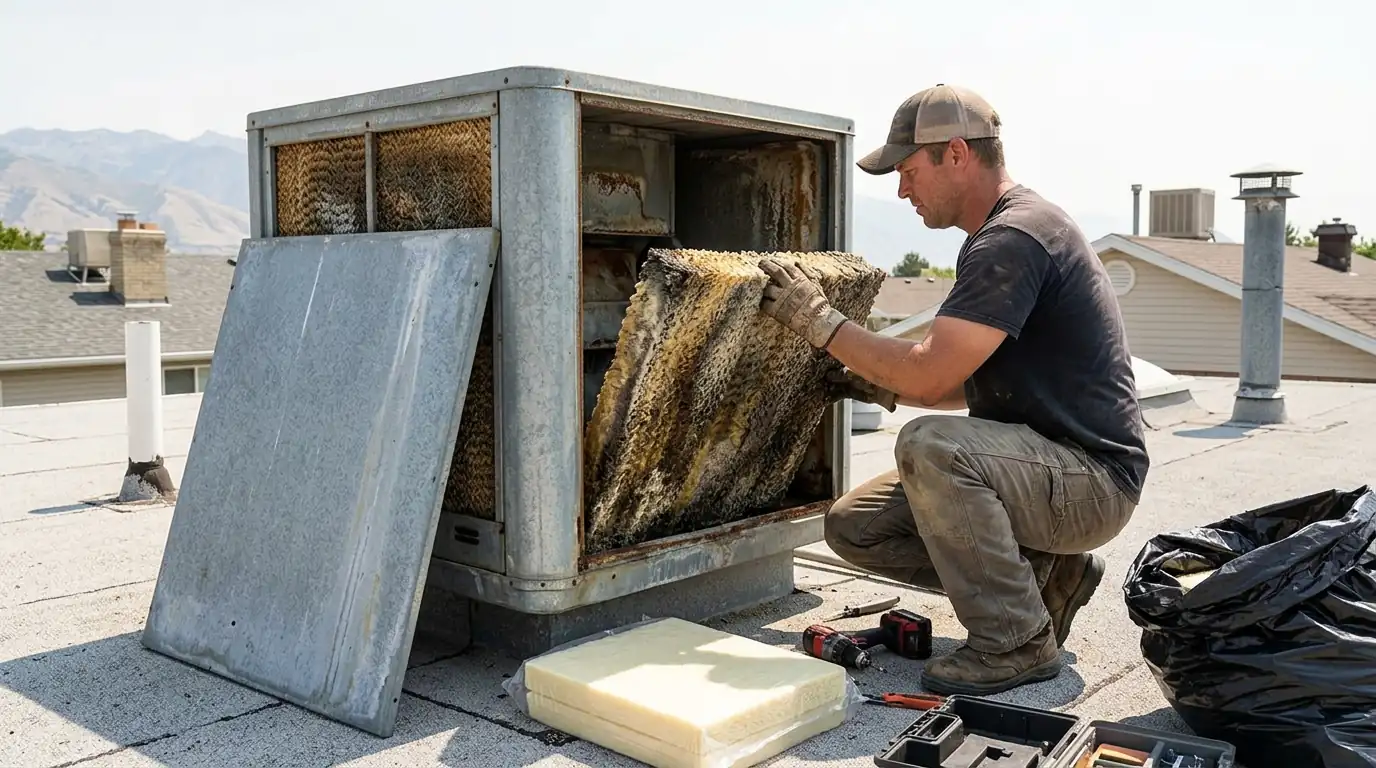
The duct drop: where the smell starts
The duct that carries cooled air down from a rooftop unit into the house stays damp longer than anything else. When a musty smell appears in every room at once, only when the cooler runs, the duct drop is usually where it starts.
Lined or insulated sections that stayed wet over a season often cannot be cleaned and need replacing. Bare metal can usually be cleaned. A leak around the roof curb can also soak the ceiling below, which is worth checking from inside.
Basement humidity in a swamp-cooled house
A study of homes in Utah County found indoor humidity ran significantly higher in summer where an evaporative cooler did the cooling than in homes with central air. The extra moisture settles in the coolest part of the house, the basement.
Public health guidance citing the EPA recommends keeping indoor humidity between 30 and 50 percent. A cheap hygrometer in the basement tells you where you stand. If it runs above 60 percent through July, a dehumidifier in the basement is worth considering even if the rest of the house feels comfortable.
Fall shutdown
At the end of the season, turn off the water, drain the pan and lines, let the pads dry and close the damper or cover the duct opening from inside. A cooler put away wet sits with standing water all winter and starts next spring already growing.
When to call someone
Call when the smell stays after you clean the pads and pan, when the duct drop is stained or its insulation is wet, when the ceiling under the cooler shows water marks, or when the basement hygrometer stays high all summer. Those point past the cooler itself to the ductwork or the house, and they are worth having looked at before another season of running it.
Where we can help
Quick questions
Plain scrubbing and rinsing is usually enough. Follow the cooler maker's cleaning instructions.
It means something is growing. Clean the cooler and duct drop before running it more.
Sources
Answered around the clock
Musty air when the cooler runs? Call us.
Tell us about the cooler and the smell. We will explain what we would check first.