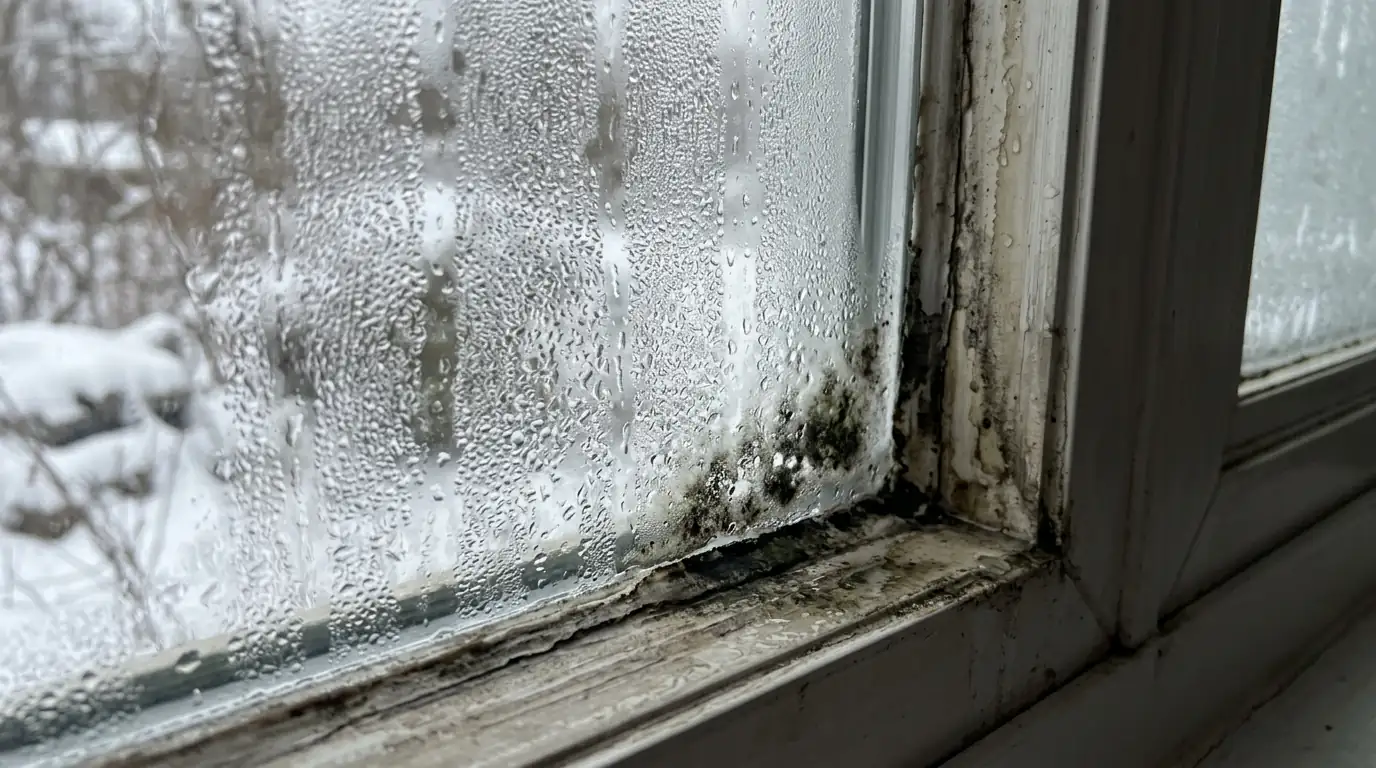
Windows fog up in winter when warm, humid indoor air meets cold glass. A little on the coldest mornings is normal; water that runs down and sits on the frame every day is what grows mold in the corners and soaks wood sills. Lowering indoor humidity and moving air across the glass stop it more reliably than cleaning.
Why windows sweat in a dry city
Salt Lake City's summers are dry, but winter indoor air is another story. NOAA normals put average humidity at the airport near 74 percent in December and January, compared with about 36 percent in July, and cooking, showers and people add more moisture inside a closed-up house.
Glass is the coldest surface in most rooms. When warm indoor air touches it, the air cools and drops its water on the pane. Single-pane and aluminum windows get colder than modern double-pane units, so older houses see more of it.
When condensation becomes a mold problem
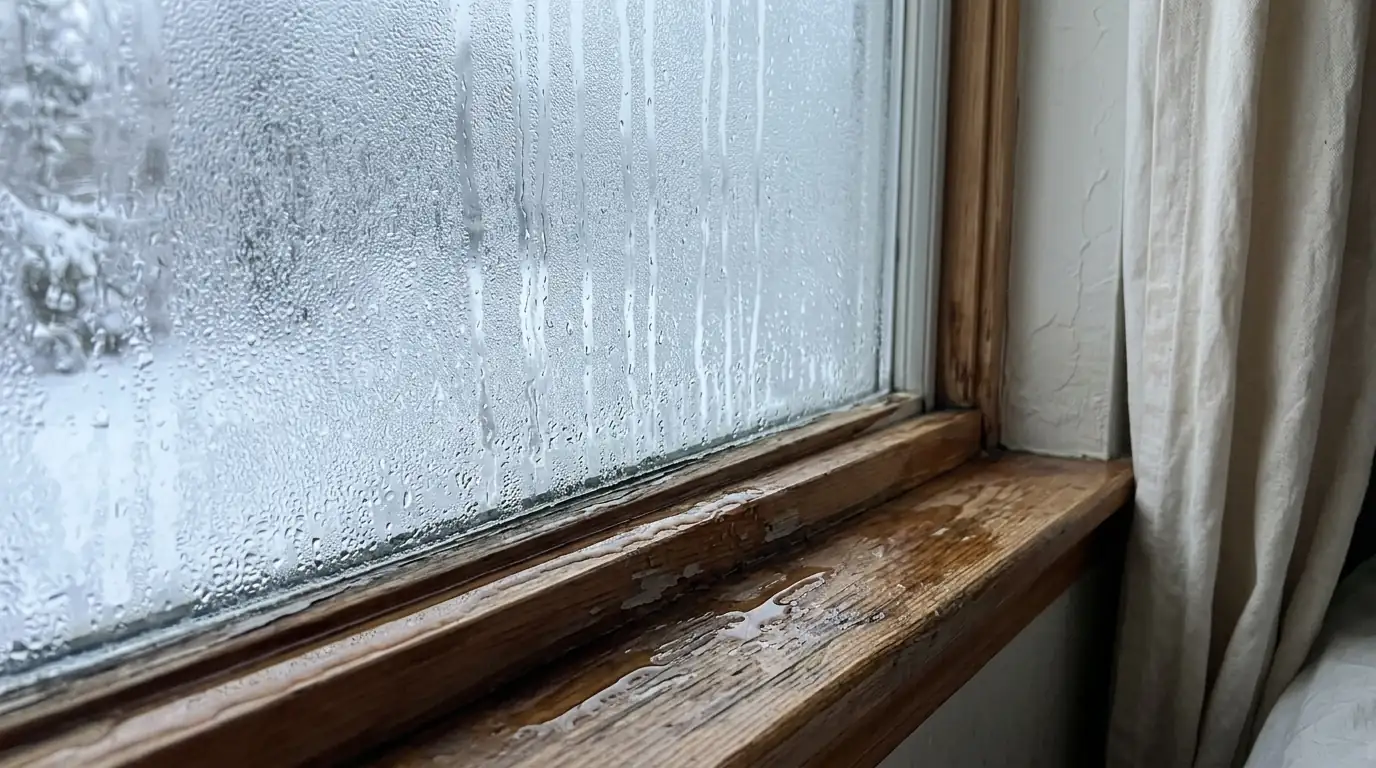
A bit of fog that clears by mid-morning is not a problem. The trouble starts when water runs down the glass and sits in the frame corners and on the sill day after day. Mold grows on the dust and grime in the corners first, then on painted wood.
The bigger risk is out of sight. Water that runs off the sill can soak into the wall below the window, and drywall there can grow mold on its back side before any stain shows on the front.
Fixes that actually stop it
Cleaning the corners every week treats the result. These deal with the cause:
- Run the bath fan through every shower and for a while after
- Use the range hood when cooking, and vent it outside
- Turn a whole-house humidifier down in the coldest weeks
- Open blinds and curtains during the day so warm air reaches the glass
- Keep furniture a few inches off exterior walls
- Add storm windows or replace failing single-pane units
Public health guidance citing the EPA recommends indoor humidity between 30 and 50 percent. A hygrometer by a bedroom window tells you whether you are above that in winter.
Cleaning what is already there
Mold on glass, vinyl and aluminum frames cleans off with detergent and water; dry the surface afterward. Painted wood that is only stained on the surface can be cleaned the same way and repainted once it is completely dry.
Wood that is soft when pressed, or paint that is lifting over black wood, means the sill has taken in water for a long time. That wood needs replacing, and the wall below should be checked with a moisture meter. See window and sill mold removal.
Why some rooms are worse
Bedrooms where people sleep with the door closed, bathrooms, kitchens and rooms on the north side get the most condensation. They combine more moisture with colder glass and less air movement. If only one or two windows in the house sweat heavily, those rooms are usually the answer; if every window does, humidity across the whole house is too high.
The humidifier nobody turned down
A furnace-mounted humidifier set comfortably in November can put far too much water into the air on a January night, when the glass is at its coldest. Many are never adjusted after they are installed.
If your windows run with water on the coldest mornings and you have one, turn it down as the temperature drops outside and watch whether the fog clears. It is the cheapest fix on this list, and often the one that works.
Where we can help
Quick questions
No. Fog between double-pane glass means the seal failed; the unit needs replacing, but it does not grow mold in the room.
They reduce it a lot, but high indoor humidity can still fog even good windows.
Sources
Answered around the clock
Black corners on your windows every winter? Call us.
Tell us how many windows and which rooms. We will explain what we would check.