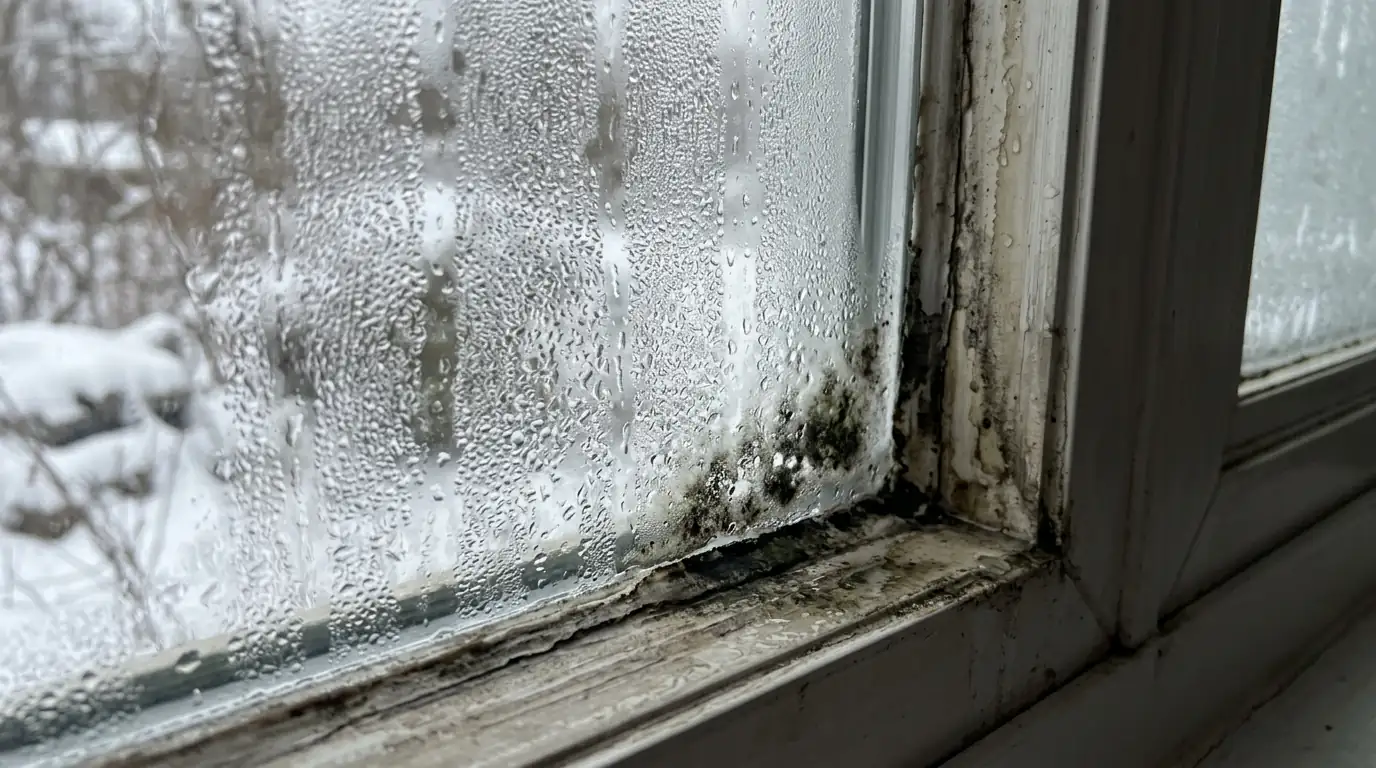
Utah attics grow mold in winter because warm, moist air from the house leaks into a cold attic and condenses on the underside of the roof deck. The three usual causes are bath fans venting into the attic, insulation blocking the soffit vents, and ice dams at the eaves. Fixing the airflow matters more than cleaning.
How moisture gets into a cold attic
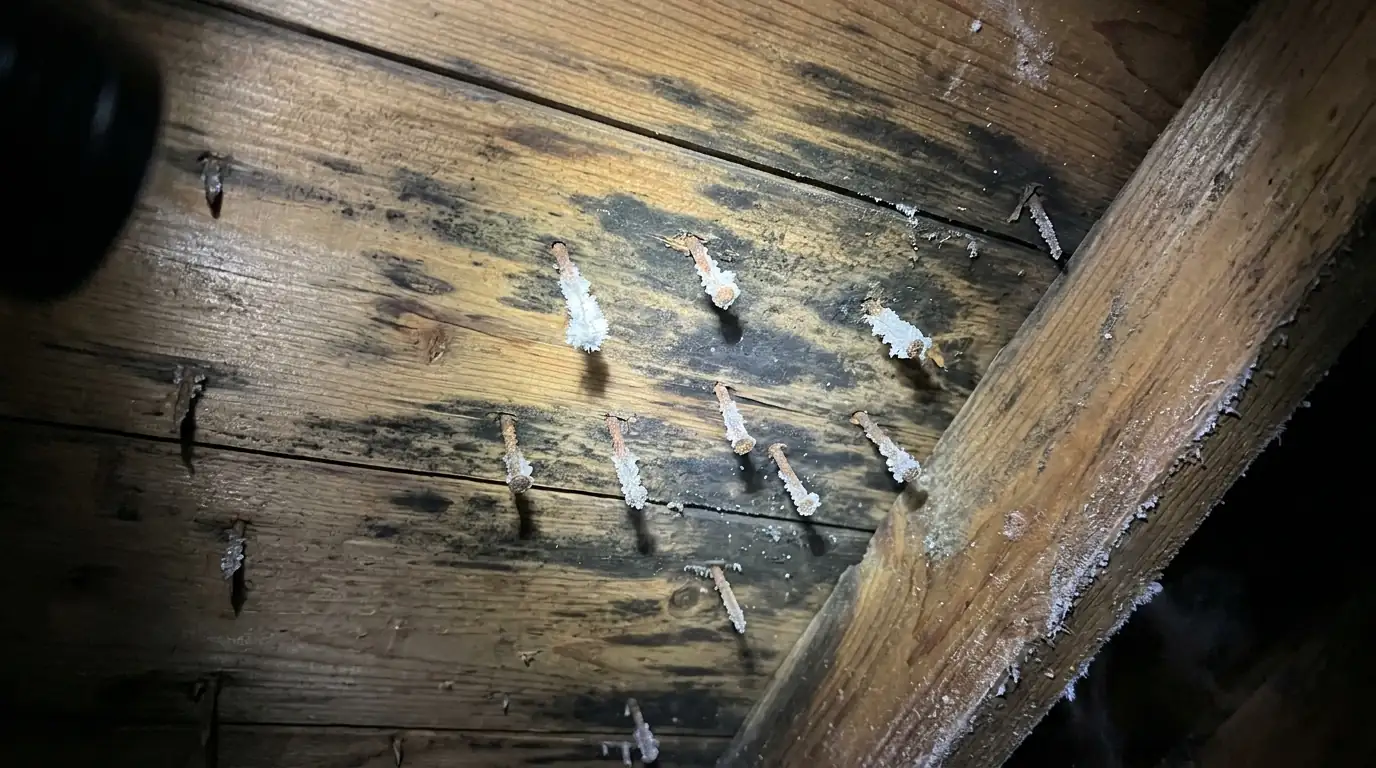
Warm air rises and carries water with it. In winter it leaks into the attic through gaps around light fixtures, plumbing stacks, the attic hatch and top plates. When it reaches the roof deck, which is close to the outdoor temperature, it condenses, often as frost.
Winter indoor air here is damper than people expect. NOAA normals put average humidity at the Salt Lake City airport near 74 percent in December and January, compared with about 36 percent in July. Cooking, showers and people add more inside.
Cause one: bath fans that end in the attic
A bathroom fan is supposed to push shower steam outside. Many older fans were ducted a few feet into the attic and left there, or the duct came loose over the years. The result is a patch of mold on the sheathing right above the bathroom, sometimes with stained insulation below it.
The fix is a sealed, insulated duct to a roof or wall cap, and a fan that actually moves enough air for the room.
Cause two: blocked eaves
A healthy attic breathes: cold air enters at the soffits, sweeps up under the roof and leaves at the ridge. When extra insulation is blown in over the years, it often drifts into the eaves and buries the soffit vents. Airflow stops, and moisture sits on the sheathing all winter.
Baffles fixed between the rafters at the eaves hold insulation back and keep that path open.
Cause three: ice dams
Salt Lake City averages under 60 inches of snow a year at the airport, and much more on the benches. When heat escaping into the attic melts snow on the roof, the water runs down and refreezes at the cold eaves, building an ice dam. Meltwater backs up under the shingles and drips into the attic along the outside walls.
Ice dams are a symptom of warm air in the attic, so the fixes overlap with the other two causes: seal the air leaks, vent the eaves, keep the roof deck cold.
What to check from the attic hatch
You can learn a lot with a flashlight on a cold morning without walking the joists:
- Frost or rust stains on the tips of roofing nails
- Gray or black staining on the roof deck, especially above bathrooms
- A bath fan duct lying loose on the insulation
- Insulation packed tight against the deck at the eaves
- Wet or matted insulation along the outside walls
- Daylight at the soffits, which means the vents are open
What fixing it looks like
Mold on roof sheathing is almost always on the surface and cleans off with HEPA sanding or blasting. Wet insulation comes out. Then the cause gets fixed: the fan duct runs outside, baffles open the eaves and the worst air leaks from the house are sealed. Cleaning without those fixes only resets the clock until next winter.
How urgent is attic mold?
Attic mold rarely needs a same-night response, but it is not something to leave for years. The sheathing is part of your roof, and years of wetting and drying can soften it. Air also moves between the attic and the house through the same gaps that let moisture up.
The practical timing is to deal with it before the next winter: clean the deck, fix the cause in the warmer months, and the attic stays dry when the cold comes back.
Where we can help
Quick questions
A little on the coldest nights can happen. Frost across the deck means too much warm air is getting in.
Vents help only when paired with sealing the air leaks and keeping the eaves open.
Sources
Answered around the clock
Seeing frost or stains in the attic? Call us.
Tell us what you saw from the hatch. We will explain what we would check.