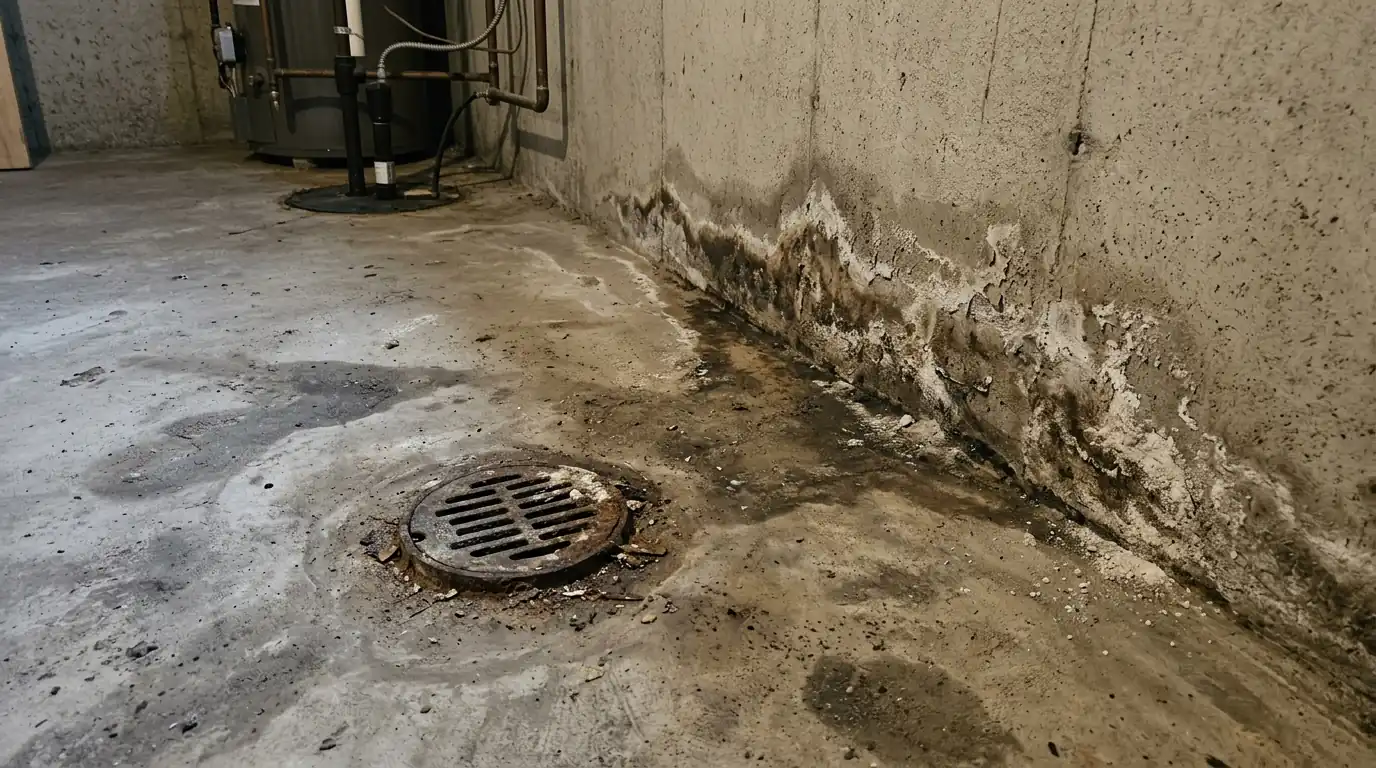
Once a roof leak is patched, the water it let in is still sitting in roof sheathing, attic insulation, framing and the drywall below. EPA guidance says wet materials dried within 24 to 48 hours usually will not grow mold, so the job after a leak is to find everything that got wet and dry it quickly, or remove what cannot be dried.
Where roof water goes
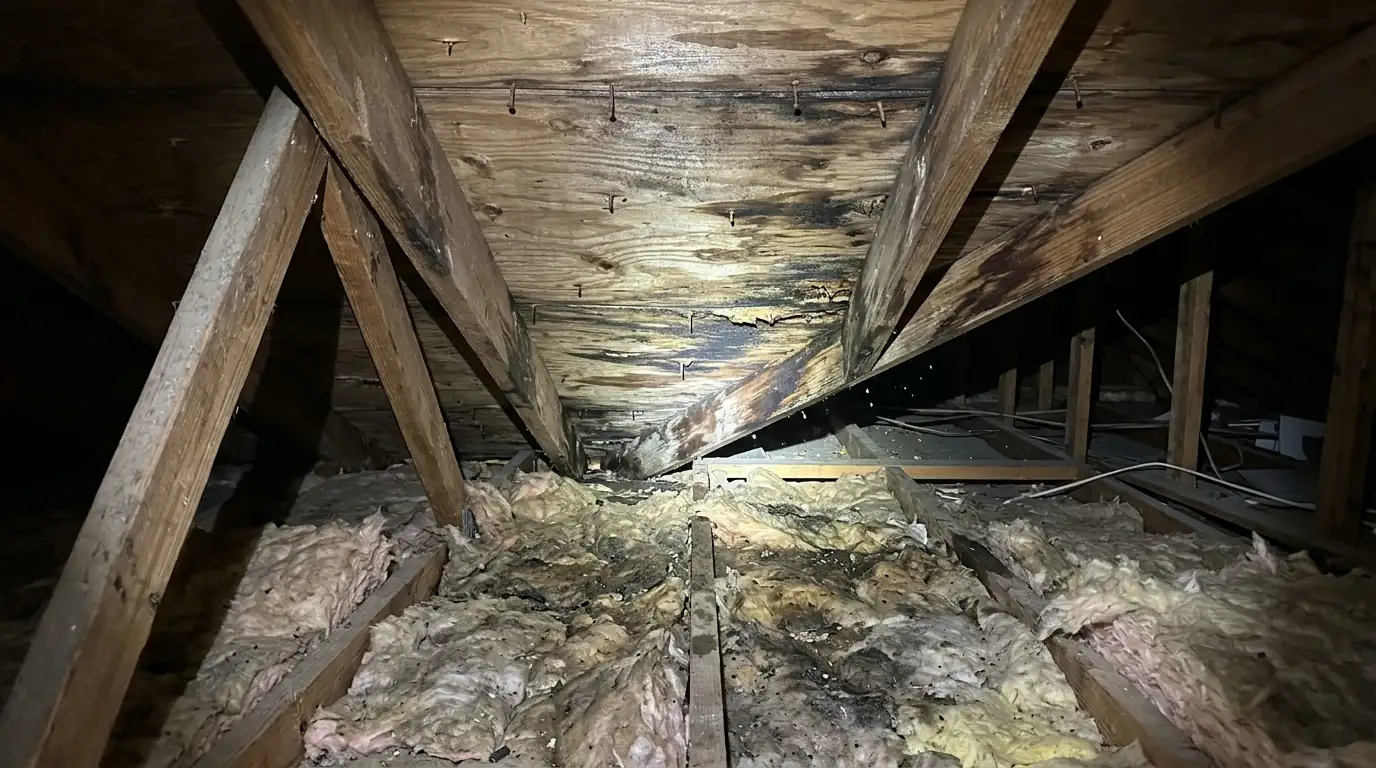
Water that gets past shingles rarely drips straight down. It runs along the underside of the roof sheathing and the rafters, soaks into insulation, and settles on top plates and ceiling drywall, sometimes several feet from where it came in.
That is why the stain on the ceiling is often not under the hole in the roof, and why a small leak can wet a surprisingly large area of the attic before anyone sees it.
The 24 to 48 hour window
EPA guidance says mold usually will not grow if wet or damp materials are dried within 24 to 48 hours. After that, insulation, drywall paper and wood that stayed wet become the places it starts.
Fiberglass insulation that got soaked holds water against the drywall below it for days. Pulling it back or removing it is often the fastest way to let the ceiling dry, and it lets you see how far the water spread.
What to check in the attic
Take a flashlight into the attic on the next dry day and look for:
- Dark staining or water lines on the underside of the roof sheathing
- Insulation that is matted, compressed or still damp
- Wet or stained top plates where the walls meet the attic
- Rusty nail tips or drip marks below the leak
- A musty smell stronger near one part of the attic
Staining spread evenly across the north side of the roof, with frost on nail tips in winter, is usually condensation rather than a leak. Our winter attic guide explains the difference.
Ceilings and walls below
A brown ring on the ceiling, a sag in the drywall or paint that bubbles near a corner all mean water reached the room below. Drywall that sags or feels soft needs to come out; a dry stain on firm drywall may only need sealing and paint once readings confirm it is dry.
Water can also run down inside an exterior wall from the top plate. A moisture meter on the wall below the leak tells you whether the wall needs opening, which is far better than finding out from a smell months later.
Ice dams and spring leaks in Utah
Salt Lake City's airport averages under 60 inches of snow a year, and the benches and mountains get far more. When heat escaping into the attic melts snow on the roof, the water refreezes at the cold eaves and backs up under the shingles. These leaks often show up at the edges of ceilings and in exterior walls in late winter.
Spring brings the valley's wettest months, so a roof that leaked once during a melt is likely to leak again in the next storm until it is repaired.
Roofer first, then drying
Fix the roof before drying the inside, or the next storm undoes the work. Then dry or remove everything that got wet, and take photos and readings as you go: insurers usually want to see the damage, the cause and the drying record. See mold insurance claim documentation for what a useful record includes.
Where we can help
Quick questions
Only once the drywall is firm and readings show it is dry. Painting over damp drywall traps the moisture.
Insulation that was soaked or stays matted usually should be, since it holds water and loses most of its value.
Sources
Answered around the clock
Roof leaked? Call us before the ceiling smells.
Tell us when it leaked and what got wet. We will explain what to dry and what to remove.