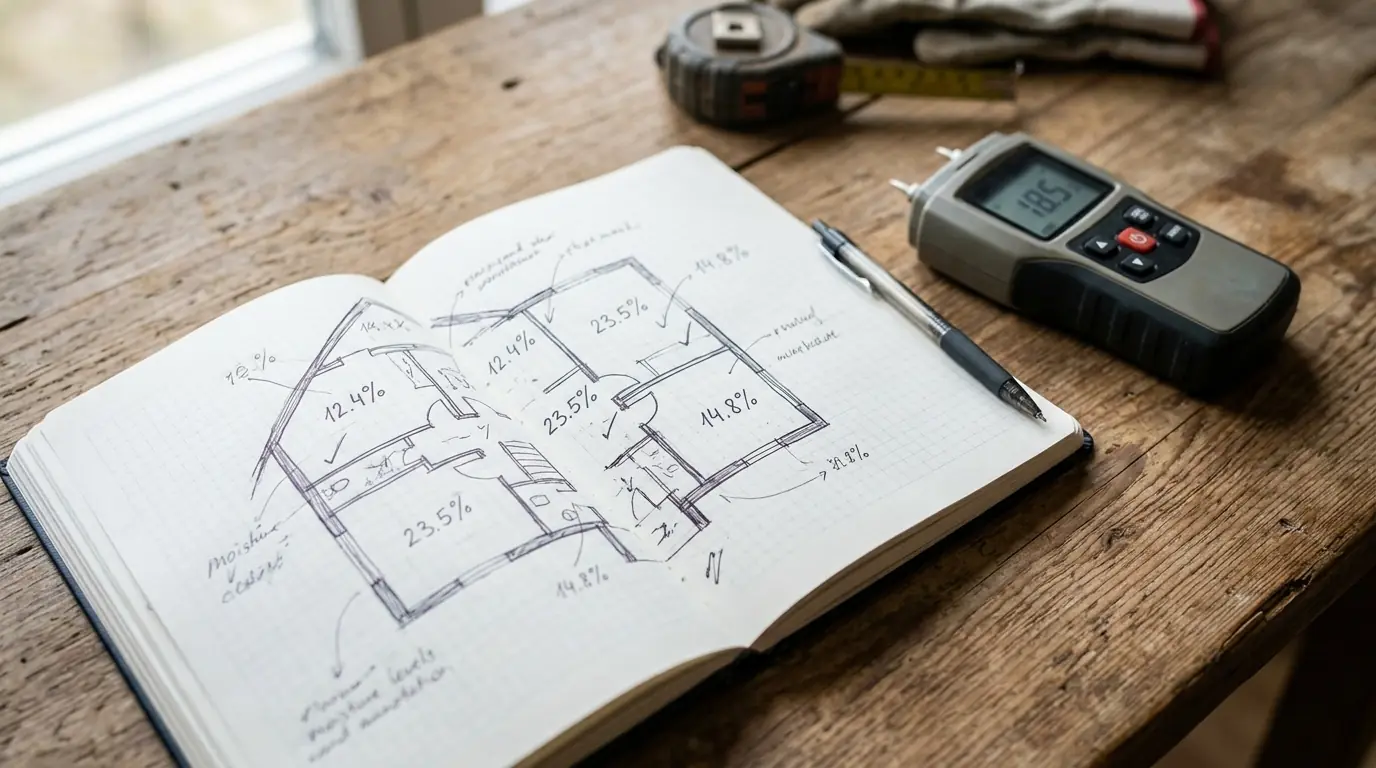
Salt Lake City's wettest months are in spring, and that is when snowmelt runs off the benches and raises groundwater. Before the melt, clear gutters, extend downspouts, check grading, cover window wells and test the sump pump. During runoff, check the basement walls and window wells weekly. If water gets in, start drying within a day or two.
Why spring is basement season
Salt Lake City has a dry climate overall, but its precipitation peaks in spring, right when the snowpack starts melting. Water comes off the foothills and benches, fills creeks and pushes into the soil around foundations.
In a big year it goes further. During the 2023 runoff, Salt Lake City, Salt Lake County, Millcreek and Emigration Canyon all declared local flooding emergencies, and the county named Red Butte, Emigration, City Creek, Big Cottonwood, Little Cottonwood and Millcreek as the creeks at highest risk.
Before the melt
Do these on a dry day in late winter, before the first warm week:
- Clear gutters and make sure every downspout runs at least a few feet from the foundation
- Check that soil slopes away from the house, not toward it
- Clean leaves and snow out of window wells and check that their drains are open
- Add covers to window wells that fill with snow, as long as they still open from inside
- Pour a bucket of water into the sump pit and confirm the pump starts and drains
- Move boxes, rugs and stored items off the basement floor along exterior walls
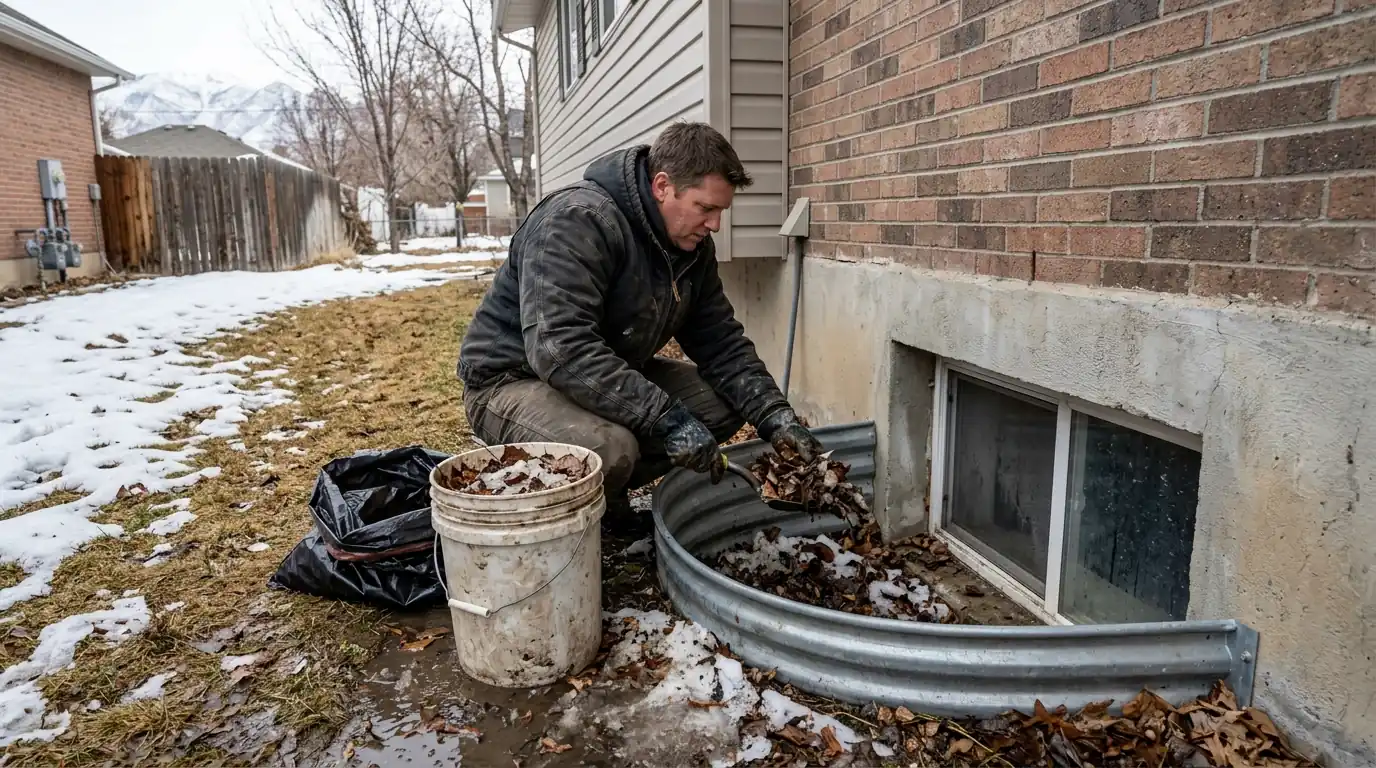
During runoff
Once the melt is under way, a few minutes a week catches problems early:
- Walk the basement and look at the bottom of exterior walls for dark lines or damp spots
- Press carpet along exterior walls; damp pad shows up before a stain does
- Check window wells after warm days and storms for standing water
- Keep a hygrometer in the basement and note readings above 60 percent
- Listen for the sump pump running more than usual
If water gets in
Speed matters more than anything else. EPA guidance says wet materials dried within 24 to 48 hours usually will not grow mold. Pull wet carpet pad and anything stored on the floor, run fans and a dehumidifier, and find where the water entered.
Our flooded basement guide covers the first two days step by step, and flooded basement cleanup is the service page for when it is more than a towel job.
After the season
When runoff ends, check the places water may have reached quietly: the back of finished walls, under carpet near exterior walls and around the floor drain. A musty smell in May or June is often the first sign that something stayed wet during the melt.
Note anything that happened this year. A wall that took water once will likely take it again, and that is the time to look at grading, a sump pump or window well covers rather than waiting for next spring.
Where we can help
Quick questions
Valley snow melts in late winter, and mountain runoff usually peaks in spring, so March through June is the window to watch.
Not always. It can be groundwater, condensation or poor grading, which moisture readings help sort out.
Sources
Answered around the clock
Water in the basement this spring? Call us.
Tell us where it came in and how long it has been wet. We will explain the next steps.