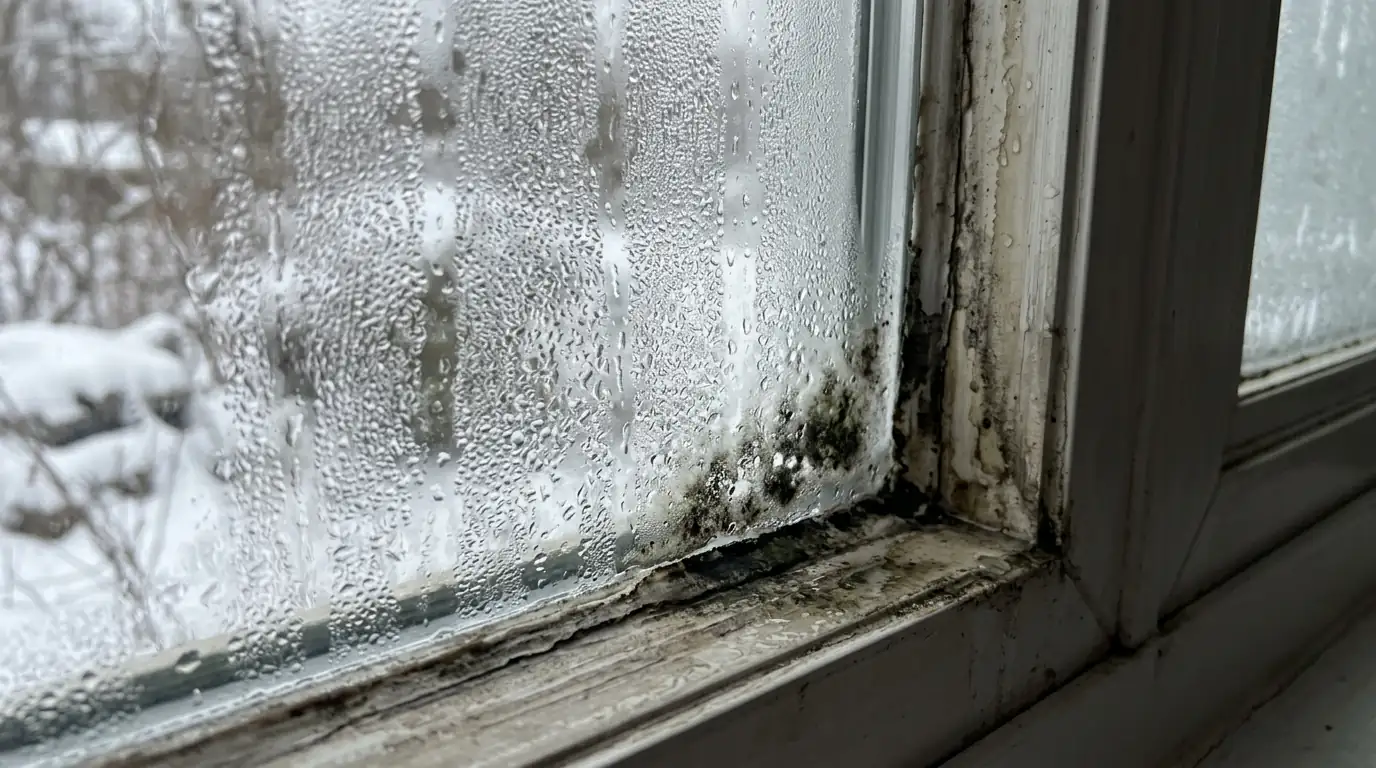
Mildew is a type of mold that grows flat on top of a surface, like the gray film on shower grout or a window frame. Other molds grow into what they sit on, such as drywall, wood or carpet backing. Mildew on a hard surface wipes off; mold that has grown into a porous material usually has to be cut out and the moisture fixed.
Mildew is a kind of mold
The two words get used as if they meant different things, but University of Florida extension guidance puts it plainly: mildew is a mold. In everyday use, mildew means the kind that grows flat and stays on the surface, while other molds grow in thicker patches and reach below the surface of the material.
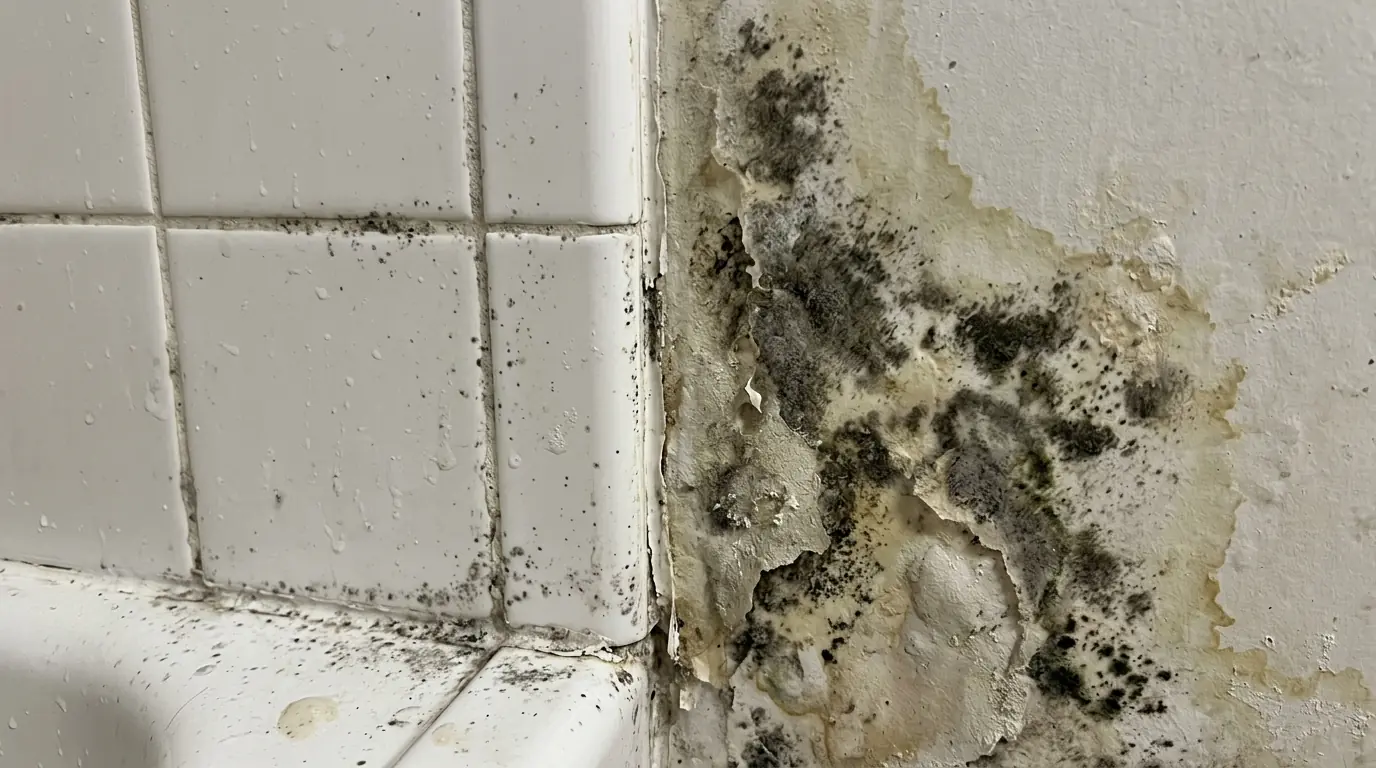
That difference is what matters in a house. Growth that sits on top of tile, glass or a painted sill can be cleaned off. Growth that has rooted into drywall paper, wood or carpet backing cannot be cleaned out of the material, only removed with it.
How to tell them apart at home
You do not need a lab for a first look. These checks point you in the right direction:
- Wipe it with a damp cloth: mildew comes away cleanly and leaves the surface sound
- Look at the texture: mildew is flat or powdery, other molds are often fuzzy or slimy
- Press the material: soft or crumbling drywall or wood means growth has gone into it
- Watch for return: growth that comes back within days in the same spot usually has moisture behind it
- Notice the smell: a strong musty smell often means more growth than you can see
Color tells you less than people think. Both can be gray, green or black, and dark color alone does not make something dangerous. Our black mold guide covers that question in more detail.
Where each one shows up in Utah homes
In Salt Lake houses, mildew is usually a bathroom and window story: shower grout and caulk, the corners of a tub surround, and window frames that sweat in winter. These are hard surfaces that get wet every day and dry slowly.
Mold that grows into materials shows up where water has soaked in and stayed: the back of drywall below a leak, basement carpet pad after a spring seep, attic sheathing above a bath fan that vents into the attic, and subfloor under a slow drip.
When you can clean it yourself
Mildew on a hard surface is a household job. Scrub with detergent and water, rinse, and dry the surface completely. Then deal with what made it wet, usually a fan that is not used long enough or humidity that is too high.
EPA guidance treats small areas of mold on hard surfaces the same way: clean them with detergent and water and dry them. Our DIY cleanup guide walks through the steps and the size limits.
When it is more than mildew
Call for a closer look when growth keeps coming back after cleaning, when the material underneath is soft or stained through, when it covers a large area, or when a musty smell is stronger than what you can see. Each of those usually means moisture is reaching the material from behind or below.
A mold inspection with moisture readings finds where the water is coming from, which decides whether the job is a fan and a scrub brush or a wall that needs opening.
Where we can help
Quick questions
It can lighten the stain, but mildew returns unless the surface stays drier. Detergent, scrubbing and better ventilation work better.
Usually not on its own. It becomes a concern when the grout or caulk is failing and water gets behind the tile.
Sources
Answered around the clock
Not sure if it is mildew or mold? Call us.
Tell us where it is and whether it comes back after cleaning. We will tell you what we would check.